Thursday, 05 September 2024 10:18

'Putting common sense back in the room'

Written by  Sudesh Kissun
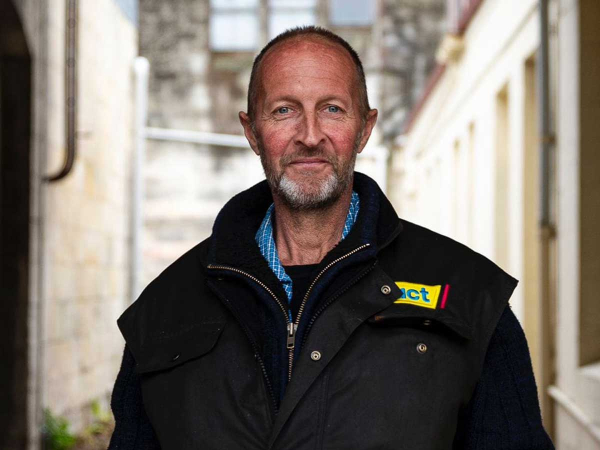
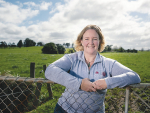
ACT MP Mark Cameron ACT MP Mark Cameron

ACT MP Mark Cameron says the Government is bringing common sense “back in the room” by halting the rollout of freshwater farm plans.

He told Rural News that the Government has listened to the constituents whereas the previous Government hadn’t.

The Government says it will pause the rollout of freshwater farm plans until system improvements are finalised.

Several regions have already started implementing freshwater farm plans in specific areas, including Waikato, Southland, the West Coast, Otago, and Manawatū-Whanganui, based on legislation passed by the previous Government.

Farmers have complained that the current system is too costly and not fit-for-purpose. The laws remain in place and council are required by law to seek freshwater farm plans from farmers.

The new Government intends to make minor amendments to the Resource Management Act (RMA) to enable the pause. Once these amendments are made, farmers will not be required to submit a freshwater farm plan for certification while changes to the freshwater farm plan system are underway.

Cameron says the council now have more certainty around the new Government’s intentions on freshwater management.

“We are steering the council to cease and desist, and they now have clarity that laws will change,” says Cameron.

“Until the laws change, the council are legally required to pursue freshwater farm plans however, the councils now know that we are changing the laws. We are putting common sense back in the room.”

Meanwhile Cameron, who is also chair of the primary production select committee and ACT MP Laura Trask are in Canterbury for public meetings.

They will be in Ashburton to hear from rural communities struggling with rules under the RMA Act, Freshwater Farm Plans, and Te Mana o te Wai.

“We will hear farmers’ experiences and concerns and take their insights to Wellington as the Government amends and replaces the RMA,” says Cameron.

The meeting at Ashburton Hotel starts at 6pm tomorrow, Friday September 6.

More like this

Smith V Fonterra

OPINION: To a chorus of crying greenies, and not a minute too soon, the Government has moved to put the courts back in their place through proposed amendments to the Climate Change Response Act 2002, intending to limit climate litigation claims such as Smith v Fonterra, in the interests of providing greater certainty for vital industry.

Editorial: Equity with Cuts

OPINION: The coalition Government’s plan to make about 9000 public servants redundant looms as a major election issue

Editorial: A Sensible Decision

OPINION: For thousands of Southland farmers, this week would have tipped them into the non-compliant category when it comes to following regional freshwater plan rules. But the Government has stepped in to give them the clarity they deserve.

Luxon Reveals Updated Ministerial Lineup

Prime Minister Christopher Luxon has announced changes to the ministerial lineup, including a new Minister for the Environment and a new Associate Agriculture Minister.

Featured

Agri Experts Give Their Views on 2050

Despite near universal optimism in the rural sector, a panel of New Zealand’s leading food and agri minds caution that the sector must be intentional about its future path.

The panel say this is needed if the sector is to successfully

navigate the social, economic, environmental and technological forces impacting its operating environment.

Their views form part of the latest version of Rabobank’s annual white paper ‘Succession 2050 – gearing up for New Zealand’s food and agri future’.

Experts Identify Key Global Challenges

The white paper focuses on the topic of succession at an industry level.

In addition to Rabobank’s own insights, the paper brings together a selection of 14 leading New Zealand and international food and agri experts – including trade negotiators, economists, systems analysts, scientists and technologists along with sectoral experts in sustainability, the future of fibre and Māori enterprise – to share their perspectives on what the New Zealand food and agri sector could look like in 2050 and what needs to change to achieve that vision.

Launching the new paper at the Primary Industries New Zealand Summit in Auckland today, Rabobank New Zealand CEO Todd Charteris said the experts who contributed to the white paper had identified plenty of reasons for New Zealand to be confident about its food and agri future.

“To name just a few, we’re a major food producer in a food-hungry world that’s on track to need 56% more food by 2050,” he said.

“Our food and fibre exports are also growing strongly and are forecast to hit $64.3 billion for the year to June 2026, while our government has signalled its plans to help double overall New Zealand exports by 2034.”

While there were many reasons for optimism, Charteris said, the expert contributors had also noted a host of changes taking place across the global food and agri operating environment that would need to be navigated for the industry to achieve ongoing success in the decades ahead.

“A number of key changes shaping the future of the sector came through in the perspectives of the expert contributors,” he said.

“There are the well-canvased issues of increasing global food insecurity, the challenging trade environment driven by geopolitical tensions, and the need to produce food within planetary limits."

'Identity Eating' Emerges as a Key Consumer Trend

“However, the experts also raised emerging trends, including what we’ve called ‘Identity eating’ – which is the growing way of signalling who you are as a person through what you eat – and is leading to higher demand for ethical and health-conscious foods.

“Another key trend identified out to 2050 was ‘Exponential everything’, which covers the transformation of the sector through science and technology.”

Rather than let these changes wash over it like a tsunami, Mr Charteris said, the broadly held view among the expert contributors was that New Zealand’s agriculture sector would need to lean in and proactively shape the changes occurring around it.

“We heard this message in many different ways; whether it was influencing global trade policy, embracing technology, capitalising on sustainability, training up for the future, defending our advantage in dairy or kiwifruit, growing Māori enterprise or more deliberately utilising all the wealth in our big blue backyard,” he said.

Building a 2050 growth engine for food and agri

Charteris said the white paper contributors had identified 23 changes they would like to see in New Zealand between now and 2050 that will help set up the sector for success.

“Essentially, they boil down into five buckets with four to five ‘work ons’ in each bucket,” he said.

“At the centre, we need a change model that starts from the customer perspective and works outward from that, feeding into more purposeful decisions about land use and production systems.

“Then once we are clear on what customers are asking for and where we want to play, we need to stack talent and technology.

“Between these items we have the elements of a 2050 growth engine.”

What’s exciting, Charteris said, is that New Zealand has the geography, the capacity, the ideas, and the time, to make something outstanding of its future.

“My wish is that our experts’ thinking will inspire others to join me in pushing for a more deliberative strategic future for New Zealand,” he said.

Government Mulling Plan Change 1 Intervention

The Government is looking at intervening on behalf of Waikato farmers who face new regulations around agricultural land use while Resource Management Act (RMA) reforms are underway.

National

Machinery & Products

» Latest Print Issues Online

The Hound

Great Idea!

OPINION: Central Hawke's Bay farmer Mark Warren recently told the Hawke's Bay Times it's time for a conversation about allowing…

No Choice

OPINION: A nation that relies as heavily as NZ does on functional global shipping lanes will have to do its…

» Connect with Rural News

» eNewsletter

Subscribe to our weekly newsletter