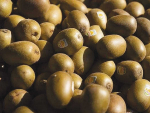
NZ kiwifruit sector on alert for mysterious Italian disease
New Zealand's kiwifruit industry is on alert following reports of a mystery disease that is sweeping through Italian orchards.




 increase font size
 Tarnya Cox.
A new strain of the rabbit haemorrhagic disease (calicivirus) is working as well as hoped since its release in Australia last autumn.
Dr Tarnya Cox, project leader at the NSW Department of Primary Industries vertebrate pest research unit, says 57% fewer rabbits were seen at the release sites two months after the new strain’s release.
“We are still analysing the data to remove any background natural mortality rates due to other circulating viruses, non-viral death, emigration, etc, so this number may change once that analysis is completed,” she told Rural News.
“We were expecting a 20% reduction on average, so based on current figures -- yes, RHDV1 K5 has performed at least as well and in some cases better than we hoped,” Cox says.
“Most samples returned from release sites were positive for RHDV1 K5, so it gives us confidence that it was RHDV1 K5 killing rabbits and not another strain.”
RHDV1 K5 is a Korean strain believed to better overcome the protective effects of a benign calicivirus which also naturally occurs in feral rabbit populations and confers some immunity to the existing RHDV1.
Calicivirus was illegally introduced to New Zealand in the face of official refusals in 1997, but rabbit numbers have bounced back in many regions.
NZ authorities had hoped to release the RHDV1 K5 strain at the same time as Australia, but missed the opportunity after failing to get the necessary approvals in time.
Environment Canterbury (Ecan) is managing the approval process on behalf of the NZ Rabbit Coordination Group (RCG), which includes regional and district councils, Federated Farmers, Department of Conservation, Ministry for Primary Industries and Land Information NZ.
They now hope to release it here next autumn, subject to approval by MPI under the Agricultural Chemicals and Veterinary Medicines (ACVM) Act 1997 and the Biosecurity Act 1993. MPI has called for public submissions, closing on December 14, saying it will consider the disease’s benefit to farming, and its risks; it must also assess a vaccine for protecting pet and farmed rabbits.
No vaccinated rabbits have been reported or confirmed dead in Australia, Cox says.
“Our study prior to the release showed the vaccine was effective, and evidence around the world also suggested it would protect against almost all RHDV1 variants. That has proven so with RHDV1 K5 in Australia.”
It is not yet known how well RHDV1 K5 has struck in the wild in Australia. “We have not yet detected RHDV1 K5 this spring,” said Cox.
“Detection relies on people finding carcases and submitting them for testing, so it was always going to be a challenge. But we have found RHDV2; this is an exotic strain of RHDV that was first identified in Australia in May 2015 but was likely here for longer. This now appears to be the dominant strain in the Australian landscape,” she said.
“RHDV1 K5 may still be out there killing rabbits in the background or it may have been out-competed by RHDV2. Only time will tell.”
New Zealand's kiwifruit industry is on alert following reports of a mystery disease that is sweeping through Italian orchards.

Could automated gun turrets in the bush shooting predators with poison paintballs rid the country of introduced pests?
As mealybugs gain a foothold in Central Otago, grapegrowers are being urged to be vigilant for signs of Grapevine Leafroll-associated Virus Type 3 (leafroll 3) in vines.
An invasive weed that can reduce water quality and block irrigation systems has been discovered in the Waikato River.
For strong wool sheep, lice infection is a nuisance more than a hefty financial cost. But, for fine wool sheep the financial toll is much greater.



Waikato milk processor Tatua has again declared a record milk payout to farmer shareholders, leaving other processors in the dust.

A Labour-led Government won’t be bringing back the controversial freshwater rules of 2020.
National’s much-touted free trade deal with India featured in the Rural Issues Debate at Mystery Creek, Hamilton on Wednesday night.
New Zealand's 2026-27 freshwater fishing season has opened, with anglers encouraged to head to rivers and lakes over the coming days as conditions look favourable across much of the country.
Central Otago District Council (CODC) has voted against a plan to spread treated sewage sludge from Cromwell and Alexandra on farmland near Lauder, a decision Federated Farmers says reflects strong opposition from rural residents.
Pāmu has released its FY26 Integrated Annual Report, reporting a Net Operating Profit of $113 million, more than double the $49 million recorded in FY25.





OPINION: The same mainstream media muppets that brought you Jacindamania in 2017 have been flat out pimping for the Opportunities…
OPINION: Your old mate reckons the atrocious way farmers in the UK are treated by their lords and masters in…




