
Kiwifruit Growers Prepare for El Niño, Stay Optimistic
Kiwifruit growers are watchful but remain optimistic as concerns around the potential effects of the El Niño weather pattern this season.




 increase font size
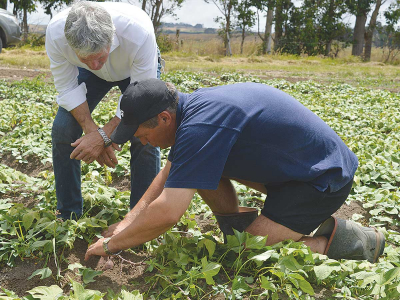 Agriculture Minister Damien O’Connor visiting Andre De Bruin’s kumara farm in Dargaville earlier this month.
Like many farmers in North Island, Dargaville kumara farmer Andre de Bruin is hoping for rain soon.
With 40 hectares of kumara crop under the ground, he remains hopeful.
“It depends on how long the dry weather lasts,” he told Rural News.
“As long as the dry doesn’t get too severe and kill the plants, we should be okay.”
De Bruin, who is also chairman of Vegetables NZ, hosted Agriculture Minister Damien O’Connor on his farm recently. O’Connor toured a paddock planted two months ago.
De Bruin says it’s hard to say how the dry weather will affect this year’s crop.
“We will only find out during the harvest,” he says.
Kumara is planted around November and December in Dargaville; from planting it takes about 120 days to harvest.
Some of the crop is transported directly to markets around the country; the remainder kept in storage for supply throughout the year.
De Bruin says while his farm is very dry, other farmers in Dargaville are better placed: some have had rain and some access to irrigation.
 |
|---|
|
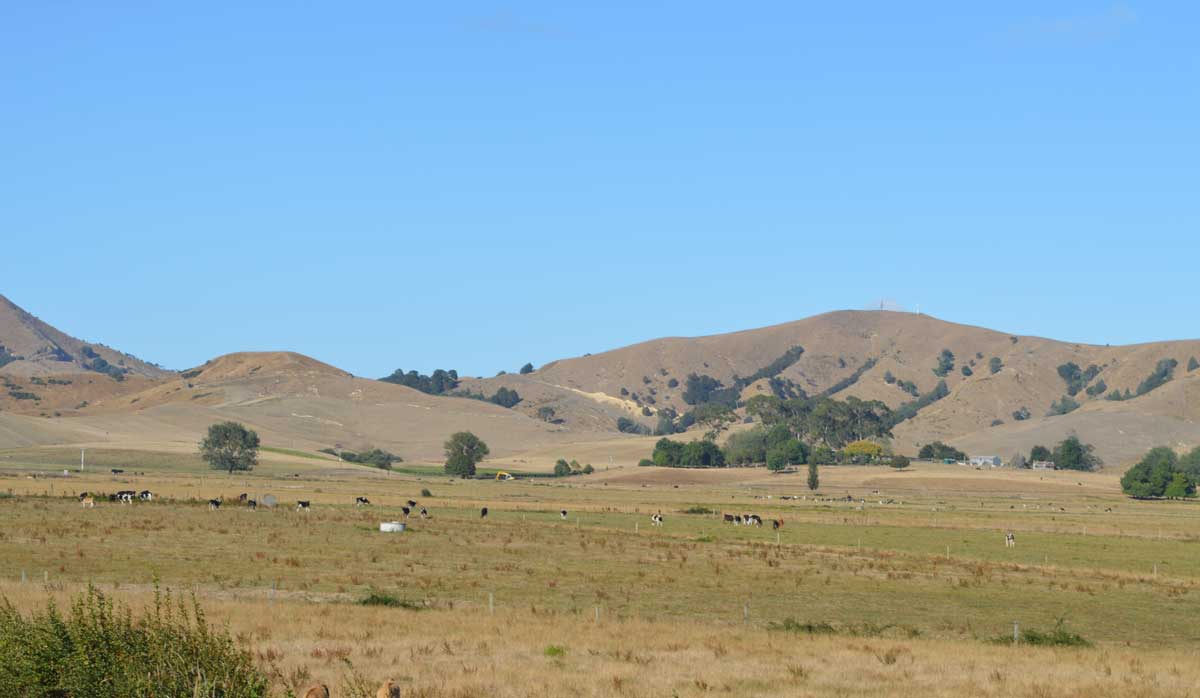
Drought is affecting much of the North Island. |
O’Connor, who spent a day in Northland, says ground conditions across the region are varied.
He praised the resilience of farmers, saying good farmers are more prepared for such climatic events.
“Most farmers have got it... they need to be more prepared in future for disruptive events.”
O’Connor says mixed farming models will help farmers not only diversify their income but provide buffer to their incomes during droughts and floods.
On the possibility of a drought being declared in Northland, O’Connor says his department is working with Federated Farmers and Rural Support Trust with “a set formula”.
“We must not overreact and too quickly declare a drought: building reputation around an area for being unreliable as a farming block,” he says. “There are downsides to declaration of a drought: such areas can be seen as losing the ability to farm sustainably and this can impact land values.”
O’Connor also visited dairy farmer Scott Taylor at Tangiteroria, midway Whangarei and Dargaville.
Taylor says milk production is falling behind, compared to last season as farmers are drying off early.
On his farm in Taylor has dried off cows that would be calving in autumn: he’s done this a few weeks earlier than usual.
“Day after day of 25 to 30 degrees with no rain, no grass growth, it’s a no-brainer,” he told Rural News.
“We need rain soon to ease the pressure, if not things are going to get quite difficult.”
Taylor is still milking 230 cows once-a-day; feeding them turnips, grass silage and palm kernel expeller (PKE).
Kiwifruit growers are watchful but remain optimistic as concerns around the potential effects of the El Niño weather pattern this season.

With forecasters advising El Niño conditions will develop through winter and strengthen into spring and summer, Ballance Agri-Nutrients is encouraging farmers and growers to think ahead about nutrient planning and be prepared to work around challenging weather conditions.
A miserable budget that didn’t deliver much for anyone.
National's decision to ‘dribble’ information about the NZ/India to Labour contributed to the delay in it deciding to supported the FTA.
Recent weather events in the Bay of Plenty, Gisborne/Tairawhiti, and Canterbury have been declared a medium-scale adverse event.



Mark Hooper has been appointed the new chair of NZPork, the industry organisation representing New Zealand pig farmers.

As the India-New Zealand free trade agreement enters into force, New Zealand’s apple industry has reaffirmed its commitment to the long-term development of India’s apple sector.
Fonterra shareholders can begin voting on Tuesday 20 October in the 2026 Board of Directors’ election, a Co-operative Council election in one Ward, and seven Annual Meeting resolutions.
National’s pledge to introduce 19 new national standards shows the party is serious about getting Wellington out of farming, Federated Farmers says.
The National Party’s policies to make it easier to grow fresh vegetables, secure reliable water and energy and simplify farm planning are practical changes that will give growers the confidence to invest, according to Horticulture New Zealand (HortNZ).
Fonterra Co-operative Group chief financial officer Andrew Murray has resigned to take up a role outside the dairy giant.


OPINION: The same mainstream media muppets that brought you Jacindamania in 2017 have been flat out pimping for the Opportunities…
OPINION: Your old mate reckons the atrocious way farmers in the UK are treated by their lords and masters in…




