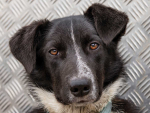
Meet Wally, the Border Collie Who Works at Greywacke
Kevin Judd, winemaker at Greywacke in Marlborough, is well versed in the gravitational pull between wine folk and dogs.




 increase font size
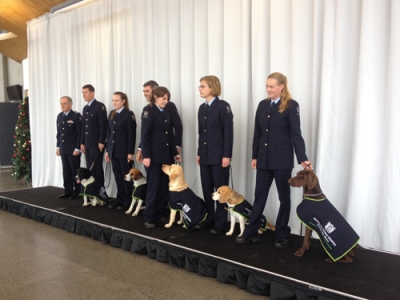 Five of the twenty-four new biosecurity detector dog teams graduating.
Twenty-four new biosecurity detector dog teams graduated from their training last week — the biggest ever boost to MPI's sniffing force.
The dog teams include dog and handler.
"The new dog teams will give us capacity to screen all arriving international flights for biosecurity risk goods," says Steve Gilbert, MPI border clearance services director.
"They will also ensure we can make greater use of dog teams to greet international cruise ship passengers at regional ports.
"This is the largest number of dog teams to graduate at the same time in the history of MPI or its predecessors – so it is a significant day."
The dog handlers are among 57 frontline biosecurity staff who graduated at the ceremony at the Vodafone Event Centre in Manukau.
The ceremony included a demonstration of MPI's new mobile x-ray machine for scanning hand baggage carried by cruise ship passengers visiting regional ports.
"The new staff, dogs and x-ray equipment are part of a MPI biosecurity ramp-up to cope with increasing passenger numbers and the heightened threat of fruit fly-host material arriving in New Zealand," says Gilbert.
"It's been a big year for us on the biosecurity frontline following the government's decision to increase biosecurity funding in its 2015 budget.
"We have employed nearly 90 new staff and have purchased six new x-ray machines for inspecting baggage, including the mobile equipment.
"There have also been moves to improve our targeting of passengers that pose the highest level of biosecurity risk.
"Although you can never totally eliminate the risk of an unwanted pest or disease entering New Zealand, we feel our border biosecurity defences are in good shape to deal with what is going to be a very busy summer."
Kevin Judd, winemaker at Greywacke in Marlborough, is well versed in the gravitational pull between wine folk and dogs.
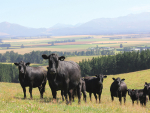
Bovine Viral Diarrhoea (BVD) is sometimes viewed as a dairy industry issue, but the reality is that the disease can have serious consequences for beef breeding herds as well.
Election years are always a concerning time for farmers, according to DairyNZ chair Tracy Brown.
Testing confirms H5 bird flu in a single northern giant petrel, found dead on a remote Cape Palliser beach in the Wairarapa, says Dr Mary van Andel, the Ministry for Primary Industries' (MPI) Chief Veterinary Officer.
Bovine Viral Diarrhoea (BVD) is sometimes viewed as a dairy industry issue, but the reality is that the disease can have serious consequences for beef breeding herds as well.


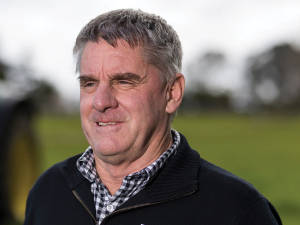
Federated Farmers has welcomed new rural policies released by ACT, saying they align closely with its own election priorities.
Rural Contractors NZ says proposed changes to land transport rules for agricultural vehicles are a welcome response by the Government to out of date regulations which have seen members hit with huge fines.
Alliance is calling for final applications for its 2027 Graduate Programme, with applications closing on Sunday 25 October.
Decades piloting planes has ensured vet and farmer David Hayes is focused on safety. So, after a serious accident while welding on farm, he is sharing his experience so others can learn from it.
Canterbury milk processor, Synlait Milk has confirmed Leon Fung as its chief executive officer.
OPINION: Making it easier to collect rainwater and use it to grow crops and livestock is a no brainer.

OPINION: The same mainstream media muppets that brought you Jacindamania in 2017 have been flat out pimping for the Opportunities…
OPINION: Your old mate reckons the atrocious way farmers in the UK are treated by their lords and masters in…




