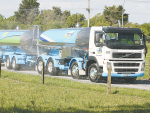
Fonterra Elections 2026: Voting Opens Tuesday 20 October
Fonterra shareholders can begin voting on Tuesday 20 October in the 2026 Board of Directors’ election, a Co-operative Council election in one Ward, and seven Annual Meeting resolutions.




 increase font size
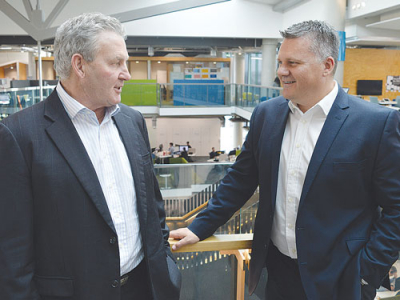 Fonterra chairman John Monaghan and chief executive Miles Hurrell.
Fonterra says it didn’t shy away from its sustainability commitments despite a financially draining 2019.
The co-op last week released its 2019 sustainability report -- the first to reflect its ‘triple bottom line’ goals of healthy people, healthy environment and healthy business.
Chairman John Monaghan and chief executive Miles Hurrell say in the 2019 sustainability report that the last financial year brought significant challenges and change for the co-op.
“There’s no question about it, it’s been a tough year. We always knew it was going to be, and should be pleased with the progress we’ve made.
“That might sound strange, given our performance this year, but we are confident that when we look back at 2019 a few years from now, it will be to mark the beginning of a new period of success for the co-op.”
After two consecutive years of losses, resulting from massive writedowns of assets, the co-op embarked on a new strategy -- learning from past decisions and agreeing on what the co-op should stand for today, Monaghan and Hurrell say.
“Eighteen months ago, we may have said we’re a global dairy giant here to make a difference in the lives of two billion people through a volume ambition of 30 billion litres of milk by 2020.
“Today, we stand for value. We’re a New Zealand dairy farmers’ co-op, doing smart, innovative things with New Zealand milk to create value for our owners, customers, and communities.
“This is the right strategy for us, but it requires us to make some different choices.”
Fonterra’s healthy business targets include an 8.5% return on capital (ROC) by financial year 2022 and 10% by 2024. Last year its ROC was 5.8%.
Fonterra targets earnings of 40c/share by 2022 and 50c by 2024. Last year it achieved 17c/share: no dividend was paid.
The co-op has a free cashflow target of $900m by end the of 2022 and over $1 billion by 2024. Last year it recorded free cashflow of $699m.
Under its healthy people target, Fonterra hopes to have 50% of its senior leadership team made up of women. Two of its seven-member executive team are presently women. The head of people and culture, Deborah Capill, has resigned and will leave in February 2020.
Fonterra also wants “ethnic” representation on its leadership team of 20% by 2022 (9% last year).
It also wants all Fonterra consumer branded products to have health star ratings by 2025 (68% last year).
On healthy environment, Fonterra hopes to have all its 10,000 farmers equipped with farm environment plans: last year only 23% of its farmers had FEPs. It also hopes to reduce greenhouse gas emissions from manufacturing sites by 30% within 10 years.
Fonterra says it will measure the success of its strategy and approach using triple bottom line reporting.
“We will measure the health of our people, our environment and our business. Each comes with a number of performance targets, including return on capital, greenhouse gas emissions and the engagement levels of our farmers and staff.”
Fonterra shareholders can begin voting on Tuesday 20 October in the 2026 Board of Directors’ election, a Co-operative Council election in one Ward, and seven Annual Meeting resolutions.

Fonterra Co-operative Group chief financial officer Andrew Murray has resigned to take up a role outside the dairy giant.
Four candidates have been confirmed for two director positions on Fonterra’s board.
A record farmgate milk price and strong global demand is laying the foundation for continued growth of organic dairy farming in New Zealand.
Waikato milk processor Tatua has again declared a record milk payout to farmer shareholders, leaving other processors in the dust.


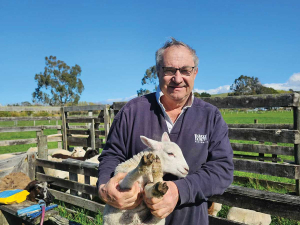
Decades piloting planes has ensured vet and farmer David Hayes is focused on safety. So, after a serious accident while welding on farm, he is sharing his experience so others can learn from it.
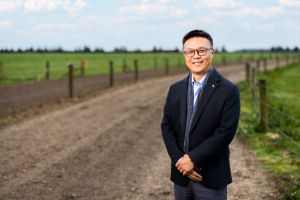
Canterbury milk processor, Synlait Milk has confirmed Leon Fung as its chief executive officer.
OPINION: Making it easier to collect rainwater and use it to grow crops and livestock is a no brainer.
As part of its Election 2026 coverage, Rural News asked political parties how they would help pull the arable sector out of the doldrums. Here's what they said:
Farmers are being encouraged to rethink how they manage waste on farm with the launch of ruralwastesorted.co.nz, a new website bringing together practical tips, real farmer experiences and resources.
New Zealand Winegrowers (NZW) is celebrating the India-New Zealand Free Trade Agreement (FTA) coming into force today, bringing New Zealand wine improved access to one of the world’s fastest-growing economies.

OPINION: The same mainstream media muppets that brought you Jacindamania in 2017 have been flat out pimping for the Opportunities…
OPINION: Your old mate reckons the atrocious way farmers in the UK are treated by their lords and masters in…




