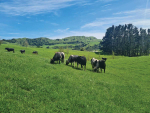
The Intricacies of Livestock Breeding
I've written a series of articles for Rural News, starting with 'The Basics of Grazing', then 'Stock Handling', followed up by 'Evaluating Stock Condition'.




 increase font size

BEEF + LAMB Genetics (BLG) needs to act now to prevent the collapse of New Zealand’s science capability in livestock breeding, say farmers and a former director of AgResearch’s Invermay campus.
“They’ve lost just… over half the science capability already: eight scientists have gone and two pHDs haven’t been completed,” Dr Jock Allison told Rural News at BLG’s inaugural Sheep Breeders’ Forum in Dunedin last week.
He was speaking about AgResearch’s planned relocation of the genetics hub at Invermay to Lincoln – “the elephant in the room” during the forum’s first-day proceedings, according to North Canterbury Corriedale and South African Merino breeder John Booker.
“I’ve already met three people who are not there anymore,” he fumed during a tirade on the topic that opened the day’s closing Q&A session.
Allison pointed out the eight scientists include one from the farm systems team, Dr Julie Everett-Hincks, but nonetheless her work was also valuable to breeders.
BLG’s chairman, former Landcorp chief executive Chris Kelly, was hauled to the front of the packed hall to provide answers on the AgResearch issue.
An injection of $15m from MBIE would help retain the scientists but BLG’s contractual obligation with MBIE meant the work the money is for has to be done by named people and it is “less important where they are situated,” Kelly said.
“One thing Beef + Lamb can do is give certainty to those people with the money we’ve got… I’m not saying we have any control over the move of Invermay to Lincoln but we will do our best.”
But that didn’t satisfy some delegates, who suggested BLG should set up an organisation to do the genetic work. “Why not act now before we lose the other half of the genomics team?” asked one.
That was echoed by Allison. “The time has come when we have to strike quickly.”
AgResearch had given the breeding industry no confidence that anything in its plans would change and another organisation would probably be able to offer the same services “a whole lot cheaper”.
Kelly acknowledged the remaining scientists “must stay or we are dead in the water. And I have made that commitment today with the funding.”
Moving on, Kelly took a shot at the lack of technology transfer in many Primary Growth Partnerships. “None of these PGPs are going to succeed until we crack the technology transfer problem…. If we could fix that, and nothing else, the agricultural sector would be twice as profitable as it is now.”
Nobody from AgResearch commented on the relocation proposal at BLG’s forum.
• More from the Sheep Breeders Forum in Rural News November 4.
I've written a series of articles for Rural News, starting with 'The Basics of Grazing', then 'Stock Handling', followed up by 'Evaluating Stock Condition'.
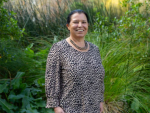
Last night saw the winners of the 2026 Beef + Lamb New Zealand (B+LNZ) Awards named at a gala dinner at Te Pae Christchurch Convention Centre.
A significant breakthrough in understanding facial eczema (FE) in livestock brings New Zealand closer to reducing the disease’s devastating impact on farmers, animals, and rural communities.
A breakthrough in the understanding of Facial Eczema (FE) in livestock could bring New Zealand closer to reducing the disease’s impact.
An innovative idea for transforming mechanically deboned meat (MDM) into a meat flake for seasoning has taken top honours in the Meat Industry Association’s (MIA) first-ever Dragon’s Den competition.


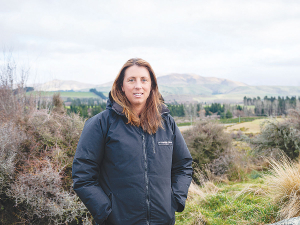
Beef + Lamb New Zealand (B+LNZ) says it welcomes the passage of the Natural Environment Bill and Planning Bill, calling the bills a positive step for sheep and beef farmers.
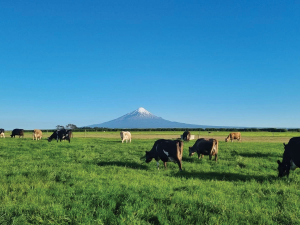
A spate of southerly winds bringing cold temperatures has presented challenges for Taranaki dairy farmers.
Converting a longstanding cropping farm to dairy was the only way to ensure the land stayed in the family long term, says new dairy farmer Rod May.
As the election heats up, Organics Aotearoa New Zealand (OANZ) has launched its election scorecard designed to help voters wanting to support policies that grow organic and New Zealand's organic sector.
A 'tsunami' of milk from key exporting countries is winding down and this may be good news for New Zealand dairy farmers.
Will the good times last? That's one of the key issues to come out of the latest Federated Farmers confidence survey.





OPINION: The same mainstream media muppets that brought you Jacindamania in 2017 have been flat out pimping for the Opportunities…
OPINION: Your old mate reckons the atrocious way farmers in the UK are treated by their lords and masters in…




