Forestry Companies Held Accountable After Coromandel Logging Truck Death
Two forestry companies have been sentenced for road failures that led to the death of Coromandel truck driver Greg Stevens.




 increase font size
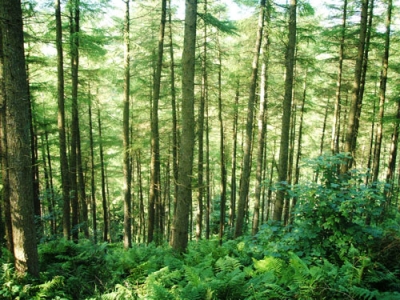 Forest owners are welcoming the review of the New Zealand Emissions Trading Scheme.
Forest owners are welcoming the review of the New Zealand Emissions Trading Scheme.
"The discussion document is refreshing in its candour. It clearly states that New Zealand needs to reduce its carbon emissions and for this to happen, policy settings need to change," says Forest Owners Association chief executive David Rhodes.
"It acknowledges that carbon prices need to be higher so that businesses have the incentive to invest in reducing their emissions in New Zealand. Most importantly for forestry, it emphasises that there needs to be much more long-term policy certainty than we have seen since the ETS was launched in 2008."
He says carbon stored in forests planted after 1989 enabled New Zealand to meet its obligations under the Kyoto Protocol, despite a surge in emissions elsewhere in the economy.
"These forests were already in the ground when the ETS was launched. Since then, the favourable treatment under the ETS of other sectors, relative to forestry, and extreme carbon price volatility have contributed to a net reduction in the planted forest area," Rhodes says.
"If things don't change, emissions will gather pace in the 2020s as the spike of forests planted the 1990s are harvested. Fortunately the government recognises this and wants to identify changes to the NZETS that could help increase the rate of forest planting."
The discussion document poses a number of questions for public consultation, but rules out including agriculture in the ETS, even though this is the source of 50% of the nation's emissions.
Rhodes says it is difficult to fathom how agriculture could be ruled 'out of scope'. It is also contrary to the recommendations of the government's own 2011 independent review of the NZETS, which envisaged agriculture being slowly phased into the scheme.
"All investors in land in New Zealand need to be given the same market signals about their role in reducing emissions. This includes those aspects of the ETS that encourage carbon forestry. It is important that land owners – who can be farmers – factor in carbon as an income stream additional to that from the eventual log harvest," he says.
Forest owners would also like to see the phase out of subsidies to emitters, particularly given that record low carbon price levels have made this assistance unnecessary over the past few years.
Carbon price stability is particularly important to forest owners because of the long-term nature of their crop.
"If the ceiling price for carbon is to continue, logic suggests there should also be guidance on what the minimum price will be. All investors will want to know the points at which the government will or will not intervene in the market."
Two forestry companies have been sentenced for road failures that led to the death of Coromandel truck driver Greg Stevens.

The Climate Change Commission has recommended maintaining the current New Zealand Emissions Trading System (NZ ETS) settings but warns of a potential unit shortfall as early as 2028.
OPINION: I recently wrote an open letter to the Prime Minister because at a recent Federated Farmers meeting, Chris Luxon told me wind and solar generation is not subsidised.
Additional reductions to costs for forest owners in the Emissions Trading Scheme Registry (ETS) have been announced by the Government.
A New Zealand-first native tree study has highlighted the Bioeconomy Science Institute's position as a forestry research leader.



Healthy snacking company Rockit has announced Wang Yibo, one of China's most influential celebrities, as its new brand ambassador.

Rabobank has celebrated the tenth anniversary of its AgPathways Programme, with 23 farmers from Otago and Southland gathering for two-and-a-half days to learn new business management and planning skills.
Adopting strategies to reduce worm burden on farm goes hand-in--hand with best practice farm management practices to optimise stock production and performance, veterinarian Andrew Roe says.
Last night saw the winners of the 2026 Beef + Lamb New Zealand (B+LNZ) Awards named at a gala dinner at Te Pae Christchurch Convention Centre.
A 12-month pathway programme has helped kickstart a career in dairy for an 18-year-old student-turned-farmer.
Zespri says its global fruit sales revenue has reached a record NZ$5.9 billion from sales of 248.1 million trays.




OPINION: The old saying 'a new broom sweeps clean' doesn't always hold up, if you ask the Hound.
OPINION: This old mutt went to school to eat his lunch, but still knows the future of the country, and…