
More To Overall Health Than Bugs and Viruses
OPINION: More than three decades ago, I was part of a group who received a monthly audio cassette tape from international leadership statesman, Dr. John Maxwell.




 increase font size
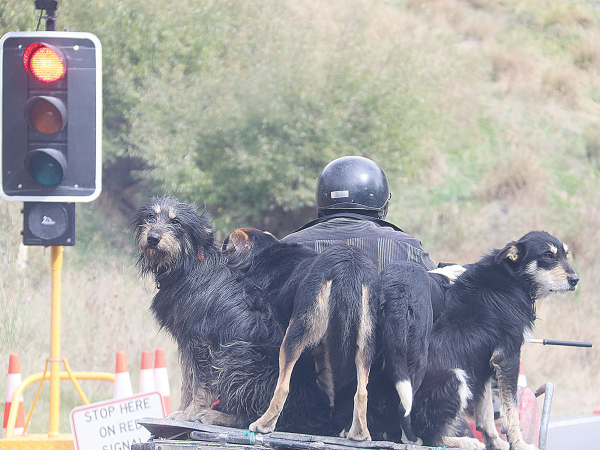 The WellMates programme is having a positive effect in increasing awareness and building knowledge of rural mental health.
Mental health and resilience programme WellMates is available at Massey University for a second year after research found that it has significantly benefitted participants.
Developed by Lincoln University after the suicides of former alumni, WellMates promotes mental health and wellbeing to first year ag students. Studies show farmers are prone to experiencing burnout and especially young adults in the rural community, with this group making up a quarter of farm suicides.
Massey’s School of Social Work senior lecturer Dr Nicky Stanley- Clarke says WellMates is having a positive effect in increasing awareness and building knowledge of mental health.
Conducting surveys on 19 participating and 58 non-participating students, those who participated in the programme showed greater mental health and wellbeing knowledge for those who participated than those who didn’t.
“WellMates helped them build their skills and improve their confidence in advocating for themselves and others,” Stanley-Clarke adds.
An interesting trend that appeared in the pre-programme survey was the number of students who presented with optimism bias. This is underestimation of the possibility of experiencing stressful situations and severity of these. Research found that peerto- peer connection is very important in combating this thinking.
A second round of funding from Massey Lincoln Agriculture Industry Fund (MLAIF) has also provided the opportunity for WellMates to be offered online this year – with learning designers at Massey translating the content from in-person courses and recording videos and voiceovers. This will be incorporated into a module embedded within learning platforms such as Stream, with additional available resources for wellbeing and counselling services like TalkCampus.
The Massey pilot is being led by Lincoln students trained in the programme, who flew up to Palmerston North to deliver and facilitate the programme.
This was run as a ‘conversation’ rather than a lecture, to further the point of it being about mental wellness, rather than a purely academic exercise.
“Students will get to hear from people like them about how important it is to manage your wellbeing and to know how to access support which helps break down stigma, particularly around the ‘tough farmer’ ideal,” explains Stanley- Clarke. “When you see others like you having that conversation, you’re more likely to join in and be engaged.”
Stanley-Clarke hopes younger people moving into rural communities can take back what they’ve learnt and pass it along. She also hopes to expand the programme into other spaces adjacent to – and outside of – agriculture.
“Any lives lost to suicide is too many. Whatever we can do to build and strengthen knowledge around mental health wellbeing, as well as share how to reach out to access support and support others, has to be good.”
WellMates will be hosted in Massey’s agriculture environment course as part of its Animal Science paper.
OPINION: More than three decades ago, I was part of a group who received a monthly audio cassette tape from international leadership statesman, Dr. John Maxwell.
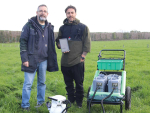
Researchers at Massey University are using a special piece of scientific equipment to improve the measurement of greenhouse gas emissions from pasture soils.
Interest in agritech and production animal systems has prompted Massey University's School of Agriculture and the Environment to new majors to its popular animal science degree.
Speculation of a possible joint move by Fonterra and a2 Milk to buy Synlait raises a much bigger strategic question, says agribusiness expert Dr Nic Lees.
The industry is crying out for graduates with agricultural related degrees.


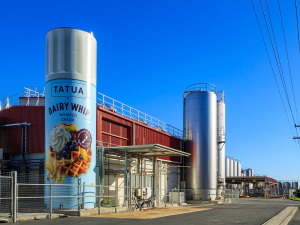
Waikato milk processor Tatua has again declared a record milk payout to farmer shareholders, leaving other processors in the dust.
A Labour-led Government won’t be bringing back the controversial freshwater rules of 2020.
National’s much-touted free trade deal with India featured in the Rural Issues Debate at Mystery Creek, Hamilton on Wednesday night.
New Zealand's 2026-27 freshwater fishing season has opened, with anglers encouraged to head to rivers and lakes over the coming days as conditions look favourable across much of the country.
Central Otago District Council (CODC) has voted against a plan to spread treated sewage sludge from Cromwell and Alexandra on farmland near Lauder, a decision Federated Farmers says reflects strong opposition from rural residents.
Pāmu has released its FY26 Integrated Annual Report, reporting a Net Operating Profit of $113 million, more than double the $49 million recorded in FY25.





OPINION: The same mainstream media muppets that brought you Jacindamania in 2017 have been flat out pimping for the Opportunities…
OPINION: Your old mate reckons the atrocious way farmers in the UK are treated by their lords and masters in…




