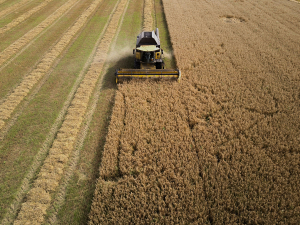
OSPRI Reduces TB Testing and Lifts Movement Controls in Key Regions
Ospri is reducing TB testing frequencies and movement control measures as the disease risk subsidies in parts of the country.




 increase font size
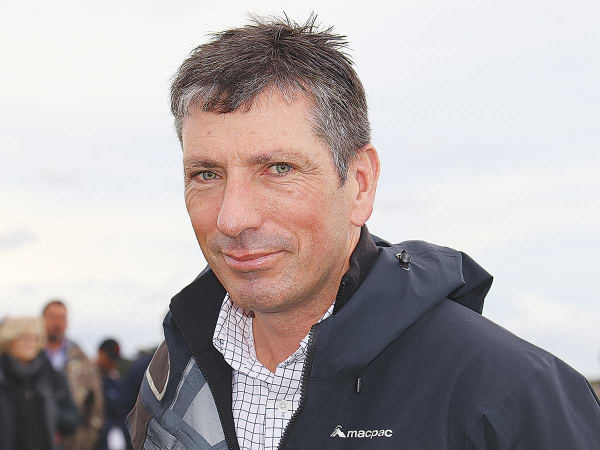 Sam McIvor says the report will be “alarming” for farmers, rural communities, as well as wider New Zealand.
The scale of beef and sheep land purchased for forestry is higher than first thought, according to a report on land-use change.
Commissioned two years ago by Beef + Lamb NZ to track the amount of land purchased for afforestation and taken out of pastoral farming, the report from consultancy firm Orme & Associates shows that 63,582ha was purchased by forestry interests in 2021. This compared with 37,950ha in 2020 and 7,000ha in 2017 - showing a significant upwards trend in conversion.
B+LNZ chief executive Sam McIvor says the report will be "alarming" for farmers, rural communities and wider New Zealanders already concerned about the conversion of food producing sheep and beef land into carbon farming.
"This takes the total to more than 200,000ha of sheep and beef farms bought over the last five years," he says.
"This scale of change is far more than what is recommended by the Climate Change Commission (25,000ha per year to meet the net zero by 2050 target) and will have a negative impact on rural communities, food production and export income, which affects all New Zealanders."
MPI’s Afforestation and Deforestation report, focusing on larger scale planting, also supports B+LNZ’s findings. Afforestation for 2023 was estimated to be 88,000ha in 2023, with 16% set aside for permanent forestry – though the impacts of Cyclone Gabrielle will likely muddy these numbers.
Uncertainty over policy changes led to a decrease to 36,000ha in 2022, but McIvor says this figure is likely to increase because there is a backlog of applications sitting with the Overseas Investment Office (OIO).
“New Zealand is one of the only countries in the world that allows fossil fuel emitters to offset 100% of their emissions,” he says.
“B+LNZ is not antiforestry; there is absolutely a place for it and for offsetting. We know many farmers are interested in integrating trees into their farms, but there is a need for some balance.”
McIvor says B+LNZ also recognises the unique circumstances of some Māori landowners who can never sell their land, where this is a legitimate instance of where carbon credits from offsetting should be available.
A previous independent report commissioned by B+LNZ found that only Kazakhstan also offer 100% offsetting from forestry in their equivalent ETS scheme. However, Kazakhstan’s landscape makes that more of a theoretical scenario.
Most countries that allow forestry offsetting for equivalent schemes have a 4-10% limit for compliance obligation.
McIvor says that while forestry can and does create jobs and export revenue, carbon farming does not.
“Production forestry, in combination with carbon forestry, can often be integrated into sheep and beef farms without loss of food production,” he adds.
“The Government is currently consulting on changes to the Emissions Trading Scheme and must urgently work with the sector to implement limits before it’s too late.”
Ospri is reducing TB testing frequencies and movement control measures as the disease risk subsidies in parts of the country.
OPINION: The good times felt across the dairy sector weren't lost at last week's Beef + Lamb NZ annual meeting.
Southland farmer and director Tony Cleland has been named OSPRI New Zealand’s new chair.
Beef + Lamb New Zealand (B+LNZ) is calling on livestock farmers to take part in a survey measuring the financial impact of facial eczema (FE).
Beef + Lamb New Zealand (B+LNZ) chair Kate Acland says there are clear governance processes in place to ensure fairness and transparency.


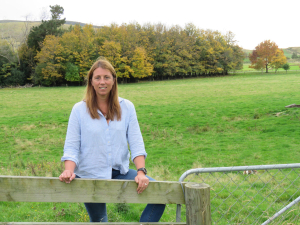
Farmgate lamb prices are down by 8%, beef cattle by 4.5% and farm expenditure up by 4.2%.
Kiwifruit growers are watchful but remain optimistic as concerns around the potential effects of the El Niño weather pattern this season.
Almond hulls sourced from Australian orchards may have the potential to help New Zealand cows reduce emissions, boost milk yield and lower input costs.
Striking a balance between meeting the needs of industry to speed up approval time for products but on the other hand ensuring that risks are properly assessed.
Surprised, humbled and quite thrilled. That’s the reaction of James Allen, one of the founding partners and now chief executive of AgFirst, on being made a life member of the Institute of Rural Professionals.

OPINION: The same mainstream media muppets that brought you Jacindamania in 2017 have been flat out pimping for the Opportunities…
OPINION: Your old mate reckons the atrocious way farmers in the UK are treated by their lords and masters in…