There is widespread anger and disbelief among farming leaders over the actions of MPI and MfE within the He Waka Eke Noa (HWEN) partnership.
Both ministries were touted by the Government as being 'partners' along with iwi and a number of farming organisations in HWEN, which had been involved in working on a joint counter proposal to put to government to deal with agricultural emissions and avoid them going into the ETS.
However, Rural News has discovered that with about a month before HWEN's proposal was due to go to the Government in May, the Ministry for the Environment (MfE) and Ministry for Primary Industries (MPI) suddenly announced that they would not be signing it because they were "conflicted".
This last minute walkout by the two ministries came as a complete surprise to the other members of the partnership who say they were led to believe the two ministries were 'genuine partners' like themselves. However, it seems they weren't. Rural News has been told the other HWEN partners felt they had been misled.
"We acted in good faith all along while it seems the Government did not."
On the HWEN website, the logos of MPI and MfE are still there as partners, but a question mark hangs over their real role. Were they just spies for government ministers, advisors to the group or just a bit of political fluff to dress the deal up as something it never was or would turn out to be?
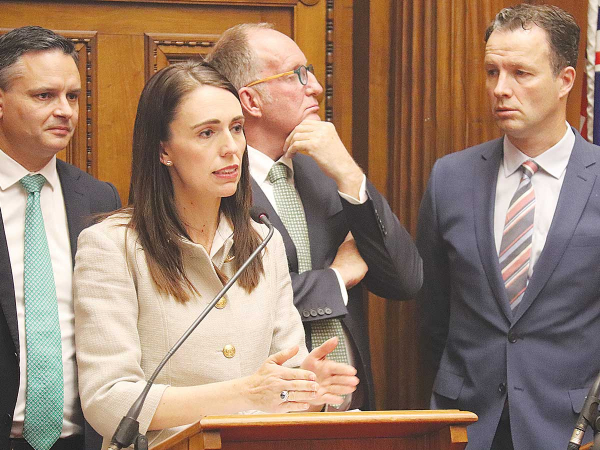
When the partnership was launched at Parliament in October 2019, Prime Minister Jacinda Ardern described the agreement as "a world first" and said, "it's great to see primary sector leaders sharing the same aspirations as the Government".
Climate Change Minister James Shaw added, “the agreement reached reflects a level of consensus never been reached in NZ before”.
Such words gave the appearance that HWEN was a genuine partnership between industry, iwi and government. But in the end, was it?
Federated Farmers president Andrew Hoggard told Rural News he can’t understand the justification MPI and MfE used in refusing to sign off on the submission that HWEN lodged in May – where they claimed they had to provide ‘independent’ advice to ministers.
“We should have been told that back in 2019. It should have been abundantly clear throughout this process to everyone that MPI and MfE wouldn’t be signing it,” he says.
“Quite frankly, I would argue if we knew that at the start, the May proposal would have been quite different.”
Hoggard says it was poor process and it should have been made abundantly clear from the start that both MPI and MfE were there in an advisory role, not as partners.
“There is a big difference to being an advisor as opposed to being a partner.”
Hoggard says, when the process started back in October 2019, the Prime Minister was talking up HWEN as an “historic government, iwi and industry partnership”. However, he says there was hint of government backtracking on this early this year, when they described it as an “historic iwi/industry agreement”.
“The word government was left out,” Hoggard says.
This lack of clarity or deceit about the real role of MPI and MfE is seen by many as a betrayal of good faith and vindicates comments by Federated Farmers, Groundswell and others that the Government can’t be trusted.
Throughout the process of preparing the May submission, Beef+Lamb NZ and DairyNZ were careful not to pick a fight with the Government – despite scepticism from many farmer groups to the contrary.
However, when the Government came back with its recent counter proposal, the narrative changed and both organisations have openly hit out as saying the counter proposal is ‘not fit for purpose’.