Beef + Lamb NZ's Lambing Kit Checklist for a Tough Season
With lambing underway in many regions, Beef + Lamb New Zealand is encouraging farmers to put together a wellequipped lambing kit to help minimise lamb losses, particularly in bad weather.




 increase font size
 B+LNZ Economic Service chief economist Andrew Burtt.
Sheep and beef farm input prices rose at a very slow pace in the year to March 2020.
On-farm inflation was 0.4%, according to the latest Beef + Lamb New Zealand (B+LNZ) Economic Service Sheep and Beef On-Farm Inflation Report.
The report identifies annual changes in the prices of goods and services purchased by New Zealand sheep and beef farms. The overall on-farm inflation rate is determined by weighting the changes in prices for individual input categories by their proportion of total farm expenditure.
B+LNZ Economic Service chief economist Andrew Burtt says large falls in interest rates held on-farm inflation at a low 0.4%.
“Of the 16 input categories, prices increased for 12 and decreased for four – fertiliser, lime and seeds; fuel; electricity; and interest – though the decreases were insignificant except for interest, which decreased by 7.2%,” says Burtt.
The most significant price increases were for insurance (+5.0%); repairs, maintenance and vehicles (+4.2%); rates (+3.7%); and animal health (+3.7%). On average these input categories account for 22% in total of farm expenditure.
“Even excluding interest, on-farm inflation was 1.5% – meaning it was already lower than the 2018-19 season, which may have given farmers a small reprieve,” says Burtt.
“Low interest rates continue to be important because not only does interest expenditure account for 14% of total farm expenditure, it is the only expense that has significantly decreased for farmers in recent years.”
The report covers the price of goods and services, not how much farmers spend on those goods and services.
As an example, individual farmers could have higher total interest expenditure due to higher debt levels, but on average will be paying less interest per dollar of debt.
Also, because the report covers the year to March 2020 the prices identified would not have been affected by COVID-19 and Burtt says it’s too early to know what impact the pandemic will have on on-farm inflation figures.
The full report is available here.
With lambing underway in many regions, Beef + Lamb New Zealand is encouraging farmers to put together a wellequipped lambing kit to help minimise lamb losses, particularly in bad weather.

Chinese beef trade quotas and a looming suspension of Brazilian beef imports into the European Union are expected to reshape global beef trade flows over the remainder of 2026, with implications for New Zealand exporters, according to Rabobank's Q3 Global Beef Quarterly report.
Will a stronger, more coordinated voice help rebuild confidence and improve returns in the wool sector?
Bovine Viral Diarrhoea (BVD) is sometimes viewed as a dairy industry issue, but the reality is that the disease can have serious consequences for beef breeding herds as well.
It’s official, lamb will take centre stage on Kiwi Christmas tables this year.

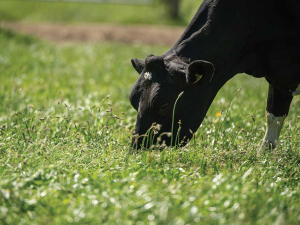
Farms across the upper North Island are trialling different pasture mixes as part of a research programme that aims to build greater resilience into farming systems.
Election years are always a concerning time for farmers, according to DairyNZ chair Tracy Brown.
The Ballance Farm Environment Awards are coming to the West Coast of the South Island.
Most dairy regions around the country have had a pretty good season so far says Tracy Brown.
Rural leader Mark Hooper has been appointed as an independent director to the NZPork board, bringing extensive farming, governance and advocacy experience to the role.


OPINION: The same mainstream media muppets that brought you Jacindamania in 2017 have been flat out pimping for the Opportunities…
OPINION: Your old mate reckons the atrocious way farmers in the UK are treated by their lords and masters in…