Fonterra FY26 Results: $9.69 Milk Price, $3.4bn Profit
Fonterra has unveiled its annual results for the 2026 financial year, posting $27 billion in revenue and close to $20 billion returned to New Zealand farmer owners and unit holders.




 increase font size
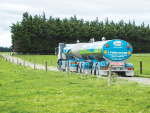
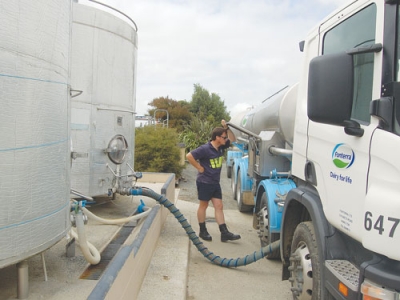 Fonterra’s milk collection in the South Island for March was 7% behind the same month in 2014.
Fonterra says milk collection in the South Island in March was 7% below last season.
The co-op collected 60 million kgMS in the South Island; soil moisture remains low across most South Island dairying regions.
“Scattered rain in March was not enough to ease the irrigation restrictions many farmers are still facing and extremely dry conditions continue to affect pasture growth rates,” the co-op says in its monthly global dairy update.
North Island collection in March reached 80 million kgMS, in line with March last season.
Fonterra says rain in March, consistent with long-term averages, supported for milk volumes. However, dry conditions remain across most dairying regions and follow-up rain is needed to hold milk production in line with last season over the coming months.
In Australia, milk collection for the nine months to March 31 reached 100 million kgMS, 6% higher than the same period last season.
Milk collection in March reached 9mkgMS, 9% ahead of March last season. Most dairying regions, Tasmania in particular, received some rain, favouring pasture growth. Western Victoria produced much more than last season and Tasmania is tracking in line with last season.
Meanwhile milk production worldwide has been subdued, Fonterra says.
EU production in January was in line with the same month last year, the first month since June 2013 with no growth in milk production. Ireland had the largest decrease, down 14%. Only the UK and Poland grew production in January.
US production in January increased 2% over January 2014. This increase was below market expectations and affected by reduced production in the major dairy states California, New Mexico, Texas, Washington, Oregon and Idaho. Argentina and Uruguay production data for January is not complete. Production in December decreased 1% over the same month last year.
Australian production in January increased 1% over January 2014. Production decreased in Victoria but increased 7% in Tasmania.
Meanwhile, New Zealand exports in January increased 3% over January 2014.
This was driven by SMP and AMF increasing 25% and cheese increasing 21%. But WMP decreased 10% to 137,000 tonnes.
Australian exports in January decreased 3% over January 2014. Increases in most major dairy categories including SMP, fluid and fresh dairy, cheese and whey powder were offset by a large decrease in WMP, down 62%.
EU exports in December increased 8%; US exports in January decreased 22% over January 2014.
Fonterra has unveiled its annual results for the 2026 financial year, posting $27 billion in revenue and close to $20 billion returned to New Zealand farmer owners and unit holders.
Fonterra Co-operative Group has confirmed the independently assessed candidates standing for election to its board in 2026.
Fonterra has revised its Farmgate Milk Price forecast for the 2026/27 season, lifting the midpoint and narrowing the range on the back of improving global dairy commodity prices.
Outgoing Fonterra Co-operative Council chair John Stevenson says that it has been a privilege to represent the co-op's farmer shareholders.
OPINION: It seems Canterbury processor Synlait is still in the doldrums.



Federated Farmers says it welcomes Labour's commitment to reviewing the Sharemilking Agreements Act, calling on other major parties to do the same.
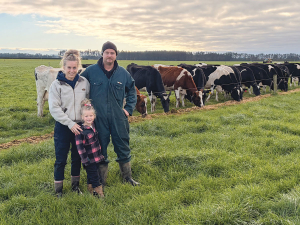
For Canterbury dairy farmers Sian Meijer and Rick Wobben, wearable technology has become one of their most valuable on-farm tools - helping manage 1850 cows across an expansive, high-performing dairy operation while improving efficiency, mating outcomes and day-to-day decision making.
Fonterra has unveiled its annual results for the 2026 financial year, posting $27 billion in revenue and close to $20 billion returned to New Zealand farmer owners and unit holders.
The first major update to the Dairy Cattle Code of Welfare in more than a decade has been released, marking what DairyNZ describes as an important step in ensuring animal welfare standards continue to evolve alongside scientific evidence and on-farm realities.
Ravensdown shareholders have elected Jane Montgomery and Kate Acland to the Ravensdown Board for three-year terms, following a closely contested director election.
Federated Farmers says new legislation replacing the Resource Management Act will cut red tape, unlock investment and help grow New Zealand's export-led economy, after the Planning Bill and Natural Environment Bill passed their third reading in Parliament yesterday.




OPINION: The same mainstream media muppets that brought you Jacindamania in 2017 have been flat out pimping for the Opportunities…
OPINION: Your old mate reckons the atrocious way farmers in the UK are treated by their lords and masters in…