Federated Farmers Welcomes ACT’s New Farming Policies
Federated Farmers has welcomed new rural policies released by ACT, saying they align closely with its own election priorities.




 increase font size
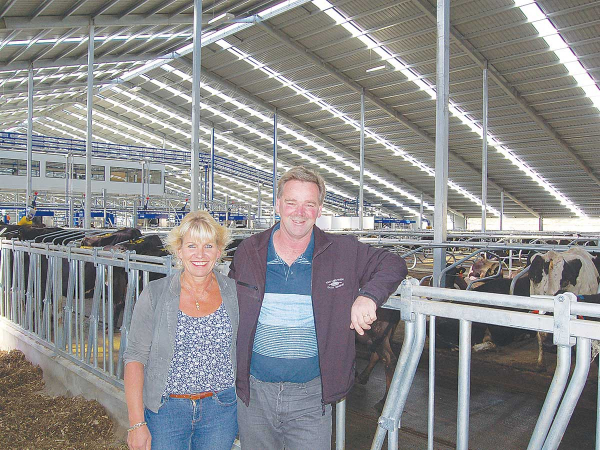 VLG owners Aad and Wilma van Leeuwen.
Canterbury farmer and former Federated Farmers dairy leader Willy Leferink says farmers shouldn't let banks run their businesses.
His comments come in the wake of one of New Zealand's largest dairy farm operators falling into receivership.
With the milk payout at near-record levels and low interest rates, the collapse of Van Leeuwen Group (VLG) has caused dismay among farmers.
Leferink points out that VLG encountered difficult days after the outbreak of M. bovis in 2017 when the payout wasn't as high. He told Rural News that he'd heard an Australian finance company had put Van Leeuwen Group into receivership.
"We think of banks as our friends. Now, I'm not saying they are our enemies, because I owe lots of money to the bank and they are a good tool," Leferink told Rural News.
"But we've got to run our own businesses. Once we let the bank run our businesses, we are in their hands."
On April 21, Calibre Partners wrote to VLG creditors saying it had been appointed receivers by Merricks Capital VLG Fund.
In a letter to suppliers on the same day, receivers Brendon Gibson, Neale Jackson and Natalie Burrett, said they are now in control of the assets of businesses of VLG.
They intend to continue running the business, which comprises 10 dairy platforms and four support blocks with 8,000ha under management, milking approximately 10,000 cows. It also includes the world's largest robotic farm.
Owned by Aad and Wilma van Leeuwen, the business was among a number of other farms around New Zealand affected by Mycoplasma bovis, which hit the VLG farms in July 2017.
The van Leeuwens were also embroiled in a legal battle with Ministry for Primary Industries (MPI) in a dispute about compensation.
They have already been paid out $63 million by MPI, but sought further compensation for professional consultancy fees, bank charges and assorted other costs.
In late 2019, VLG refinanced its operations under a $140 million deal with Australian-based funds manager Merricks Captial, its first foray into the NZ agricultural market.
Merricks described its entry into New Zealand as an opportunity for New Zealand businesses.
"In an agricultural industry that is starved of capital, we provide a flexible, agile, alternative lending option for customers in New Zealand. We are here to fill the void left by banks to ensure that the New Zealand market has access to the capital it needs to thrive," the statement said.
In February this year, Merricks announced that a related entity had loaned $12.7 million to Happy Valley Nutrition, the company behind a new $280m milk processing plant in Otorohanga.
Federated Farmers has welcomed new rural policies released by ACT, saying they align closely with its own election priorities.
Federated Farmers is backing Feilding High School’s call to keep Agriculture and Horticultural Science as a standalone subject in Year 11.
National’s pledge to introduce 19 new national standards shows the party is serious about getting Wellington out of farming, Federated Farmers says.
Mobile phone coverage and reliability are deteriorating in rural areas, and farming families are bearing the cost, according to a Federated Farmers survey.
Central Otago District Council (CODC) has voted against a plan to spread treated sewage sludge from Cromwell and Alexandra on farmland near Lauder, a decision Federated Farmers says reflects strong opposition from rural residents.


Federated Farmers has welcomed new rural policies released by ACT, saying they align closely with its own election priorities.
Rural Contractors NZ says proposed changes to land transport rules for agricultural vehicles are a welcome response by the Government to out of date regulations which have seen members hit with huge fines.
Alliance is calling for final applications for its 2027 Graduate Programme, with applications closing on Sunday 25 October.
Decades piloting planes has ensured vet and farmer David Hayes is focused on safety. So, after a serious accident while welding on farm, he is sharing his experience so others can learn from it.
Canterbury milk processor, Synlait Milk has confirmed Leon Fung as its chief executive officer.
OPINION: Making it easier to collect rainwater and use it to grow crops and livestock is a no brainer.


OPINION: The same mainstream media muppets that brought you Jacindamania in 2017 have been flat out pimping for the Opportunities…
OPINION: Your old mate reckons the atrocious way farmers in the UK are treated by their lords and masters in…




