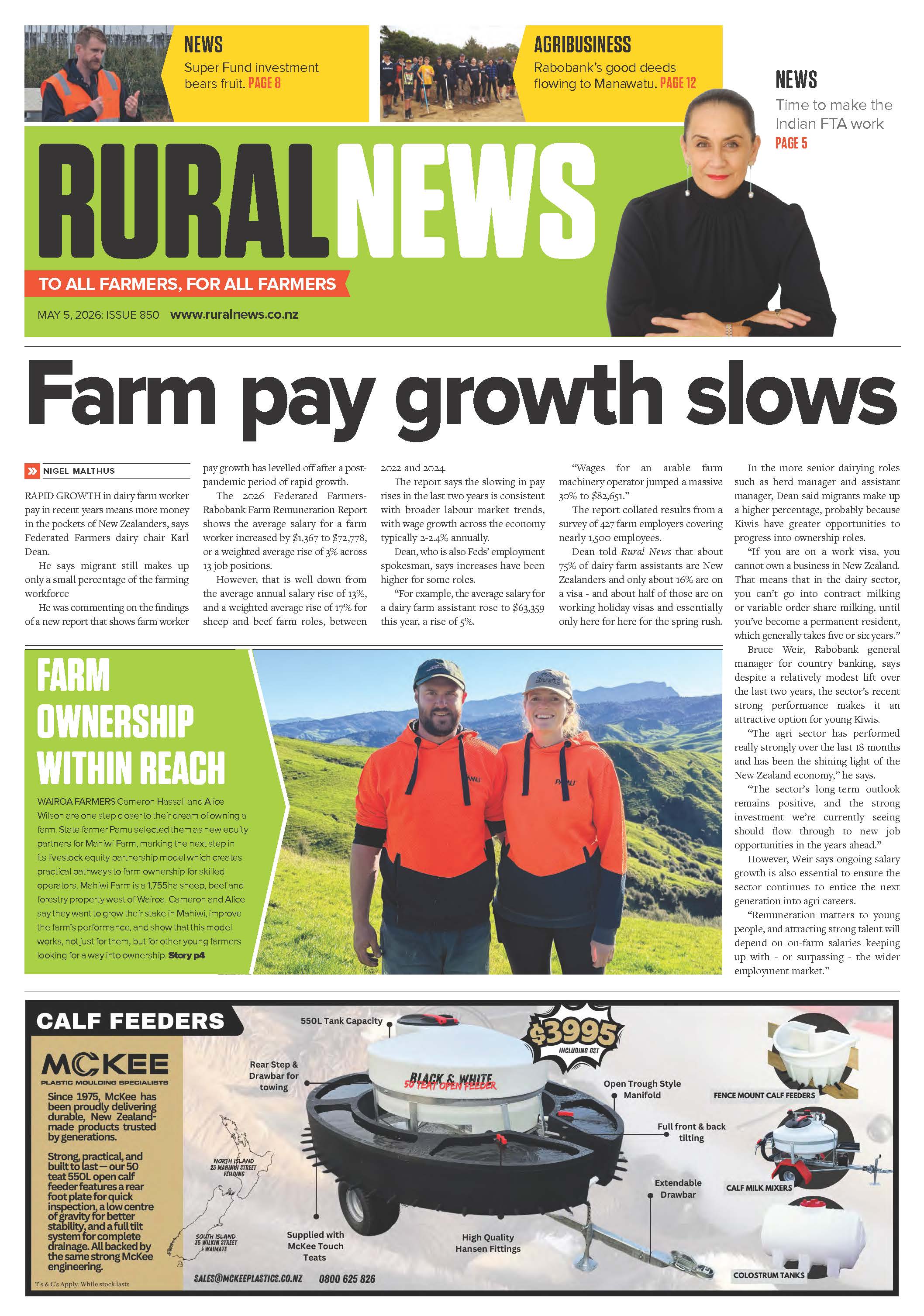
Government Declares Medium-Scale Adverse Weather Event in Bay of Plenty, Gisborne/Tairāwhiti, and Canterbury
Recent weather events in the Bay of Plenty, Gisborne/Tairawhiti, and Canterbury have been declared a medium-scale adverse event.




 increase font size

NIWA is forecasting a warm, early spring. Temperatures over the August to October period are "very likely" to be above average in the North Island regions and in the north of the South Island. They are "likely" to be average or above average in the east and west of the South Island.
Nevertheless, cold snaps, frost and snow conditions will still occur in many areas from time to time, as is typical of this time of year. Sea surface temperatures are also forecast to be above average along the east coast of New Zealand and further offshore, with conditions close to average to the west and in the Tasman Sea.
Rainfall for the August–October is forecast to be normal or above normal in the east and north of the North Island and the west of the South Island, while normal or below normal rainfall is likely for the west of the North Island and the north of the South Island.
Normal rainfall is expected for the east of the South Island. Soil moisture levels and river flows are likely to be normal or below normal in the north of the South Island and the west of the North Island, normal or above normal in the north and east of the North Island as well as the west of the South Island. Normal soil moisture levels and river flows are forecast for the east of the South Island.
The equatorial Pacific Ocean remains in a neutral state (neither El Niño nor La Niña) despite some patterns reminiscent of a weak La Niña. International guidance indicates that neutral conditions are the most likely outcome over the coming three months.
Higher pressures than normal are forecast south of the country, while lower pressures than normal are expected to the north over Australia and the Coral Sea. This circulation pattern is expected to produce a weaker than normal westerly flow over New Zealand.
Recent weather events in the Bay of Plenty, Gisborne/Tairawhiti, and Canterbury have been declared a medium-scale adverse event.

Agriculture and Forestry Minister Todd McClay is encouraging farmers and growers to stay up to date with weather warnings and seek support should they need it.
With adverse weather set to rain down on the Top of the South, the Bay of Plenty and parts of Northland, Agriculture Minister Todd McClay says farmers, foresters, and growers need to prepare for possible challenges.
Rural Communities Minister Mark Patterson says the present weather conditions remain challenging for farmers.
While it has been a great spring and summer for farmers, soil moisture levels in the Waikato are now plummeting as the dry February starts to bite.


OPINION: Farmers around the country are welcoming the proposed reform of local government.
A move to boost farmer uptake of low methane emitting sheep is underway.
Silver Fern Farms has tackled the ongoing war-induced shipping challenges to mideast markets by airlifting 90 tonnes of chilled New Zealand lamb and beef to the United Arab Emirates.
The primary sector is leading New Zealand's economic recovery, according to economist and researcher Cameron Bagrie.
Dairy industry leader Jim van der Poel didn't make much of the invitation he received to the recent New Zealand Dairy Industry Awards in Rotorua.
Farmers around the country are going public big time, demanding their local district, city and regional councils come up with amalgamation plans that meet the needs of rural communities and don't allow urban councils to dominate.





OPINION: The old saying 'a new broom sweeps clean' doesn't always hold up, if you ask the Hound.
OPINION: This old mutt went to school to eat his lunch, but still knows the future of the country, and…