JD enhances harvesters
John Deere has enhanced its grain harvesting line-up, covering the 600C corn heads and 600F Hydraflex draper units.




 increase font size
Combine harvesters are the final piece of the jigsaw in growing a successful crop.
While Cyrus Hall McCormick is credited with inventing the reaper in 1834 – and starting the mechanisation of cereal production – it took a lot longer to see the harvester we know today.
The Sunshine Company of Australia produced the auto header in 1923, about when Curtis Bros produced the first Gleaner. Massey Harris, Canada, produced the first self-propelled units in 1937, the first Claeys in 1952 and the Claas Herkules in 1953.
For the last 80 years look and layout haven’t been said to have changed much – until now.
In January 2016 The Tribine Company of Newton, Kansas, will start making an innovative new combine design that will turn the look of the conventional combine on its head.
Brought about by the vision of Ben Dillon over 15 years, the new Tribine harvester comprises a front and rear section which articulates through a central joint with 30˚ of lateral oscillation. The front half of the unit derives from an AGCO gleaner S77 rotary combine with the grain tank removed, and the rear unit is a 27 tonne capacity chaser bin. The latter is around twice the capacity of the largest conventional machines now in the marketplace.
“The unconventional design will enable cropping farmers to realise greater profitability by reducing labour costs, having less capital tied up in machinery and reducing ground compaction,” the company says.
In use, the front part of the machine threshes and cleans the grain in the normal fashion, powered by the 370hp engine; it then transfers the clean grain to the cavernous holding tank via a 30cm diameter transfer auger. Chopped straw, chaff and MOG exit the rear of the front unit and are distributed back onto the ground by a pair of high capacity, hydraulically driven fans.
The system uses three hydraulic pumps to power the all-wheel-drive, all-wheel-steer and unloading auger systems. The latter, located at the rear of the holding tank, uses a 7m long x 56cm diameter auger to discharge at 13.5 tonnes/minute to empty the tank in just two minutes.
With an overall length of 10.6m and a width of 4.4m, the machine is no shrinking violet. Its articulation ensures great manoeuvrability and its steering has a crab steer mode.
Extensive use of aluminium panels keep overall weight down, though the machine weighs 45 tonnes fully loaded.
This weight is carried on 1200mm wide tyres of 1800mm diameter and the company notes that the ground pressure exerted is less than conventional units due to the large footprint of these tyres. It also points out that the combined weight of a conventional harvester and a 200hp tractor pulling a 27 tonne chaser bin far exceed the Tribine’s payload.
John Deere has enhanced its grain harvesting line-up, covering the 600C corn heads and 600F Hydraflex draper units.
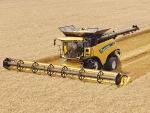
The New Holland flagship CR 10.90 holds the Guinness World Record for harvesting nearly 800 tonnes of wheat in eight hours at nearly 100 tonnes/hour average.
Toplink Machinery has added the Samasz range of grassland machinery to its stable at Te Awamutu.
NEW HOLLAND Agriculture has reclaimed a Guinness World Record title by harvesting 797.656 tonnes of wheat in eight hours with the world’s most powerful combine – the 653hp CR10.90.



Healthy snacking company Rockit has announced Wang Yibo, one of China's most influential celebrities, as its new brand ambassador.
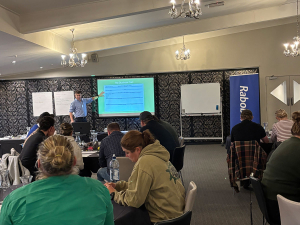
Rabobank has celebrated the tenth anniversary of its AgPathways Programme, with 23 farmers from Otago and Southland gathering for two-and-a-half days to learn new business management and planning skills.
Adopting strategies to reduce worm burden on farm goes hand-in--hand with best practice farm management practices to optimise stock production and performance, veterinarian Andrew Roe says.
Last night saw the winners of the 2026 Beef + Lamb New Zealand (B+LNZ) Awards named at a gala dinner at Te Pae Christchurch Convention Centre.
A 12-month pathway programme has helped kickstart a career in dairy for an 18-year-old student-turned-farmer.
Zespri says its global fruit sales revenue has reached a record NZ$5.9 billion from sales of 248.1 million trays.


OPINION: The old saying 'a new broom sweeps clean' doesn't always hold up, if you ask the Hound.
OPINION: This old mutt went to school to eat his lunch, but still knows the future of the country, and…