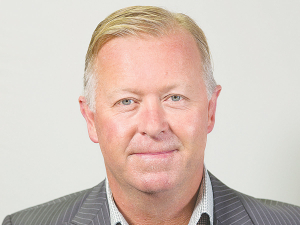
Made in New Zealand is a feature that looks at the wealth of design and manufacturing ability we have in New Zealand. This week machinery editor Mark Daniel takes a closer look at Combi Clamp Limited, catching up with managing director Wayne Coffey.
Q- When was the company founded, by whom and why (was it to solve a problem or market a product)?
The company was founded in 2002 by my wife Lynley and me while managing a farm in Taihape. With 11,000 ewes and a sheep handler the sheep didn’t like, we realised we needed something more user- and stock-friendly.
Q- Where are you located? Is it single or multiple sites and how many people are employed?
In 2017, we purchased our workshop in Kaimanawa Street, Palmerston North, where we currently employ six full time staff, plus two sales representatives who cover New Zealand and Australia.
We also have an agreement with Ritchie Agricultural in Scotland who manufacture and sell the Combi Clamp under licence.
Q- What are your key products and which markets do they serve?
Our extensive range includes the Combi Clamp Sheep Handler with a range of options, including 3 Way Drafts, Weighing, Gadget Holders, Races, Wheel attachments, Wool Classing and Lamb Cushion Walls.
Our wide range of cattle crushes are aimed at general, heavy-duty and vet operations, with options including Auto Head Yoke, Sliding Gate, Anti Backing Ratchets and Offside Gate Openers.
Q- Are your products unique? If so, what are the four key benefits? If not unique, what are the four unique selling points?
The Combi Clamp is unique because it catches sheep with the operator’s bodyweight being the mode of power. It is quiet because there are no power-driven air or hydraulics, meaning there’s nothing to go wrong, so maintenance is minimal. The HD Cattle Crushes follow the same principles, all featuring our Auto Head Yoke, where cattle catch themselves.
Q- Looking at an ever-evolving market, what changes have you made over the last few years, or what will you have to do in future (design or manufacturing changes, reworks to enter new sectors or the incorporation of electronics)?
The world has become a throwaway society, but living with a wife who thinks everything should last 30 years, we keep building equipment stronger to handle bigger animals.
Q- What has been the company’s greatest success since its formation?
Our greatest success is measured by the positive client feedback that we receive. We have sold thousands of handling systems in the UK, EU, Ireland, Canada, North America, Australia and NZ.
Q- In contrast, what has been the biggest ‘oh bugger’ moment or the steepest learning curve?
Our biggest learning curve was that we should have moved to in-house manufacturing earlier than we did. Manufacture by a third party meant margins were too tight to grow the business. Manufacturing in-house means we can make changes more easily and work on R&D with new product development.
Q- If you were approached by someone looking to start a business, what would be your three key pieces of advice?
Do your research and develop your product before hitting the market to be in front with momentum. Believe in and back yourself, because if you aren’t confident, you may end up a statistic and finally, it’s all about the people not the product.