Friday, 04 March 2022 09:55

Benefits many and varied of reducing soil compaction

Written by  Mark Daniel
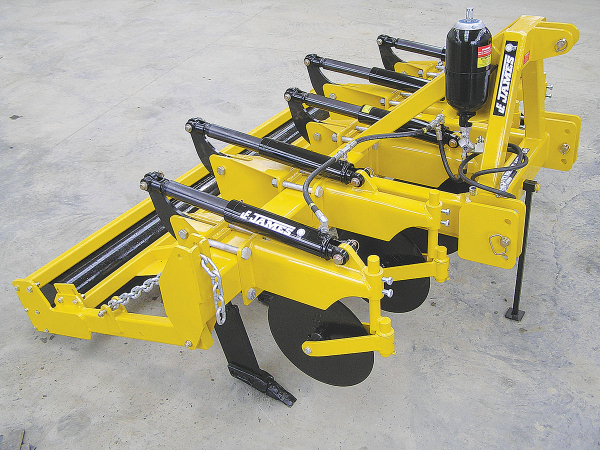
The James Soil Aerator is designed and built to overcome compaction in heavy soils. The James Soil Aerator is designed and built to overcome compaction in heavy soils.

For many years, reducing soil compaction has been recognised as an efficient way of increasing production for grassland and arable operations.

While there are many products in the market, key design features can have a major effect on the efficiency, horsepower requirements, output and ultimately final surface finish.

The James Soil Aerator was designed and built to overcome compaction in heavy soils. This is often demonstrated by surface ponding after rainfall, shallow root systems and restricted plant growth or output.

The five-leg aerator is a linkage-mounted design, centred around a heavy-duty frame for durability with inherent weight to aid penetration in difficult conditions. Operating to a working depth of 23cm, the initial lifting and subsequent ‘wave’ effect creates a vertical slot and horizontal fissures, creating drainage, oxygenation and deeper root systems.

The process also promotes the release of ‘locked’ minerals that are typically unavailable because of a lack of oxygen. MPI trials in Southland showed that ‘aerated’ paddocks on average produced 21.7% more dry matter over a 15-month period.

Up front, the machine has individual disc assemblies, which slice through the soil surface and shallow root systems. This allows easy entry for the aerator leg, as well as reducing surface damage to the sward. 

Each of the five legs on the machine are manufactured from high-grade carbon steels, each is inclined slightly forwards to aid penetration and help ‘pull’ the machine into the ground. Each leg is fitted with an adjustable and replaceable shin to prevent excessive wear to the main part of the leg. At the base of the leg, a heavy-duty ‘frog’ assembly carries a replaceable point that creates the initial ‘lift’ and initiates the ‘wave effect’, which creates ground shatter and allows working depths of up to 25cm.

Integral to the machine is a hydraulic auto-reset system, which removes the problem of overload and the frustratingly time-consuming issue of broken shear bolts. Importantly, the machine can be easily adjusted to suit prevailing conditions, such as rock burdens or sub-surface timber. At the same time, it acts as a shock absorber system for the aerator and the tractor rear linkage.

At the rear of the machine, a full-width smooth roller and scraper assembly serves to level any surface imperfections, which ensures that aerated pastures or paddocks can be quickly returned to production.

jamesengineeering.co.nz

More like this

New CLAAS Swath Turner Fixes Twin-Rotor's Blind Spot

Twin rotor swathers have become the ‘go-to’ for forming swaths to feed hungry harvesters and balers, however, the design layout often means that crop located between the two rotors is not picked up, turned over or incorporated into the swath formed for subsequent harvesting.

Motueka Farm Machinery Sold as Sturgeons Retire After 44 Years

Close to the Abel Tasman and Kahurangi National Parks, Motueka is known for apples, pear and kiwifruit orchards, alongside specialised crops such as hops. Indeed, that specialisation, saw the area being the New Zealand centre of the tobacco growing, until the early 1980s.

Can-Am Unveils 2027 SSV, ATV Range With New Defender HD10

Can-Am has introduced its 2027 range of side-by-side vehicles (SSV) and all-terrain vehicles (ATV), including the industry leading Defender, the Maverick R and the hugely capable Outlander ATV, incorporating a host of advancements designed to deliver an exceptional riding experience.

Featured

Ah Tatua, You've Done It Again!

Waikato milk processor Tatua has again declared a record milk payout to farmer shareholders, leaving other processors in the dust.

India FTA Unites NZ First, Greens

National’s much-touted free trade deal with India featured in the Rural Issues Debate at Mystery Creek, Hamilton on Wednesday night.

2026-27 Fishing Season Opens Across New Zealand

New Zealand's 2026-27 freshwater fishing season has opened, with anglers encouraged to head to rivers and lakes over the coming days as conditions look favourable across much of the country.

CODC Rejects Plan to Spread Sludge on Lauder Farmland

Central Otago District Council (CODC) has voted against a plan to spread treated sewage sludge from Cromwell and Alexandra on farmland near Lauder, a decision Federated Farmers says reflects strong opposition from rural residents.

National

Machinery & Products

» Latest Print Issues Online

The Hound

'LinkedIn Greens'

OPINION: The same mainstream media muppets that brought you Jacindamania in 2017 have been flat out pimping for the Opportunities…

UK Warning

OPINION: Your old mate reckons the atrocious way farmers in the UK are treated by their lords and masters in…

» Connect with Rural News

» eNewsletter

Subscribe to our weekly newsletter