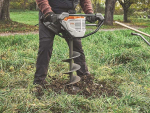
Stihl Launches BT140, Its First Battery-Powered Auger
With battery tools becoming more widespread and more importantly, productive and reliable, it was only time before we saw augers or post-hole borers.




 increase font size
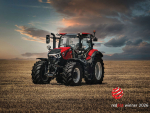
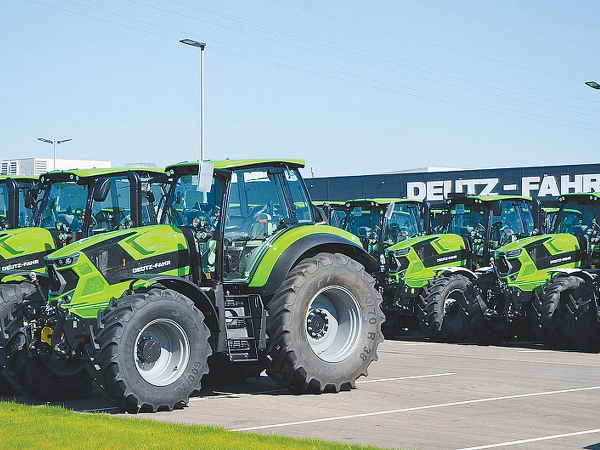 European tractor registrations for 2021 reached their highest level in the last decade.
Despite ongoing problems caused by Covid, European tractor registrations for 2021 were up by around 17% over 2020 and reached their highest level in the last decade.
It’s reported that the market reached 230,000 “tractors” across Europe. However, the trade association CEMA reports the number of real tractors was just under 180,00 units – after removing quad bikes, side by side vehicles and telehandlers that are all recorded in the overall numbers in some countries.
While several factors caused production delays, levels of demand remain high – probably due to the high and rising agricultural commodity prices.
The United Nations Food and Agriculture Association reports that 2021 food prices averaged around 28% higher than 2020, reaching their highest level since 2011.
Registrations varied from country to country. However, the key markets of France and Germany, which jointly account for four out of ten of all tractors registered in Europe, saw rises of 10% and 9% respectively.
In contrast, growth in Italy and Poland – the third and fifth largest markets – were especially strong at 36% and 42% respectively. Adjusted numbers saw France record a total of 36,053 tractors, Germany 34,472 and Italy around 24,000 units.
CEMA reports that while demand currently remains high, its members are expecting to see a shortage of product over the coming months; Particularly for tractors and harvesting, thereby putting pressure on expected delivery dates for harvest in July and new season cultivations in the European autumn.
CEMA also cities ongoing disruptions because of Covid-related staff shortages, transport and logistics – particularly the shortage of shipping containers.
From a manufacturer perspective, most companies are reporting that they expect production disruptions over the coming months. Mainly because of the ongoing Covid situation, but also increasingly due to a shortage of component supplies – such as wiring looms that are usually produced in the war-torn Ukraine.
With battery tools becoming more widespread and more importantly, productive and reliable, it was only time before we saw augers or post-hole borers.
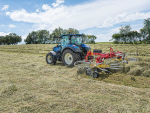
Austrian manufacturer Pottinger has released details of a new compact, linkage-mounted compact twin rotor rake, without a chassis, that is said to deliver impressive manoeuvrability.
The new Lemken Saphir XMR mechanical seed drill has been introduced as the successor to the proven Saphir 10m, with the manufacturer claiming new standards for precision, ease of use and area coverage.
Krone's XDisc 710 direct-cut header can now be used by John Deere and New Holland forage harvesters, as well as the Krone Big X it was originally designed for.
Fifty Eight years ago, on the 16th of August 1968, August Claas, the founder of the harvesting company and father of Helmut Claas, personally presented a Claas Senator combine harvester to Scottish farmer John Steven.

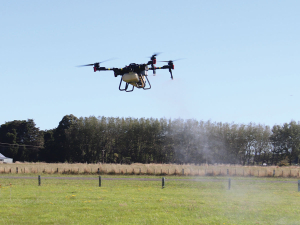
OPINION: David Seymour and James Meager's plan to make it easier for farmers and orchardists to operate drones can best be described a 'courageous' move.

New Zealand wool is reaching new heights as air filtration companies move away from synthetic products to biodegradable alternatives.
Opuha Dam's ability to protect South Canterbury communities from major flooding has taken a significant step forward, with Opuha Water Limited (OWL) successfully commissioning a new outlet valve capable of releasing record volumes of water from the dam ahead of a weather event.
There's been widespread support from the primary sector for the Government's announcement on changes to freshwater farm plans that come under the Natural Environment Bill, which is now set to replace the existing RMA.
A partnership between state-owned enterprise Pāmu (Landcorp Farming Limited) and charity Meet the Need is putting more than quality New Zealand beef into food bank parcels this year.
The Opportunity Party has faced criticism during the election campaign that its policies are too urban-focused and offer little for rural communities.



OPINION: The same mainstream media muppets that brought you Jacindamania in 2017 have been flat out pimping for the Opportunities…
OPINION: Your old mate reckons the atrocious way farmers in the UK are treated by their lords and masters in…