Landpower had joined other agri-companies in sponsoring $850,000 of agricultural technology, service and advice for Lincoln University.
This is for a three years of research aimed at improving the performance and viability of New Zealand dairy farming.
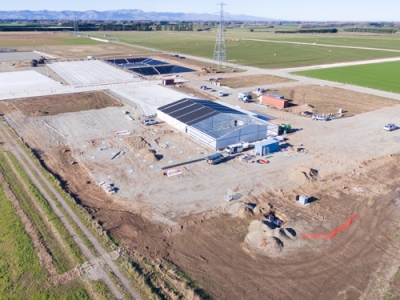
The venue is Ashley Dene Research and Development Station where a dairy conversion is now almost complete. It will have 175ha of land carrying 530 cows milked in a 54 bail rotary shed, with supporting feed and stand-off pads. Various dairy farming systems will be integrated with arable and livestock farming.
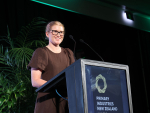
Lincoln University farms director Dr Teresa Moore says the research will include farm profitability, animal welfare and environmental performance.
"It has been a great pleasure to engage with the supporters over this dairy conversion and what it means to NZ, she says. "They wanted to get behind Lincoln University and the valuable environmental research that is needed to ensure everyone's longevity in farming. They see merit in our objectives for this farm and want to support it as worthwhile and effective."
Other supporters include OPUS International Consultants, Waikato Milking Systems, PGG Wrightson and Genetic Technologies (Pioneer).
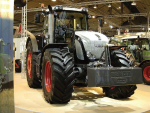
Under the arrangement, two CLAAS ARION 430 CIS tractors, a JCB Loadall 536−60 Agri Super telehandler and a Trioliet Solomix 1 ZK mixing wagon are on site and will be followed by a Fliegl VFW slurry wagon, AMAZONE ZA-TS Super fertiliser spreader and CLAAS DISCO 3600 Contour mower over the coming months.
Claas Harvest Centre chief executive Richard Wilson says the research project offers benefits for all.
"The outcomes of this research will help to build a stronger and more sustainable dairy industry and give us a great opportunity to showcase how our technology and service can support dairy producers.
"In turn, the next generation of agricultural students will gain first-hand appreciation of [the latest] technology during their education, carrying with them into their first job and subsequent careers."