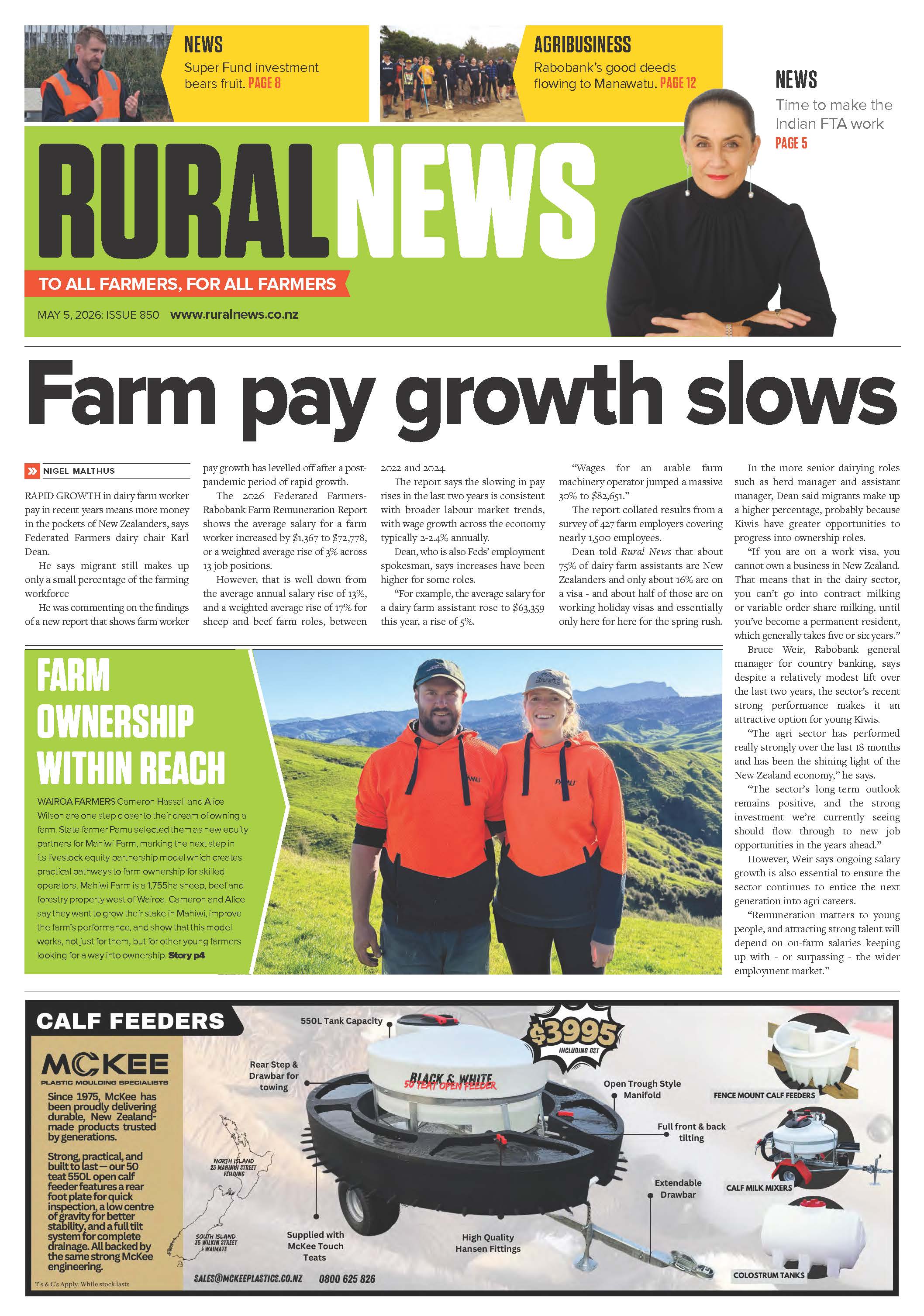
The Eastern Institute of Technology (EIT), Work and Income NZ and local iwi joined John Bostock, owner of JM Bostock Ltd, in training people in orchard work.
The partners set up an EIT level-three, 20-week sustainable fruit production course with theory and practical modules. The theory mirrors the orchard cycle to help the students’ learning.
Bostock says the scheme, run at his orchard, ticks the right boxes for growers and creates job prospects for graduates.
“The key for us is getting these trainees into full time work rather than just seasonal jobs. We are helping up-skill them, so they can easily apply what they learn to a real job in an orchard.”
Fourteen students completed a course in November 2013 and all got jobs. Among them were Jason Cunningham and his two sons who began working for JM Bostock Ltd.
“We have job security now, so it takes the stress away. I used to get low when I knew the seasonal work was coming to an end and I had to go back on the dole. But this course gives me more purpose in life and direction.”
Bill Neilson also got a full-time job with JM Bostock Ltd and says the course has opened doors for him.
“Two years ago I was a dole bludger, doing nothing but sitting on the couch. Now I’m out in the sun picking apples. I look forward to getting up each day. I’m setting a good example to my children by working. It gives them the incentive to get out there and work for a living too.”
EIT horticulture tutor Erin Simpson says having the classroom on an orchard helps give the students hands-on experience. While teaching the theory, Simpson was able to take students from the classroom into the orchard to bring the theory to life.
“Industry buy-in has been a key to this course taking off. It ensures we are providing programmes to meet industry needs. The students start with pruning, pest and disease control, tractor driving, orchard machinery usage, irrigation, maintenance and thinning, so it’s sequential through the season and means at the end they have the right practical skills to get a job.
“The timing is ideal because when they finish the course in November there are plenty of jobs out there for them.”
Bostock has been encouraging other growers to back the sustainable fruit production scheme and as a result more growers are providing support.
“If we all get together and each do a little bit we can make a big difference. Unemployment creates social challenges in Hawke’s Bay, so if we are all paddling in the same direction it will help.”
The first-time graduates were recently treated to a ceremony at the Te Aranga marae, Flaxmere, where their achievements were recognised.
Applications are open for the next course starting in March.