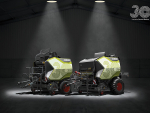
Claas Balers Turn 30
Claas built its first variable chamber round baler - the Variant 100 - in 1996, so 2026 marks 30 years and the fifth generation of the Variant name, recently complemented by the new Cerex Series introduced in 2025.




 increase font size
 Separating plastic waste from net wrap is not the nicest task on a cold wet morning.
Wrapped round bales make life easier during feeding out, but they present the problem of plastic waste needing to be separated from net wrap.
Separating the two is not the nicest task on a cold wet morning.
German manufacturer Krone has introduced a system for its Comprima and Comprima X-treme models that allows peripheral wrapping, said to have a number of advantages.
By increasing the density on the perimeter of the wrapped bale, the peripheral film reduces the bales' tendency to expand and take in air. This increase helps reduce mould growth and ultimately improves the quality of the baleage.
There is also the added benefit of not needing to separate net wrap and bale film for recycling, as only one product is being used.
In practice, there are also time saving benefits during the wrapping cycle as the conventional wrapping can proceed immediately after peripheral wrapping without any interruption, as well as saving on the overall amount of film being used
Changing from traditional net to film is as easy as swapping rolls, with Krone recommending the use of 1280mm wide Krone Round Wrap which will cover bales from edge to edge. This product is said to have excellent adhesive properties and has a five-layer construction to help maintain bale shape.
The new peripheral wrap system can be fitted as a factory option on new machines or retro-fitted to all Comprima models built since 2014.
For more information contact www.tulloch.co.nz
Claas built its first variable chamber round baler - the Variant 100 - in 1996, so 2026 marks 30 years and the fifth generation of the Variant name, recently complemented by the new Cerex Series introduced in 2025.
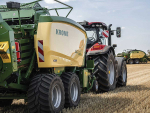
Recently revealed, Krone’s new Series Six, BiG Pack Plus and Pro balers are designed to use standardised components, interfaces, and control concepts, including pick-up, knotter systems and user interfaces.
Krone's XDisc 710 direct-cut header can now be used by John Deere and New Holland forage harvesters, as well as the Krone Big X it was originally designed for.
Already known for its extensive range of mowers, tedders and swathers, German manufacture Krone looks to be joining the trend in the swather sector, following the release of its first belt merger, the Swativo T1040 Pro.
While turnover was back slightly at €2.3 billion in 2024/2025 (previous year €2.4 billion), the German Krone Group saw earnings fall from €107 million to €40.1 million.

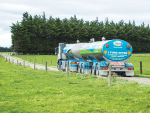
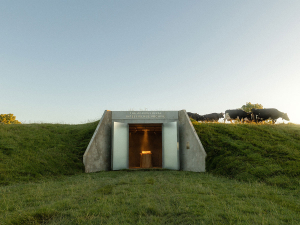
Halter has launched Mav, an AI farming assistant that lets dairy farmers ask questions about their herd and pasture and get answers drawn from the data the company’s collars already collect.

OPINION: At first glance it appears that Father Christmas has delivered the rural sector good tidings, with most pundits predicting the return of the centre-right coalition.
For 15 years, Glenda Rees has travelled from Gore to Awarua, often several times a week, to keep watch over one of the country’s rarest birds.
With some farmers opposing a government-industry partnership set up to develop methane reducing products, one NZ company claims that it already has a product on the market.
During the nesting season, from September to December, industrious starlings can quickly build nests in the darker areas behind tractor and vehicle, usually close to hot engines, typically resulting in localised damage or in some cases complete write-offs.
The meat processing industry is much more collegial than it was in the past and is now more focused on common goals.



OPINION: The same mainstream media muppets that brought you Jacindamania in 2017 have been flat out pimping for the Opportunities…
OPINION: Your old mate reckons the atrocious way farmers in the UK are treated by their lords and masters in…