
Lanaco and Blueair Launch World-First NZ Wool Air Filter
New Zealand wool is reaching new heights as air filtration companies move away from synthetic products to biodegradable alternatives.




 increase font size
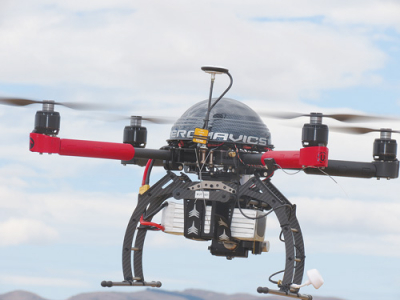 Unmanned Aerial Vehicles (UAV’s) or dones continue to gain favour in the agriculture sector.
A UK research company suggests the market for agricultural robots and drones, now about $3 billion annually, will balloon to $10b by 2022.
Acceptance of GPS technology in the past decade – just look at its use in cars – has grown to where farmers use this technology, with superb accuracy, to apply fertiliser and sprays. Tractors can now achieve sub-2cm accuracy by using GPS guidance. And they can hugely reduce inputs and outputs, and reduce driver fatigue over long days and difficult conditions, such as poor light or dust.
The industry says around 300,000 tractors will this year be sold equipped with some form of guidance or auto-steer system. As prices keep tumbling it’s predicted this will jump to 660,000 units annually by 2026.
The next stage seems to be unmanned, autonomous tractors, such as the concept units shown by CNH at the recent Farm Progress Show in the US: a full-size tractor, without cab, could cultivate, plant and spray without an operator. It appears now that the jury’s out on whether the preferred choice would be full-size units, or a number of smaller, lighter 50hp units roaming a farm doing repetitive tasks. Interestingly, the technology is now in place but seems to be stymied by draconian regulations and/or lack of trust on the part of potential users.
The next stage is foreshadowed by AGCO-owned Fendt, which suggests a master/slave format, where one tractor with a driver is ‘shadowed’ by a second autonomous unit.
Not long ago, with wearily repetitive work and staff recruitment difficulties mounting, it was mind-boggling to imagine robots milking cows; now it’s a commonplace: cows choose how often they want to be milked and their productivity shows it’s working. The milking robot market is tipped to hit $8.5b by 2026, up from today’s estimate of $1.9b. It’s getting a push from robots that push up feed and remove manure, and by the growing acceptance on the part of livestock farmers once wary of anything without teats.
Meanwhile, unmanned aerial vehicles (UAVs), ie drones, gain favour, helped by common sense regulations. And though pizza chain chatter about home deliveries may grab the headlines, the real heft is in drone use by agriculture, getting broader by the month.
Onfarm camera-equipped units can send real-time pictures of life and work in progress – things such as cast sheep and leaking water troughs. They will also produce aerial maps using near-infra-red, or photo-mosaic technology, to inform on crop health, and emerging technology will do targeted spot treatment on problem areas.
The next generation of farmer – or at least one of his staff – will need to be up-to-speed on computer operation and programming, while those of more mature years – who are still out on the farm – will need eyes in the back of our heads and a good set of low-tech ear plugs.
New Zealand wool is reaching new heights as air filtration companies move away from synthetic products to biodegradable alternatives.

Generative AI in the workplace, trials in the field, and industry-relevant research took centre stage at this year’s Grape Days events in Central Otago, Hawke’s Bay and Marlborough.
Bradley Wadsworth lives on the family farm – Omega Station – in the Wairarapa about 30 minutes’ drive east from Masterton.
Virtual fencing company Halter is going global but for founder Craig Piggott, New Zealand farmers will always remain their main partners.
Felton Road Wines is using an electric drone sprayer to apply organic fungicides and monitor crops, cutting emissions and transforming management.


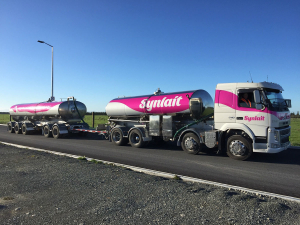
Synlait has swung to second-half profit as operations stabilise, but the dairy processor still posted a $75.4m annual loss.

LIC shareholders have elected a new North Island representative to the co-operative's Board, along with five representatives to its Shareholder Reference Group (SRG), following the company's Annual Meeting held in Invercargill.
Farmers across parts of Southland and South Otago are continuing to deal with difficult conditions after a prolonged run of wet weather, with pressure building around feed supply, stock management, pasture damage, farm infrastructure and everyday workloads.
Federated Farmers says it welcomes Labour's commitment to reviewing the Sharemilking Agreements Act, calling on other major parties to do the same.
For Canterbury dairy farmers Sian Meijer and Rick Wobben, wearable technology has become one of their most valuable on-farm tools - helping manage 1850 cows across an expansive, high-performing dairy operation while improving efficiency, mating outcomes and day-to-day decision making.
Fonterra has unveiled its annual results for the 2026 financial year, posting $27 billion in revenue and close to $20 billion returned to New Zealand farmer owners and unit holders.




OPINION: The same mainstream media muppets that brought you Jacindamania in 2017 have been flat out pimping for the Opportunities…
OPINION: Your old mate reckons the atrocious way farmers in the UK are treated by their lords and masters in…




