
South Africans dominate at Dairy Awards
There was a South African flavour to the 2015 Central Plateau Dairy Industry Awards last night, with all three major winners having South African roots.




 increase font size

MAKING SURE none of the rhinoceros herd is poached during the night isn’t something New Zealand farmers have to worry about but it is typical for an increasing number of South African farmers diversifying into the lucrative game breeding industry.
After several years of rapid growth, there are now estimated to be more than 10,000 commercial game ranches in South Africa breeding rare species for hunting, meat and conservation purposes.
Kirstie Macmillan of Farm To Farm Tours recently returned from escorting a group of New Zealand farmers through South Africa, Victoria Falls and Botswana.
“We were fortunate to have some great wildlife encounters in the reserves but it was also fascinating to visit farmers breeding rare game such as rhinoceros, Sable antelope and buffalo alongside beef cattle and cropping operations,” she told Rural News.
The group visited a 4000ha farm in the productive agricultural region of Kroonstad, Free State, where their farm host was lamenting the returns on his 1500-head Bonsmara cattle stud. He believes it is his newer game enterprise that will see him through to retirement. When he starts talking prices, it’s easy to see why. A South African buffalo cow recently sold for a record 20 million Rand (about $NZ3 million) and yearling bulls are fetching up to $NZ1 million. As well as buffalo, he’s breeding Sable antelope with quality hunting bulls worth around $NZ6500 and breeding bulls at least triple that.
Meanwhile he’s expanding his rhinoceros herd and hopes to get around $NZ20,000 for bulls and NZ$27,000 for two-year-old females.
As he converts more of his farm to game breeding, he is looking to move his cattle operation onto cheaper land in Mozambique where the government is trying to improve the country’s farming industry and infrastructure. He’s also bought land in Botswana, one of the few African countries exporting beef to Europe.
Although profitable, it becomes clear rare game breeding is not without its challenges. While game breeds require less land per head than domestic livestock, there is the need for specialist vet care and disease control, intensive fencing and fire breaks. Moving and handling stock is labour intensive and often involves tranquilizer darts, plus heightened security is necessary with, in some instances, 24/7 supervision of valuable stock.
Rhinoceros poaching is a particular problem as demand for rhino-horn powder grows in Vietnam and China. The Farm To Farm group heard how recently a Vietnamese poaching ring was arrested with over $US10 million worth of horn.
Global attention on the plight of the rhinoceros is rising, but still record numbers have been poached in South Africa this year. Some farm breeders de-horn females to reduce the risk, and provide 24-hour security for bulls. Others have given up on rhinoceros altogether.
There are calls for legalisation of the horn trade in South Africa arguing that harvesting horn, under anaesthetic, to supply what’s clearly a buoyant market, would push prices down and reduce poaching.
Such was the interest of the trip, Farm To Farm Tours is planning a return to southern Africa, in addition to many other regions of the globe, in 2013.
There was a South African flavour to the 2015 Central Plateau Dairy Industry Awards last night, with all three major winners having South African roots.
[NZ] is about 90%. They were also getting lamb growth rates up to 320g/day.



Alliance is calling for final applications for its 2027 Graduate Programme, with applications closing on Sunday 25 October.
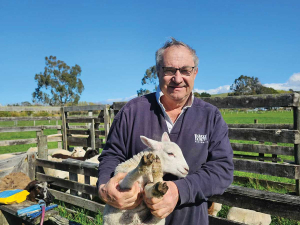
Decades piloting planes has ensured vet and farmer David Hayes is focused on safety. So, after a serious accident while welding on farm, he is sharing his experience so others can learn from it.
Canterbury milk processor, Synlait Milk has confirmed Leon Fung as its chief executive officer.
OPINION: Making it easier to collect rainwater and use it to grow crops and livestock is a no brainer.
As part of its Election 2026 coverage, Rural News asked political parties how they would help pull the arable sector out of the doldrums. Here's what they said:
Farmers are being encouraged to rethink how they manage waste on farm with the launch of ruralwastesorted.co.nz, a new website bringing together practical tips, real farmer experiences and resources.


OPINION: The same mainstream media muppets that brought you Jacindamania in 2017 have been flat out pimping for the Opportunities…
OPINION: Your old mate reckons the atrocious way farmers in the UK are treated by their lords and masters in…




