McRae Wins Southern South Island B+LNZ Director Vote
Matt McRae, a farmer from Mokoreta in Southland who runs a sheep, beef and dairy support business alongside a sheep stud, has been elected to the Beef +Lamb NZ Board as a farmer director.




 increase font size
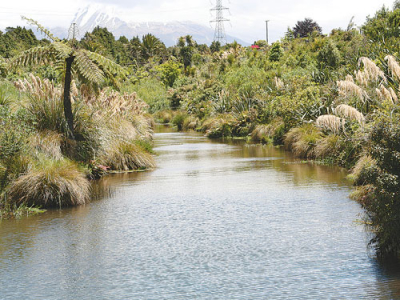 Riparian planting.
Farmers, don't give the rule-makers a reason to regulate, says Beef + Lamb New Zealand’s environment team.
The message is in response to signals from regional and national government that stricter environmental regulations are coming.
Speaking on a recent BLNZ podcast, environmental policy manager Corina Jordan said the government can only regulate when it has reason to do so.
“If we can ensure that as a farming community we are not giving them reason to intervene in our farming businesses due to environmental and public concerns, then we are safeguarding ourselves from having stricter regulation forced upon us.”
Jordan says the BLNZ environmental team spent a lot of time last year talking to farming communities about policy changes in NZ and the drivers behind those changes. These include public and political concerns about farming and the environment, and changing consumer attitudes toward food production systems in NZ and other countries.
“In NZ there is growing public concern about farming and its impact on freshwater resources,” she says. “Initially the finger was pointed at the dairy sector, but recent media attention has drawn the red meat sector into the spotlight with concerns over winter grazing practices and feedlots.”
Jordan says it is important that the sector responds. Losing a social licence to operate will impact on the resilience of a farming business.
“It’s important in relation to our businesses and the opportunities for the future of our businesses, that social license is enhanced and not eroded.”
She says many of the policies promoted by regional and national government have been underpinned by reports from the multi-sector Land and Water Forum, and because of existing rules that land be managed within environmental limits.
The forum was asked by government ministers to consider four key issues: to hold the line or improve water quality, look at a resource allocation system that is fair and equitable, sediment management, and good management practices (GMP).
“GMP encompass what society expects farmers to do when they are, for example, winter grazing.”
Jordan forsees likely changes in legislation early this year to introduce these four key issues into environmental policy.
BLNZ believes environment related issues such as these should be dealt with at catchment level. “Every catchment is different in water quality, nutrient loading or sediment loss depending on geology, climate, soil, farming systems and proximity to urban populations,” Jordan says.
“We need to make sure that when the rules are written they have the flexibility to allow farmers to do what they want to do while operating within environmental limits.”
Jordan says within the policy setting process there is opportunity for farming groups to co-create policy with regional councils so that the policies will work for them.
BLNZ has developed resources that guide farmers and farming groups through the policy-making process. They have worked alongside farmers in Waikato, Southland and Canterbury as their regional councils set their freshwater standards.
“When farmers understand the issues, they can then decide what they want to do about it,” she says.
“National legislation is effects-based so in order to intervene with regulation, the regional council or national government must have a reason to step in. If farmers are addressing these issues themselves, they are less likely to intervene with repercussions.
“We need to take control of our own destiny.”
Matt McRae, a farmer from Mokoreta in Southland who runs a sheep, beef and dairy support business alongside a sheep stud, has been elected to the Beef +Lamb NZ Board as a farmer director.
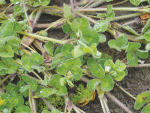
Recent widespread autumn rain will have triggered the germination of subterranean clover seeds, and the resulting seedlings should be allowed to reach the 3–4 trifoliate leaf stage before grazing, says Beef+Lamb NZ.
A hub farm in each of Beef + Lamb NZ’s seven regions and more focus groups are being rolled out for the red meat sector this year.
The red meat sector is poised for a strong rebound this season, with export receipts forecast to top $10 billion and farm profitability to almost double.
Progeny testing at Pāmu’s Kepler farm in Southland as part of Beef + Lamb New Zealand’s Informing New Zealand Beef programme is showing that the benefits of hybrid vigour could have a massive impact on the future of beef breeding.


New Plymouth-based Manuka honey exporter Egmont Honey has completed its acquisition of Taihape beekeeping business Tweeddale's Honey, with settlement finalised on Friday, 18 September.
Westpac NZ is calling on farmers and growers to start preparing now for the possibility of a dry summer, as likely El Niño conditions raise the risk of drought across parts of the country.
Fonterra Co-operative Group has confirmed the independently assessed candidates standing for election to its board in 2026.
Fonterra has revised its Farmgate Milk Price forecast for the 2026/27 season, lifting the midpoint and narrowing the range on the back of improving global dairy commodity prices.
New Zealand's citrus growers were challenged to build their future on the value embedded in their fruit rather than the volume they produce, at Citrus New Zealand's annual gathering in Gisborne on 17 September.
Leading John Deere technicians and apprentices from New Zealand and Australians were recognised at the recent sixth annual JD Technician of the Year Awards, held in Brisbane.




OPINION: The same mainstream media muppets that brought you Jacindamania in 2017 have been flat out pimping for the Opportunities…
OPINION: Your old mate reckons the atrocious way farmers in the UK are treated by their lords and masters in…