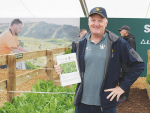
New pasture guide launched to support farmers in a changing climate
A new publication has been launched that offers a comprehensive and up-to-date resource on commercially available grazing pasture species in New Zealand.




 increase font size

HOW MUCH grass is going to grow on your farm next week?
While you might have a figure in mind, and the ability to factor the weather forecast into that mental calculation, a new online service promises to provide a reliable reference prediction.
At a district level, the Pasture Growth Forecaster (www.pasturegrowthforecaster.co.nz) is free thanks to funding from Beef + Lamb New Zealand and DairyNZ.
By registering for the service users get an e-mail every Sunday predicting what the typical dryland dairy or sheep and beef farm in the district will grow in the coming week. Go online and the free forecast extends to a fortnight. For a $9.95/month subscription, a forecast tailored to a 5km square is available, taking account of the water holding capacity of the five main soil-types in that square.
Besides the week-to-view and fortnight forecasts, there’s a prediction for season-long pasture growth, showing the range from production in the best years, to the worst.
Rezare systems, with the help of farm management company Farmax, built the programs that generate the forecasts which are administered by Farmax to provide the service.
“We see this as an awareness generation tool,” Farmax general manger Gavin McEwan told Rural News. “You’ll look at it and get an indicative measure of pasture growth for the region of your farm, but there’s no substitute for getting out there and actually measuring growth.”
Beef + Lamb New Zealand chief executive, Dr Scott Champion says while nothing about the weather is ever certain, the tool “pulls together the best information available to forecast grass growth”.
That should give greater confidence around decisions such as feed allocation, grazing rounds, or stock ratios, he says.
“Knowing when you are likely to have more or less feed than usual is going to be a key benefit of using this tool.”
Some BLNZ and Farmax project farms trialled the forecaster over the past year.
“They’ve found significant benefit in being able to calculate pasture growth on their own farms, supporting timing decisions around destocking or buying in animals to use the available feed,” says Champion.
There are 44 districts at the free service level.
Each district forecast is built up from the mean of the 5km square forecasts that are available by subscription.
McEwan acknowledges there may be big discrepancies between the predictions and what farms actually grow, particularly as the dairy model, at this stage, is dryland regardless of location.
However, the predictions should provide benchmarks which can be used to derive forecast figures “tweaked” according to the particular farm and management inputs such as irrigation and nitrogen fertiliser.
A new publication has been launched that offers a comprehensive and up-to-date resource on commercially available grazing pasture species in New Zealand.
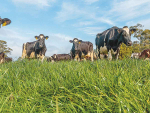
New Zealand farmers know that pastoral fortunes can shift rapidly once summer’s extreme dryness gives way to cooler, wetter autumn conditions.
Pasture renewal is the process of replacing older, less productive pastures with a completely new pasture.
Ever wondered what the financial result would be if you let pasture weeds get away on you? There's now a tool to find the answer.
Your cows don’t know it yet, but their life is about to change, for the better. So is yours.


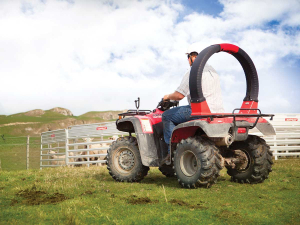
When Northland leather worker Vernon Suckling started making horse saddles 50 years ago, quad bikes and side-by-side vehicles were unheard of.
Alliance Group has confirmed that eligible farmer-shareholders who supply and continue to back the business will receive up to $20 million later this year, following the strategic investment partnership with Dawn Meats.
With a general election under five weeks away, Rural News is asking major political parties about their policies and positions on key issues facing the primary sector. We will run their responses to each question over the next four weeks. The ACT Party and the Greens didn't respond in time.
The red meat sector is in great heart.
Dr Scott Champion, Foundation for Arable Research chief executive, says that everyone in the supply chain had a role to play in driving the sector's long-term success.
Entries opened on Monday, 5 October 2026 for the 2027 New Zealand Dairy Industry Awards (NZDIA), which organisers describe as the nation's biggest celebration of excellence in the dairy sector.




OPINION: The same mainstream media muppets that brought you Jacindamania in 2017 have been flat out pimping for the Opportunities…
OPINION: Your old mate reckons the atrocious way farmers in the UK are treated by their lords and masters in…




