Resilient Global Dairy Industry Overcoming Volatility
Fonterra chief executive, Richard Allen says being resilient has helped the dairy industry overcome extreme volatility in recent years.




 increase font size

FARMERS’ PROBLEMS caused by the drop in Fonterra’s forecast milk solid payout are best tackled head-on with agribusiness management training, says Primary ITO, which offers courses in this discipline.
The need is urgent to review and revise budgets and monitor cashflow to ensure debt levels don’t rise unnecessarily. Spending cuts, increasing milk production and generally improving onfarm performance are among the options.
Primary ITO’s Diploma in Agribusiness Management supports farmers in honing their business management skills to manage risks like a volatile payout and take control of their business.
Key subjects include business and finance, where students learn to develop and monitor financial plans, monitor on-farm performance against objectives, and develop a budget to share with their bank manager or accountant, are all directly applicable to the farmer’s own business.
Cath Blake, manager of Dairy Training Ltd, says cashflow budget development and implementation are vital. “The skills farmers gain by completing the Diploma in Agribusiness assist in managing financial risk…. This financial capability helps farmers to look to the goals of the business and gives long term confidence in the dairy industry.”
Staff costs can also be a point of contention when budgets are tightened. Staff may be let go or professional development and training costs cut.
Mark Paine, DairyNZ strategy and investment leader (people and business) says recruiting the right staff and keeping staff motivated can mean staff turnover is reduced.
“The cost of staff turnover to the dairy industry is about $300 million per year. If we can hold onto our good staff, this can lead to better business performance.”
The Diploma in Agribusiness Management includes human resource management as a key subject, and supports farmers’ staff development. Farmers learn how better to recruit, select and induct staff, and build good working relationships and assess performance.
The Agribusiness Diploma is a collaborative project between Primary ITO, DairyNZ, Beef and Lamb New Zealand and HortNZ. Studies are open to farmers, growers and agribusiness operators.
www.primaryito.ac.nz/diploma
Fonterra chief executive, Richard Allen says being resilient has helped the dairy industry overcome extreme volatility in recent years.

The head of global dairy organisation, International Dairy Federation (IDF) is calling for accurate use of ‘dairy' term.
The New Zealand government is calling on global dairy industry players to urge their countries to bring down trade barriers.
Northland farmer Greg Collins has taken over as chair of the Fonterra Co-operative Council.
Fonterra’s 2026 financial year was a year of delivery, with record volumes of milk collected, processed and shipped by the co-op.


During the nesting season, from September to December, industrious starlings can quickly build nests in the darker areas behind tractor and vehicle, usually close to hot engines, typically resulting in localised damage or in some cases complete write-offs.
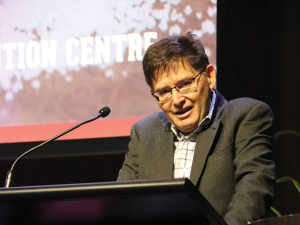
The meat processing industry is much more collegial than it was in the past and is now more focused on common goals.
With the last couple of months having seen some potential tractor purchases put on hold with the impending election and continued input cost rises, year-to-date figures, ending September, has seen deliveries up around 5% over the same period in 2025, with a total of 2026 units.
Beef+Lamb New Zealand is calling for nominations for director roles in the Northern South Island and Northern North Island electoral districts.
Fonterra chief executive, Richard Allen says being resilient has helped the dairy industry overcome extreme volatility in recent years.
The head of the Ministry for Primary Industries (MPI) trade and international relations group says New Zealand is well-positioned to secure trade access and compete internationally as the world becomes more complicated, demanding and uncertain.


OPINION: The same mainstream media muppets that brought you Jacindamania in 2017 have been flat out pimping for the Opportunities…
OPINION: Your old mate reckons the atrocious way farmers in the UK are treated by their lords and masters in…