
Lanaco and Blueair Launch World-First NZ Wool Air Filter
New Zealand wool is reaching new heights as air filtration companies move away from synthetic products to biodegradable alternatives.




 increase font size
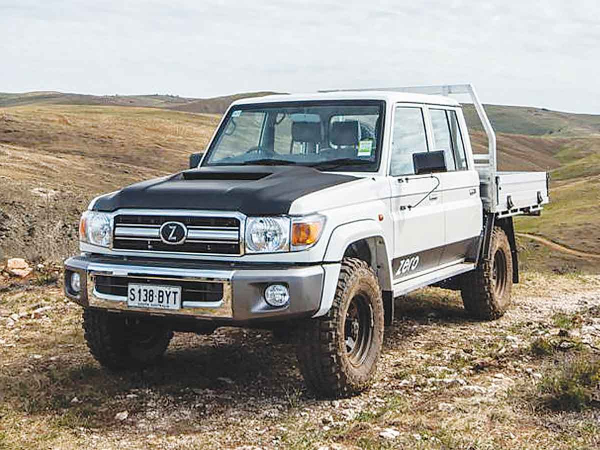 The ZED 70 is based on the rugged Toyota Landcruiser 70.
Based on the Toyota Landcruiser 70, the all-electirc ZED 70 is engineered for harsh climates.
While hybrid and electric vehicles are in the news every week, particularly in the saloon and SUV sectors, alternative propulsion choices seem to have bypassed the massive ute sector.
That looks like it’s about to change with recent announcements from leading vehicle manufacturers. However, one Australian-built unit is ready to hit the streets or tracks now.
The ZED 70, built in Adelaide by Zero Automotives, is based on the rugged Toyota Landcruiser 70. It’s said to be engineered to face the harsh climates of the ‘dry country’ – particularly in the mining and agri-business sectors.
Although the company has no plans to mass produce the vehicle, it can supply units that are customised to meet industry-specific needs, producing design-compliant and road legal utes for under AU$200,000.
Said to offer an effective range of up to 350km, the ZED 70 features a 700Nm electric motor, partnered with a 20 to 120kW/hour battery pack. This combines to deliver more torque than the original, factory fitted V8 engine.
The company suggests the vehicle is particularly suited to confined environments where diesel particulates can have a detrimental effect on people working nearby. Using current and emerging technologies – such as geo-fencing, telematics and semi-autonomous operation – the ZED 70 can also be fitted with automated speed limiters for individual sites.
Available in wagon, dual-cab, single-cab and troop-carrying configurations, the vehicle will also incorporate regenerative braking, high-voltage air conditioning and heating.
New Zealand wool is reaching new heights as air filtration companies move away from synthetic products to biodegradable alternatives.

Kaikōura families affected by July's severe storm have found a practical solution to a problem that's kept some children away from regular schooling for weeks: a washed-out section of Inland Kaikōura Road, which has stopped the local school bus from running its usual route.
Generative AI in the workplace, trials in the field, and industry-relevant research took centre stage at this year’s Grape Days events in Central Otago, Hawke’s Bay and Marlborough.
While hybrids and PHEVs have not usually been the focus of farmers and rural dwellers, the current Iranian-driven fuel crisis has pushed up fuel costs and created a new interest in the genres.
Since arriving on New Zealand’s shores in 1976, the Hilux has been seen of farms, building sites and back roads, becoming a familiar part of how rural and more recently, Kiwis work and live.


Dairy processors are ready to further boost New Zealand’s export earnings but want the incoming government to match their ambition with good policy.

Massey University is best placed to solve the “problems” facing the dairy industry, says vice chancellor, Pierre Venter.
Synlait's longest serving employee – a man who joined the Canterbury-based milk processor even before it began processing milk – is now its newest executive.
A dairy industry leader believes eradicating the common and costly disease, Bovine Viral Diarrhoea (BVD) is within reach.
A farmgate milk price of $10/kgMS this season is firming up as milk powder prices soar and the New Zealand dollar weakens.
Federated Farmers has welcomed new rural policies released by ACT, saying they align closely with its own election priorities.


OPINION: The same mainstream media muppets that brought you Jacindamania in 2017 have been flat out pimping for the Opportunities…
OPINION: Your old mate reckons the atrocious way farmers in the UK are treated by their lords and masters in…




