
US Launches Lamb Safeguard Probe, NZ Exports at Risk
As expected, the US has launched a safeguard investigation into lamb imports, a move that could impact New Zealand sheepmeat returns.




 increase font size
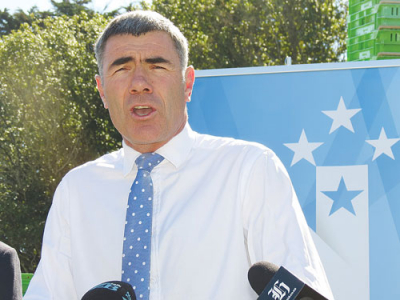 Nathan Guy.
Most farmers are now flat-out calving and lambing and are looking forward to another season of forecast good returns.
MPI’s Situation Outlook report shows exports growing. Milk prices look solid at about $7/kgMS and the returns for red meat farmers are strong. These prices will be helped by a softening NZ/US exchange rate, though tariff wars may impact farmer returns.
It’s disappointing that Trade Minister David Parker hasn’t visited China yet; we’ve had 10 months of the coalition Government and China is our largest export market worth $12b a year. Political relationships matter, especially in China, and this will have been noted in Beijing.
Also concerning farmers are the coalition Government’s ill-thought-out policies and how they could have a serious impact on the engine-room of the economy.
Most farmers back M.bovis eradication and are awaiting spring milk test results to gauge the spread of the disease. But their nervousness also includes climate change regulations, ETS obligations, petrol taxes, slowing overseas investment, industrial relations reforms and a wide-ranging review of the dairy industry.
National well knows the importance of addressing climate change, but we must do this in a pragmatic, science-based way, not by slapping on yet another tax. It’s vital to address the wider impacts on the economy, jobs and incomes and use technology to help solve our methane emissions.
The ETS shows the Government reaching for the regulation lever rather than researching an enduring solution. The inclusion of animal emissions in the ETS will see farmers annually paying $5000-$10,000 extra in taxes. This won’t have any tangible effect on climate change and no country in the world is doing this. This tax will be felt nationwide all the way to the consumer and will make us globally less competitive -- something this Government doesn’t understand.
A Federated Farmers survey of 1100 members confirmed that farmers are deeply concerned about how the Government’s policies are going to hurt them. It showed a 500% increase in pessimism over just the last 12 months; rural NZ is growing weary of the Government’s intentions.
Business sector surveys show similar pessimism, back ed by an OECD global survey of business confidence that confirms NZ has dropped from second-highest to the bottom. This is a real worry.
Damien O’Connor’s attempts to soften the blows have amounted to little more than lip service. He admitted in parliament recently that we can expect more costs.
His ‘rural proofing’ scheme is a sop: it sounds good but lacks teeth. This so-called ‘guidance tool’ to enable government agencies to get rural communities front-centre when they are designing policy is, in fact, voluntary not mandatory. This means bureaucrats and ministers can easily dismiss and ignore it. Had the scheme been in place earlier this year, would ministers have been advised to ditching financial support for water storage schemes, given that half NZ was in drought last summer?
The recently formed Primary Sector Advisory Council will cost $500,000 a year and no one really knows what its role is apart from designing a strategy for the minister. To achieve anything meaningful it needs freedom to run a cost-of-compliance ruler over all Government policies impacting the primary sector.
While this season’s onfarm returns look positive, dark clouds are massing on the horizon. Decisions coming from the Beehive are not helping business confidence or farmer sentiment.
• Nathan Guy is National’s primary industries spokesman.
As expected, the US has launched a safeguard investigation into lamb imports, a move that could impact New Zealand sheepmeat returns.

New Zealand's red meat sector says it welcomes the Government's focus on trade ahead of the general election in November.
New Zealand red meat exports are booming but a pending decision in the White House, Washington D.C., could dent sheepmeat earnings.
Politicians calling for New Zealand to withdraw from the Paris Agreement on climate risk damaging two of our gold-plated free trade deals.
Prime Minister Christopher Luxon says the red meat sector is doing an excellent job promoting our pasture-fed system around the globe.



Kiwifruit growers are watchful but remain optimistic as concerns around the potential effects of the El Niño weather pattern this season.

Almond hulls sourced from Australian orchards may have the potential to help New Zealand cows reduce emissions, boost milk yield and lower input costs.
Striking a balance between meeting the needs of industry to speed up approval time for products but on the other hand ensuring that risks are properly assessed.
Surprised, humbled and quite thrilled. That’s the reaction of James Allen, one of the founding partners and now chief executive of AgFirst, on being made a life member of the Institute of Rural Professionals.
It was billed as a chance for all the political parties to woo the rural vote, but question marks hang over just how effective this was.
Minister of Conservation Hon Tama Potaka has appointed Susan O'Regan as Chair of the Queen Elizabeth II National Trust (QEII) for a three-year term.

OPINION: The same mainstream media muppets that brought you Jacindamania in 2017 have been flat out pimping for the Opportunities…
OPINION: Your old mate reckons the atrocious way farmers in the UK are treated by their lords and masters in…




