
It's The Margins That Matter
OPINION: It appears to be difficult for people who haven’t tried to run a business to understand the difference between assets and cash.




 increase font size
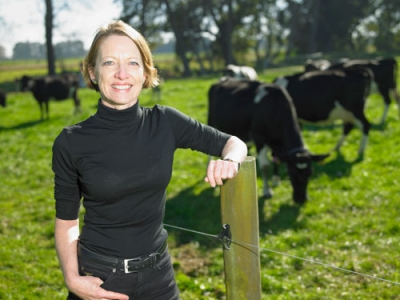 Jacqueline Rowarth.
Australian agriculture has almost limitless potential according to a landmark white paper on agricultural competitiveness released at the beginning of July.
Prime Minister Tony Abbott and Minister for Agriculture Barnaby Joyce stated that “a strong agriculture sector contributes to a strong economy – and that means more jobs, more exports, higher incomes and better services to the community”. They then announced a A$4 billion dollar investment in “a fairer go for farm business, building the infrastructure of the 21st century, strengthening the approach to drought and risk management, farming smarter and accessing premium markets”.
Agriculture in Australia is about 2.4% of the domestic economy and contributes about 13% of the export economy. In some contrast, New Zealand’s dairy sector alone delivers 26% of export value.
The Australian investment is being made to enable the sector to become even more competitive as well as profitable and resilient. It recognises the importance of diversification (from mining) and that biological industries face unique challenges. It also recognises that domestic policy settings influence agricultural productivity because they shape farmers’ incentives and capacity to innovate and improve productivity.
Policies have similar affects in NZ.
Last June Rabobank economists Hayley Moynihan and Blake Holgate observed in their report on competitive challenges that for NZ farmers, increasing compliance costs “associated with strict environmental regulatory reform will largely be a new production cost, negatively impacting current competitiveness”. They suggested that any new environmental controls should provide scope for innovation as well as the appropriate incentive for industry investments in science and new technology that will help farmers meet demands for increasing production and protecting the environment.
Australia is now creating an enabling policy environment under the ‘fairer go’ heading. Regulation streamlining to reduce costs of doing business, and tax reform “to ensure taxes are lower, simpler and fairer for our farmers and all Australians”, the repeal of the Carbon Tax and a review of electricity prices were also emphasised.
Water infrastructure is receiving $450 million and the “premium market money” includes over $30 million to break down technical barriers to trade and employ five new agriculture counsellors.
Australia already spends four times as much on agricultural R&D per unit of contribution to the export economy as NZ – but is spending another $100 million more in R&D and extension because of the “unlimited potential” identified. The research money is being focussed on advanced technology, biosecurity, soil, water and management of natural resources, and the adoption of R&D.
Of particular political note is the creation of a commissioner dedicated to agriculture. Quite how much influence the new commissioner will have is not yet clear. NZ has a Commissioner for the Environment (PCE) who is an independent officer of Parliament, reporting to Parliament through the Speaker of the House and the Officers of Parliament committee. Given the importance of NZ agriculture, and the challenges it faces, it is surely time to have a Commissioner for Agriculture, independent of Government, as is the PCE, and able to investigate matters of importance – such as the milk price, the role of the supermarkets, the importance of co-operatives, the science behind policy and regulation setting, the cost of compliance and the value of agriculture to the 85% of NZers not involved in the primary sector on the land or in a support role.
Much of what has been stated in the Australian landmark white paper could equally be applied to NZ. Achieving “almost limitless potential” is a direction for both but Australia is ahead of us in investment and initiatives. As for the strapline - it is even truer in New Zealand than it is in Australia and deserves immediate recognition and action: ‘Stronger farmers – stronger economy’.
• Jacqueline Rowarth is professor of agribusiness, The University of Waikato.
OPINION: It appears to be difficult for people who haven’t tried to run a business to understand the difference between assets and cash.
OPINION: In the 1980s, concern was expressed in West Germany about the falling birth rate. Some simple analysis was performed by Professor Helmut Sies, physician and biochemist at Dusseldorf University. His letter ‘A new parameter for sex education’ was published in Nature in 1988:
OPINION: Humans are resilient. We are part of nature and have evolved for survival.
OPINION: Is New Zealand ‘Godzown’ or the ‘Last bus stop on the planet’?
OPINION: "The worst thing that agriculture does is take land from nature."


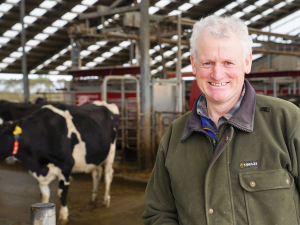
In Dacre, near Invercargill in New Zealand’s South Island, Bruce Dinnington is running a dairy operation unlike any other.

A free online platform aggregating governance vacancies across rural and regional New Zealand has been launched.
Environment Minister Nicola Grigg has announced details of a new rural plastics recycling scheme.
Agricultural drone operators say that a government decision to allow lower-risk drone work without certification won’t lower standards but drive innovation and efficiency.
OPINION: Warning bells are ringing in the arable sector.
Farmgate lamb prices are down by 8%, beef cattle by 4.5% and farm expenditure up by 4.2%.



OPINION: The same mainstream media muppets that brought you Jacindamania in 2017 have been flat out pimping for the Opportunities…
OPINION: Your old mate reckons the atrocious way farmers in the UK are treated by their lords and masters in…




