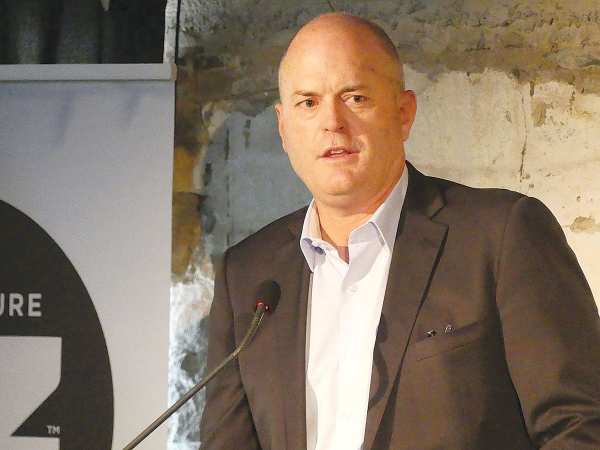
National’s agriculture spokesman, Todd Muller on why the recovery from COVID-19 needs to include strategic water storage infrastructure.
A few months ago, I penned a column where I noted the challenging conversations farmers were having across dinner tables up and down the country because of the Government’s proposed freshwater reforms.
Now, barely six months later, so much of New Zealand is closed with the exception of our farms and hospitals. The tough, painful and fearful kitchen table conversations are occurring in many houses across the country.
We are still in the highly fluid part of the crisis, where only hard choices sit in front of us. The ‘stay home, save lives’ strategy will slowly morph into the ‘safety first, but slowly restart’ phase.
A tougher period lies in the months ahead.
By September, we may be tens of billions more in debt, we will have a Government that is having to spend more in order to rightly support those who have been impacted by the coming recession. And we will have an economy with the tap turned squarely off on two big foreign earners, international tourism and international students. Together these two sectors earn about $23 billion per year, about the same as all meat and dairy exports. More debt, more spending, and less income.
Whatever our national strategy was just a few months ago is now wholly inadequate. What is the new plan for our country? How do we rebuild after this crisis?
I start by asking the simple question; what do we do best in the world, and can we still be the best when the global lights come on? Our capacity to produce diverse food products – be it dairy, meat, kiwifruit, wine at scale – with sublime quality assurance gives us a strong platform to build from.
So how can we amplify and leverage that advantage for us all?
There will be a call from many to stop all regulatory constraints on agriculture throughout the economic recovery. That would be a mistake. Firstly, we must expect our global consumers to be more health and compliance conscious after the pandemic, not less so. Our provenance of healthy and sustainably produced food will come under more scrutiny not less.
Secondly, this Government has had a failure of political process not of concept. Building on the previous Governments efforts to improve sector capacity to farm within limits was not a flawed strategy, rather it was their inability to execute that was their downfall.
In the case of Essential Freshwater reform, it allowed the conversation to be deliberately and inaccurately framed in the context of a collective failure to date, and a petulant disregard for sector feedback. It deserves our criticism, but let’s not be duped into thinking that somehow going back in time when there was a light touch approach is going to be our future.
The agriculture sector will be best served by a nationwide acceptance that the nation’s economic stimulus needs to include strategic water storage and distribution infrastructure.
Access to water is a critical enabler of economic, social and environmental improvement. It can act as the battery for a low emissions future that is less reliant on fossil fuels, it can release the productive capacity of thousands of hectares that are water stressed. Partnered with good farming practice, it can materially improve the biodiversity of our rivers. It can give our communities surety that potable water will be available into the future. The time has come.
These are the types of big ideas we will need to consider to recover our country. We need many more.
I hope that through the fog of uncertainty, we can start these conversations at our kitchen tables tonight.
• Todd Muller is National’s agriculture spokesman