
Ravensdown Elects Montgomery, Acland to Board
Ravensdown shareholders have elected Jane Montgomery and Kate Acland to the Ravensdown Board for three-year terms, following a closely contested director election.




 increase font size
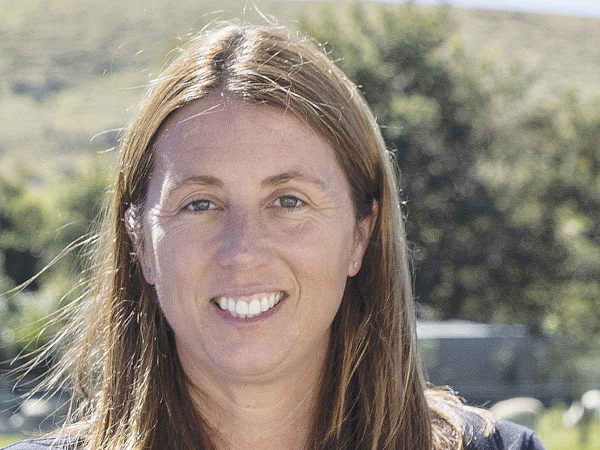 Kate Acland
OPINION: We've been having constructive conversations with the Government recently around climate change and emissions from food production, but now is the time to see these conversations turn into action.
The current Government has confirmed its commitment to a split gas approach for domestic emissions reduction targets and reviewing New Zealand's methane targets this year. It has commissioned an independent review of those targets based on the science of warming.
This is all positive. However, we still have emissions reductions targets for methane of 10% by 2030 and 24-47% by 2050. This range has no scientific or reasonable justification.
The independent methane science review, completed last year, suggests a range of 15-24% reduction in methane emissions by 2050 (from a baseline of 2017) would see agriculture contribute no further warming.
A no additional warming target would put agriculture on par with what is being asked of longlived gases. Anything greater means agriculture is being asked to do the heavy lifting in terms of New Zealand’s warming impact on the planet.
We are calling on the Government to urgently amend New Zealand’s domestic methane targets based on the principle of no additional warming, and align that with our international commitments, so that farmers have certainty about what they are being asked to do and that this is no more or less than other sectors of New Zealand.
The Government must also make it clear that it will not price farmers for their emissions if progress is being made towards targets.
B+LNZ analysis based on our extensive stock surveys suggests the sheep and beef sector has already reduced its methane emissions by around 10% from a 2017 baseline – five years ahead of the current 2030 target. This is on top of a 30% reduction since 1990.
We know other agriculture sectors are heading in the right direction as well.
It is clear we are going to hit the current 2030 target as a sector, yet we’re currently still faced with the threat of pricing by 2030 hanging over us.
Putting an emissions price on the least subsidised, most carbon efficient producers of animal products makes absolutely no sense and will put us at a further disadvantage globally.
We’ve had carbon pricing through the ETS and offsetting for years, but have we seen a reduction in fossil fuel emissions?
This suggests that maybe pricing is not the best incentive and will undoubtedly lead to unintended consequences.
If a target has already been met, why introduce a pricing mechanism at all?
Farmers need confidence in the future. While recent increases in profitability have provided some short-term relief, ongoing policy uncertainty means many family- run hill country farms are questioning their long-term viability.
The threat of emissions pricing on a sector that has done its part already adds to that uncertainty.
Much of the emissions reductions in the last five years in our sector are due to large scale planting of whole sheep and beef farms into forestry, as offsets for fossil fuel emissions.
We congratulate the Government for its recent moves to restrict this planting that is decimating our rural communities.
In the last few months, however, we have seen a rush of foresters purchase sheep and beef farms before the new rules come into place.
Even with the recently announced restrictions, modelling suggests many thousands of hectares will still be planted each year in order to meet the Government’s net zero by 2050 target for carbon. We will be tracking this closely.
This will continue to see our sector shrink and our emissions fall in order to solve another sector’s problem.
The recent afforestation rule changes are positive, but are they are enough?
We urgently need to build confidence in the future, to see emissions reductions targets that are underpinned by science based on the warming impact of gases, and the removal of any pricing threats on agriculture.
Some vocal voices in agriculture have called for New Zealand to abandon our international climate change commitments, creating the impression among some Kiwis that farmers don’t want to do their part. These calls reflect growing frustration with inequities and uncertainty.
Farmers are not after a free pass. The science shows we’ve already done our bit and this should be recognised and applauded.
Kate Acland is chair of Beef + Lamb NZ
Ravensdown shareholders have elected Jane Montgomery and Kate Acland to the Ravensdown Board for three-year terms, following a closely contested director election.

Beef + Lamb New Zealand (B+LNZ) says it welcomes the passage of the Natural Environment Bill and Planning Bill, calling the bills a positive step for sheep and beef farmers.
As farmers begin thinking about establishing next year’s winter forage crops, Beef + Lamb NZ is encouraging farmers to carefully consider what crops they are planting and where.
Farmgate lamb prices are down by 8%, beef cattle by 4.5% and farm expenditure up by 4.2%.
Red meat farmers are welcoming Labour’s plan to review the Emissions Trading Scheme and not to campaign on pricing agricultural emissions.


National’s pledge to introduce 19 new national standards shows the party is serious about getting Wellington out of farming, Federated Farmers says.
The National Party’s policies to make it easier to grow fresh vegetables, secure reliable water and energy and simplify farm planning are practical changes that will give growers the confidence to invest, according to Horticulture New Zealand (HortNZ).
Fonterra Co-operative Group chief financial officer Andrew Murray has resigned to take up a role outside the dairy giant.
A major move is about to get underway to improve the quality and viability of dairy beef and cattle in NZ.
Veterinarians say changes to the code of welfare for dairy cattle provides a positive foundation for improved cattle welfare across the country.
Today, 15 October, is the International Day of Rural Women, which recognises rural women’s contribution to farming, communities and the environment.



OPINION: The same mainstream media muppets that brought you Jacindamania in 2017 have been flat out pimping for the Opportunities…
OPINION: Your old mate reckons the atrocious way farmers in the UK are treated by their lords and masters in…




