International Day of Rural Women: Two DairyNZ Farmers’ Stories
Today, 15 October, is the International Day of Rural Women, which recognises rural women’s contribution to farming, communities and the environment.




 increase font size
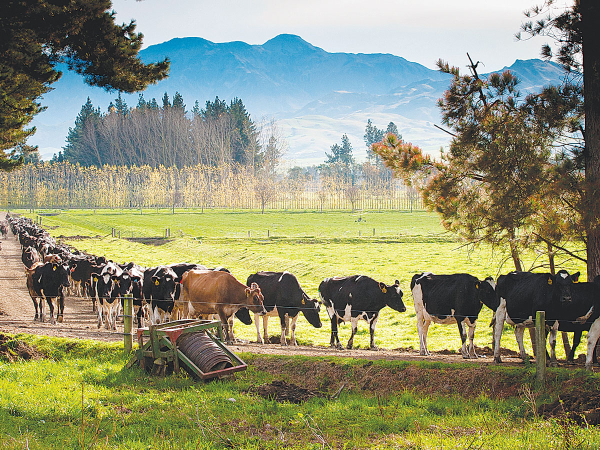 DairyNZ stats show productivity gains per cow has increased over the last 30 years.
OPINION: Evolution is important. So is feeding people properly.
Most people know this intuitively, but it doesn’t stop them trying to alter evolution’s course. In agriculture, the selection of plants and animals from their wild state has been hugely beneficial in terms of food production. Adding enablers (founded on engineering, science and then technology) has created extra yields upon which we are now dependent. Without those increased yields, which have been achieved mostly on existing farmland rather than expansion, starvation and more war would have occurred.
Since 1961, US wheat yield has doubled from 1.5 tonnes per hectare to over 3. In the same timeframe, UK wheat yields increased from over 3 tonnes per hectare to approximately 8 tonnes.
New Zealand’s wheat yields are now over 9 tonnes per hectare.
These increases have been achieved by overcoming genetic and environmental limitations, mostly to do with human capability (tractors achieve more than horses which achieve more than people), nutrients, water and control of pests and diseases.
Similarly, breeding animals to fit the environment, or altering the environment to fit the animal (such as barn systems for milk in the USA) has also been part of process.
DairyNZ's statistics released each year show productivity gains for the last 30 years per animal (from an average of approximately 280 kgMS per cow to just under 400) and per hectare (from approximately 700 kgMS per hectare to over 1100).
More people are being fed from less land and water per person because of productivity gains per hectare. Agriculturalists have been working with nature, investigating limitations, and identifying systems to overcome those limitations – enhancing productivity.
A rethink has occurred in this era of climate change awareness, and in our attempts to reduce the impacts of human progress, particularly in methane from animals, we might be overlooking the very aspects that could help us in the future.
American researchers from Stanford University and the Carnegie Institute have calculated the net effect of the improvements that have been achieved. Between 1961 and 2005 (the research was published in 2010) they found that although emissions from factors such as fertiliser production and application had increased, the net effect of higher yields had avoided emissions of approximately 13.1 GtCO2e per year. A gigatonne has nine zeros before the decimal point and one GtCO2e is apparently equivalent to the mass of all land mammals in the world not counting humans. A lot.
The researchers estimated that each dollar invested in agricultural yields had resulted in 68 fewer kgC (249 kgCO2e) emissions relative to 1961 technology ($14.74/tC, or approximately $4/tCO2e). They concluded that “further yield improvements should be prominent among efforts to reduce future GHG emissions”.
Despite this, the research on agricultural methane has been focused on inhibiting it.
Methane is important for the ruminant animal. By removing hydrogen ions in a safe and belchable form, the likelihood of rumen acidosis is reduced.
Dr Graeme Coles, nutrition scientist, explains the science: “Under normal conditions, the New Zealand dairy cow loses about 45% of the energy she derives from her feed by making methane,” he says.
“However, that does mean that she is able to clear 55% of the energy (in the form of short chain fatty acids (SFCA)) to the circulation. Even a small improvement in the amount of SCFA that can be cleared from the rumen will significantly reduce the pressure to make methane.”
Despite this, much of the research and commercial investment to date has been in pursuit of products that inhibit the methanogenic microbes, either chemically or by vaccinating against them. “This causes expression of the symptoms of rumen acidosis – reduced rumen pH, reduced rate of feed utilisation, reduced animal productivity and in extreme cases, rumen wall tissue damage,” he says.
Dr Coles has been developing a rumen prebiotic that enhances clearance of fermentation products from the rumen to the circulation. Farmers are reporting an 8% improvement in energy recovery from a given diet. Over a decade of on-farm investigation, Dr Coles calculates that 60kg of MS per cow per year has been achieved.
Improved feed conversion means less methane.
The American researchers concluded that future agricultural productivity is critical, as it will shape emissions from conversion of native landscapes to food and biofuel crops. Conversion is a major threat to biodiversity.
Investment in agricultural research is an important mitigation strategy, and focussing on enhancing rather than blocking would fit with the next stage of evolution.
Ruminants and their microflora have evolved over millennia. Changing the relationship must be done with care.
Charles Darwin pointed out that “It is not the strongest of the species that survives, not the most intelligent that survives. It is the one that is the most adaptable to change.”
Enhancing gives flexibility; blocking does not.
We forget Darwin at our peril.
Dr Jacqueline Rowarth, Adjunct Professor Lincoln University, is a director of DairyNZ, Ravensdown and Deer Industry NZ. She is a colleague of Dr Coles and their latest paper on ‘An agroecological approach to preparation and use of a milk protein production baseline’ was published at the end of September.
Today, 15 October, is the International Day of Rural Women, which recognises rural women’s contribution to farming, communities and the environment.
The first major update to the Dairy Cattle Code of Welfare in more than a decade has been released, marking what DairyNZ describes as an important step in ensuring animal welfare standards continue to evolve alongside scientific evidence and on-farm realities.
Have a plan in place for your cows and staff.
DairyNZ deputy chair Cameron Henderson has been re-appointed unopposed for another term.
OPINION: The stats speak for themselves.


Fonterra shareholders can begin voting on Tuesday 20 October in the 2026 Board of Directors’ election, a Co-operative Council election in one Ward, and seven Annual Meeting resolutions.
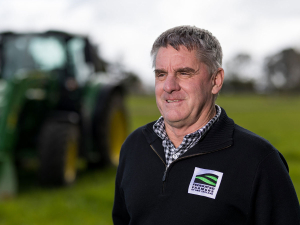
National’s pledge to introduce 19 new national standards shows the party is serious about getting Wellington out of farming, Federated Farmers says.
The National Party’s policies to make it easier to grow fresh vegetables, secure reliable water and energy and simplify farm planning are practical changes that will give growers the confidence to invest, according to Horticulture New Zealand (HortNZ).
Fonterra Co-operative Group chief financial officer Andrew Murray has resigned to take up a role outside the dairy giant.
A major move is about to get underway to improve the quality and viability of dairy beef and cattle in NZ.
Veterinarians say changes to the code of welfare for dairy cattle provides a positive foundation for improved cattle welfare across the country.



OPINION: The same mainstream media muppets that brought you Jacindamania in 2017 have been flat out pimping for the Opportunities…
OPINION: Your old mate reckons the atrocious way farmers in the UK are treated by their lords and masters in…




