Sheep & Beef Farm Conversion to Forestry Slows, Risk Remains
Conversions of sheep and beef farms to forestry have slowed, however new research from Beef + Lamb New Zealand (B+LNZ) suggests land of value for food production remains at risk.




 increase font size
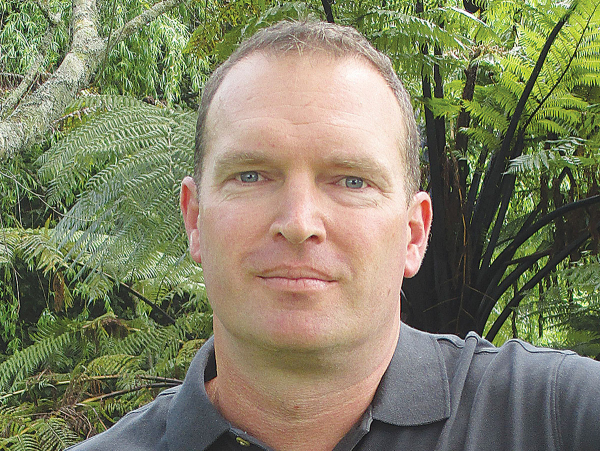 Steve Cranston asks if farmers have been sold out in the He Waka Eka Noa proposals.
OPINION: With the emissions pricing options now out for discussion, the fear campaign has begun in earnest.
If we don't hold our collective noses and accept one of the two prescribed options, agriculture will be thrown into the abyss of the Emissions Trading Scheme (ETS).
The two options, as written, offer no light at the end of the tunnel for agriculture. They provide no certainty for the future and will see the mis-informed criticism of agricultural emissions continue indefinitely.
Once the pricing mechanism is established in law the Government is free to increase emissions pricing and force increased reductions at their discretion. The decisions might be made indirectly through an independent panel, but the result will be the same. The Climate Change Commission is also an 'independent' body, but they have been notable in their attempts to suppress any reference to methane's warming effect being allowed to enter the realms of policy discussion.
Levy body leaders claim that this discussion should focus solely on the pricing mechanism and should not be linked to the reduction targets, they are being wilfully naive. The price you pay for your emissions is directly related to the reduction target. Agreeing to a pricing mechanism without a clear understanding of what the targets will be and how they will be set in future is akin to writing the Government a blank cheque.
HWEN appears deliberately opaque on the targets; their wording on the subject appears to leave the door open for further refinement. If this opportunity is not take, the Government's 10% by 2030 methane reduction will be applied.
There remains only one solution to give farmers some certainty on emissions pricing - that is to link the targets to the science. The split-gas approach fails miserably on this front, it merely acknowledges that methane's effect on climate is different to that of long-lived gases and allows for separate management. It contains no reference to the 0.3% annual reduction (3% by 2030) required to achieve zero warming.
Any organisation which tells you otherwise is being disingenuous. Without a science-based reference point, excessive targets will continue to be set, farmers will pay tax on emissions not adding to climate change and it will give a misleading and exaggerated impression of our emissions to global consumers. Not the outcome farmers will be hoping for.
The case for agriculture to set a warming-based target is a strong one, but there lies a roadblock ahead. In their infinite wisdom, DairyNZ submitted in support of the 10% by 2030 target, this will blunt any attempts by farmers to have it revised down. The DairyNZ negotiating strategy seems to be agree first, then argue against what was agreed to at the next review in 2024.
The two options have also taken a wide berth around the science of carbon sequestration, this will be of particular interest to Beef+Lambs NZ levy payers. HWEN has selected the arbituary date of 2008 to pick favourites. If your trees were planted or regenerated after that date you will receive full recognition for the carbon sequestered on your property. Pre-2008 trees get different treatment - only the 'additionality' derived from active management will be recognised. Let's say your regenerating native bush was sequestering CO2 at the typical rate of 10 t/ha/year; you would not get any credit for that sequestration. However, if you fenced off the trees and put out some opossum bait, the new sequestration rate may be revised up to 12 t/ha/year. It's only this additional 2 tonnes which will count.
Incentivising good management is one of the founding principles of HWEN and it is the right approach. However, there are smarter ways to achieve this without undermining the integrity of the emissions accounting process.
How the concept of 'additionality' got past Beef+Lamb NZ without them howling out their disapproval to their levypayers is another one of those HWEN mysteries. The process has lacked transparency and any real engagement with the rural community from the outset.
The question for farmers to consider is, what influence is government funding having on our levy bodies' ability to advocate for better policy?
Steve Cranston is an agricultural and environmental consultant and the director of Hamilton-based Cranston Consulting Ltd.
Conversions of sheep and beef farms to forestry have slowed, however new research from Beef + Lamb New Zealand (B+LNZ) suggests land of value for food production remains at risk.

The Climate Change Commission has recommended maintaining the current New Zealand Emissions Trading System (NZ ETS) settings but warns of a potential unit shortfall as early as 2028.
OPINION: I recently wrote an open letter to the Prime Minister because at a recent Federated Farmers meeting, Chris Luxon told me wind and solar generation is not subsidised.
Additional reductions to costs for forest owners in the Emissions Trading Scheme Registry (ETS) have been announced by the Government.
Farmers are welcoming the Government’s revised science-based biogenic methane targets for 2050.


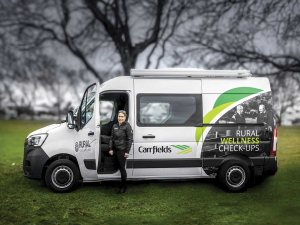
Celebrating 50 years in the rural landscape of Central Canterbury and beyond, Ashburton-based Carrfields, has been the exemplar for all aspects of modern agriculture via its extensive range of services including supply, growing, agronomic advice and marketing.
For Taupiri dairy farmers Logan and Sian Dawson, their involvement in the NZ Dairy Industry Awards has been a key catalyst in the growth of their business - the experience helping shape how they approach the farm ownership pathway they are pursuing today.
West Otago dairy farmer Luke Kane has been awarded the 2026 Rabobank Dr John Morris Business Development Prize.
OPINION: As the general election approaches, political parties are churning out policies in the hope of attracting more votes.
An LIC bull, Tronnoco AR Sadio-ET S3F, bred by Tony and Keri O'Connor of Tronnoco Farming Co Ltd near Timaru, has won the 2026 Mahoe Trophy.
With forecasters advising El Niño conditions will develop through winter and strengthen into spring and summer, Ballance Agri-Nutrients is encouraging farmers and growers to think ahead about nutrient planning and be prepared to work around challenging weather conditions.




OPINION: The same mainstream media muppets that brought you Jacindamania in 2017 have been flat out pimping for the Opportunities…
OPINION: Your old mate reckons the atrocious way farmers in the UK are treated by their lords and masters in…