
Federated Farmers Welcomes ACT’s New Farming Policies
Federated Farmers has welcomed new rural policies released by ACT, saying they align closely with its own election priorities.




 increase font size
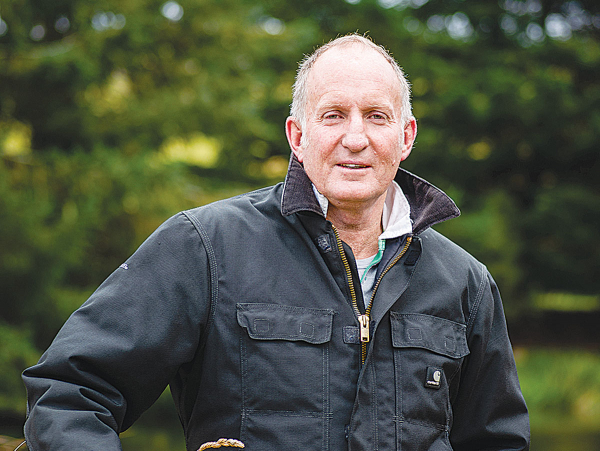 B+LNZ chair Andrew Morrison.
Primary sector partners have signalled a united determination to advocate strongly for farmers on emissions pricing.
Earlier this month, the leaders of DairyNZ, Beef+Lamb NZ and Federated Farmers met to discuss emissions pricing and to re-establish a common position between the three organisations.
DairyNZ chair Jim van der Poel says a united voice on emissions pricing is the best way to ensure positive policy outcomes for farmers.
“All three organisations have agreed on nine core principles that we will all be raising in our submissions and through the He Waka Eke Noa partnership.”
The Government’s emission pricing proposal differs significantly from the He Waka Eke Noa recommendations, which were designed as a wholefarm system approach to reduce emissions, meet targets and give fair recognition and reward for on-farm planting. The Government’s subsequent changes have needlessly put the finely balanced cross-sector consensus at risk.
“Our organisations are all united in our determination to get the best possible outcome we can and will continue to work closely together as we advocate for farmers,” says Beef+Lamb NZ chair Andrew Morrison.
Federated Farmers chair Andrew Hoggard said individual organisations will continue to raise sector specific issues.
The current methane targets are wrong and need to be reviewed.
The methane price should be set at the minimum level needed and be fixed for a five-year period to give farmers certainty.
Any levy revenue must be ringfenced and only be used for the administration of the system, investment in R&D, or go back to farmers as incentives.
The future price should be set by the Minister on the advice of an independent oversight board appointed by all He Waka Eke Noa partners.
The system must incentivise farmers to uptake technology and adopt good farming practices that will reduce global emissions.
All sequestration that can be measured and is additive should be counted.
Farmers should be able to form collectives to measure, manage, and report their emissions in an efficient way.
Farmers who don’t have access to mitigations or sequestration should be able to apply for temporary levy relief if the viability of their business is threatened.
We will not accept emissions leakage.
Federated Farmers has welcomed new rural policies released by ACT, saying they align closely with its own election priorities.
Federated Farmers is backing Feilding High School’s call to keep Agriculture and Horticultural Science as a standalone subject in Year 11.
National’s pledge to introduce 19 new national standards shows the party is serious about getting Wellington out of farming, Federated Farmers says.
Today, 15 October, is the International Day of Rural Women, which recognises rural women’s contribution to farming, communities and the environment.
Mobile phone coverage and reliability are deteriorating in rural areas, and farming families are bearing the cost, according to a Federated Farmers survey.



Federated Farmers has welcomed new rural policies released by ACT, saying they align closely with its own election priorities.

Rural Contractors NZ says proposed changes to land transport rules for agricultural vehicles are a welcome response by the Government to out of date regulations which have seen members hit with huge fines.
Alliance is calling for final applications for its 2027 Graduate Programme, with applications closing on Sunday 25 October.
Decades piloting planes has ensured vet and farmer David Hayes is focused on safety. So, after a serious accident while welding on farm, he is sharing his experience so others can learn from it.
Canterbury milk processor, Synlait Milk has confirmed Leon Fung as its chief executive officer.
OPINION: Making it easier to collect rainwater and use it to grow crops and livestock is a no brainer.




OPINION: The same mainstream media muppets that brought you Jacindamania in 2017 have been flat out pimping for the Opportunities…
OPINION: Your old mate reckons the atrocious way farmers in the UK are treated by their lords and masters in…




