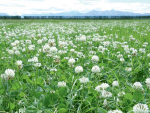
White Clover: Free Nitrogen as Urea Prices Climb
Growing great pasture this season doesn’t have to break the bank.




 increase font size
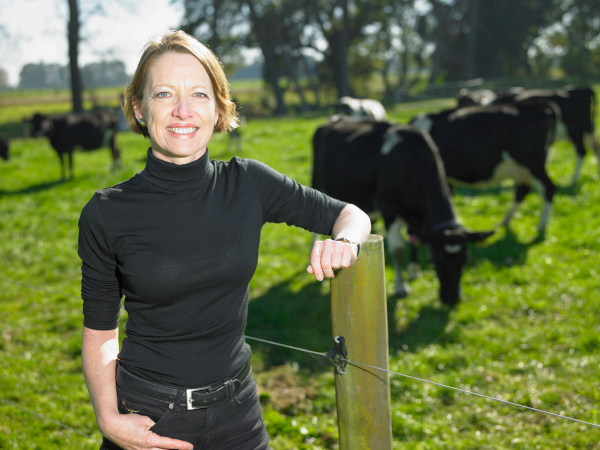 Dr Jacqueline Rowarth.
Dr Jacqueline Rowarth on our misunderstandings about the role of nitrogen.
OPINION: Nitrogen is a basic requirement for the creation of soil organic matter.
It doesn’t matter whether the source of the nitrogen is synthetic fertiliser (such as urea or DAP), urine, legume fixation or animal manure – but it is required. Every tonne of carbon sequestered in the soil is associated with 80 to 100kg of nitrogen, as well as approximately 20kg phosphorus, 14kg of sulphur and smaller amounts of various other nutrients.
In many soils it is the addition of nitrogen fertiliser that has allowed more plants to grow and die, contributing more organic matter to the soil than was possible before the fertiliser was added.
This is assuming that moisture and other nutrients are not limiting for plant growth.
Considerable research across New Zealand and Europe has shown that adding fertiliser nitrogen and grazing pastures optimally results in a higher proportion of organic matter in soils than is possible under either lax management or hard grazing. ‘Optimal’ is the key.
The misunderstanding about the role of nitrogen has arisen because of some American research where farmyard manure was replaced by urea and the organic matter in the soil decreased.
Of course, it did.
Manure contains a lot of carbon with some nitrogen and other nutrients. Urea is almost half nitrogen with some carbon, oxygen and hydrogen. The soil organisms were used to a high carbon diet and cannibalised the organic matter in the soil as they adjusted to their new diet. (The human analogy is moving from a normal to an Atkins diet (low carbs), and cannibalizing fat reserves as the body searches for energy...)
A second piece of research, by the same group, calculated carbon inputs in cropping to a base soil over 51 years (1955-2005), in comparison with actual soil carbon after 51 years. The synthetic fertiliser nitrogen plots had less soil carbon than the calculation indicated ‘should’ have been present. The authors concluded that the synthetic fertiliser nitrogen had eroded the soil organic matter.
However, examination of the data indicated that after 51 years of cropping, plots with treatments involving addition of synthetic fertiliser contained more soil carbon than those which had not.
Pasture production and soil organic matter in New Zealand have increased over time due to research informing management strategies. These include application of fertiliser and lime and optimisation of grazing regimes. The Ministry for the Environment and StatsNZ have reported that soil total carbon (which makes up approximately 58% of soil organic matter) is now within target range for 95% of tested sites.
Professor Louis Schipper of University of Waikato has warned that when soils reach higher soil organic matter status, they can become susceptible to C loss if management changes.
Changes in climate also have an effect. Warmer temperatures generally stimulate both plant growth and soil organism activity. As soils dry out, plant growth is curtailed before that of soil organism activity. Micro-organisms are able to keep active, using the organic matter as energy, for longer in drought than plants can keep growing. Once the plants have stopped growing, the organic matter being consumed by the soil organisms is not replaced and so soil organic matter will be eroded.
Irrigation can prevent this loss.
By keeping plants growing, inputs to the soil organic matter are maintained. Although some decreases in organic matter with irrigation have been reported, research has indicated that the irrigated plants were lacking in nitrogen. In this scenario, the activity of the soil organisms in the warm moist conditions outstripped that of the plants.
The interactions between the different components of biology, physics and chemistry involved in the soil are highly complex and the drivers of change in soil biology and organic matter are still being examined.
Soil biology has been described as the Black Box of the soil. Aeroplane black boxes are actually orange to aid recovery. Calling them black is as much a misrepresentation as suggesting synthetic nitrogen destroys organic matter.
• Dr Jacqueline Rowarth has a PhD in Soil Science. The analysis above is her own. This email address is being protected from spambots. You need JavaScript enabled to view it.
Growing great pasture this season doesn’t have to break the bank.
Precision application of nitrogen can improve yields, but the costs of testing currently outweigh improved returns, according to new research from Plant and Food Research, MPI and Ravensdown.
A New Zealand developed and manufactured nitrogen efficiency booster is growing in popularity in China where it is used to improve potato crop production.
Di-ammonium phosphate is frequently added to grape juice at the start of fermentation to ensure yeast have adequate nitrogen to complete fermentation.
Nitrogen is an essential nutrient for plant growth, and nitrogen fertiliser has long been critical to maintaining the high productivity of grazed pasture systems in New Zealand.


For Canterbury dairy farmer Cameron Henderson, supporting Meet the Need comes down to a simple question: how can the success of New Zealand farming benefit more than just those within the industry?
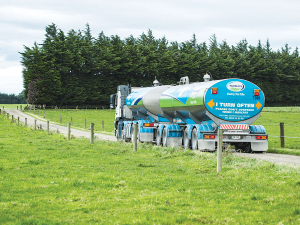
Fonterra board members are in line for a pay rise of around 3%.
Dairy processors are ready to further boost New Zealand’s export earnings but want the incoming government to match their ambition with good policy.
Massey University is best placed to solve the “problems” facing the dairy industry, says vice chancellor, Pierre Venter.
Synlait's longest serving employee – a man who joined the Canterbury-based milk processor even before it began processing milk – is now its newest executive.
A dairy industry leader believes eradicating the common and costly disease, Bovine Viral Diarrhoea (BVD) is within reach.


OPINION: The same mainstream media muppets that brought you Jacindamania in 2017 have been flat out pimping for the Opportunities…
OPINION: Your old mate reckons the atrocious way farmers in the UK are treated by their lords and masters in…




