Major shakeup for the NZ science system
The government has announced a major restructuring of the country's seven crown research institutes (CRIs), which will see them merged into three public research organisations (PROs).




 increase font size
The first six months of 2016 were the warmest start to a year on record in New Zealand.
NIWA (National Institute of Water and Atmospheric Research) explains that the warmer temperatures were due to a combination of climate change, exceptionally warm seas and more northerlies than usual.
In December last year, the NIWA 'outlook' was for temperatures over the next three months to be "most likely (45%) average" with only 25% chance of above average temperatures. By January the above average likelihood for the following three months had increased to 40%, and by February to 45%. In March it was 55% and April (covering the period until June), 60%.
This shows the difficulties of forecasting in general, and of predicting the effects of several factors at once in particular. NIWA has sophisticated models, but NZ has a unique island environment.
The people who work in this unique environment, and support the unique economy -- the farmers and growers -- already knew it was unusually warm. They have been coping with unprecedented climate adjustment and impact on pasture growth and incursion of pests and diseases for several seasons. What is needed is some direction on how to deal with the changes.
News of the 'warmest six months' was accompanied in the media by consideration of impacts, but little discussion of the research that would be required to ensure sustainable natural resource management for production and conservation.
Concerns have already been raised that the capability and capacity to do the research no longer exist. At Agresearch, for instance, rejuvenation, refocusing and relocation – thereby meeting a combination of requirements for research directions and funding – mean that many mature researchers have departed and new positions are at central hubs. Infrastructure, institutional memory and culture are all being lost in the repositioning, and NZ as a whole will be affected.
In the 2014-15 annual report Agresearch reports having received about $72.5 million from industry for commercial research and $60m from the Ministry of Business, Innovation and Employment (MBIE). This suggests that although 55% of research effort and results will be directly captured by industry, 45% should be strategic/public good. The latter is the research that focuses on the environmental landscape but is difficult to sheet home to an individual user. Biosecurity and understanding of pests and diseases – and therefore how they can be managed – are in this category. The pasture pest research capability in Agresearch is estimated to be at most one-third of what it had a decade ago. The climate change group has been similarly downsized, as has strategic plant breeding in general
Of particular concern to farmers and growers should be the loss of research covering the wide range of climate and soils, and hence weather-pest-disease-pasture-animal-environment interactions, that are a feature of NZ.
Central research hubs are supposed to serve the regions, but tales of 'too far in terms of time and expense' already exist. Of course there are some researchers still trying to do what is required, but budgets constrain their efforts. And models cannot take the place of actual research.
The outlook is not improving. Open bidding for funding through MBIE and 'innovative New Zealand' puts vital public-good research on pest management and climate change into the same pool as far more trendy subjects such a high-tech manufacturing.
Examination of what farmers and growers need from research in order to be able to go on supporting the economy is urgent. Aligning research funding to contribution would be a start, as would giving core funding to the scientists with a track record of research that adds value to farmers and growers. The next step would be to re-establish research in the regions, perhaps on Landcorp farms in the absence of research farms.
A rethink of the current system is vital to ensure the sustainable future that farmers and growers want and NZ needs.
• Jacqueline Rowarth is professor of agribusiness, The University of Waikato.
The government has announced a major restructuring of the country's seven crown research institutes (CRIs), which will see them merged into three public research organisations (PROs).

OPINION: NIWA has long weathered complaints about alleged stifling of competition in forecasting, and more recently, claims of lack of transparency by the Crown-owned entity - spurred by its refusal to release information under the OIA about its conduct around Cyclone Gabrielle and the Hawke's Bay flooding.
Merging MetService and NIWA is the right thing to do, but independent weather forecaster Phil Duncan of WeatherWatch says he isn’t sure a merged entity will boost rural weather forecasting.
NIWA scientists leading New Zealand’s MethaneSAT agricultural emissions science programme are gearing up for the launch of its satellite.
OPINION: Plan for the worst and hope for the best!

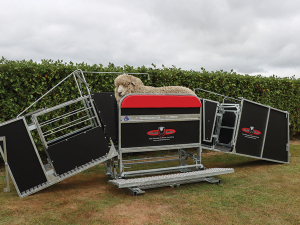
Oamaru-based livestock handling specialist Te Pari has bought Combi Clamp, the New Zealand manufacturer of Combi Clamp manual sheep handlers.
Agriculture Minister Todd McClay has admitted that a scheme bringing workers from Pacific nations to work on orchards has become too hard to navigate but says changes are coming.
A new app designed in New Zealand aims to help sheep, beef and deer farmers capture, analyse and use body condition score data more effectively.
Canterbury farmer Andy Macfarlane has been appointed to the board of AgriZeroNZ, the public-private partnership designed to accelerate the development and deployment of emissions reduction tools for New Zealand farmers.
For over 50 years Mel Ewers has been supporting the apple sector navigate through compliance and quality assurance issues.
The apple sector is enjoying a bumper harvest season.



A fair question has been raised about how member-funded organisations should conduct themselves when taking a public position on any…
OPINION: It really is getting harder to lampoon government bureaucrats when they do such a good job of it themselves.…