
Lanaco and Blueair Launch World-First NZ Wool Air Filter
New Zealand wool is reaching new heights as air filtration companies move away from synthetic products to biodegradable alternatives.



 increase font size

New Zealand Wool Services International CEO John Dawson says the strengthened New Zealand dollar has negatively impacted at this week's South Island sale with most types easing in local terms.
The weighted indicator for the main trading currencies has lifted 2.97 percent compared to the last North Island sale on 1st October and 4.67 percent against the previous South Island sale.
Of the 8,423 bales on offer 75.4 percent sold.
Dawson reports that compared to the South Island sale on 24th September, Merino Fleece 17 to 23.5 microns were 2 to 6 percent cheaper in-line with currency movements and high seasonal volumes.
Mid Micron Fleece 24 to 27 microns were 2 to 4 percent cheaper with 28 to 30.5 microns down 7 to 9 percent.
Compared to the North Island sale on 1st October, Fine Crossbred Full Fleece 31.5 and 32 microns were 3 to 4 percent dearer with 32.5 and 33 microns up to 9.5 percent dearer as limited volumes pressured this segment. Fine Crossbred Second Shears 32 to 35 microns were generally 1.5 to 5 percent cheaper with shorter types under continued pressure.
Coarse Crossbred Fleece were up to 1 percent easier.
Coarse Second Shears were 1.5 to 2.5 percent cheaper.
Short Oddments were down 1.5 to 3.5 percent.
Well spread interest with Western Europe and China dominating the Fine Wool sector with Australasia and China strong on the fine and coarse crossbred wools, supported by Middle East, United Kingdom and India sparingly.
Next sale on 15th October comprises approximately 5,000 bales down 30 percent on anticipated roster volumes.
New Zealand wool is reaching new heights as air filtration companies move away from synthetic products to biodegradable alternatives.

Will a stronger, more coordinated voice help rebuild confidence and improve returns in the wool sector?
OPINION: Confidence in the wool sector is rebounding as prices hit levels not seen in more than 15 years.
Rising strong wool prices are finally returning the sector to profitability.
The recently signed free trade agreement with India is an invitation to strengthen relationships between the New Zealand and Indian strong wool industries, says Wool Impact chief executive Andy Caughey.



The Royal New Zealand College of General Practitioners (the College) and Hauora Taiwhenua Rural Health Network are calling for investment in a proposed new training pathway for rural GPs, warning that many rural practices are struggling to recruit while a large share of the existing workforce nears retirement.
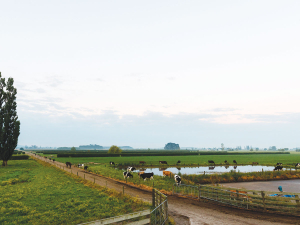
Federated Farmers has called on Central Otago District Council (CODC) to drop or vote down a plan to truck sludge from Alexandra and Cromwell to farmland near Lauder, warning it would compound an "outrageous" situation created by a separate council's decision weeks earlier.
Synlait has swung to second-half profit as operations stabilise, but the dairy processor still posted a $75.4m annual loss.
LIC shareholders have elected a new North Island representative to the co-operative's Board, along with five representatives to its Shareholder Reference Group (SRG), following the company's Annual Meeting held in Invercargill.
Farmers across parts of Southland and South Otago are continuing to deal with difficult conditions after a prolonged run of wet weather, with pressure building around feed supply, stock management, pasture damage, farm infrastructure and everyday workloads.
Federated Farmers says it welcomes Labour's commitment to reviewing the Sharemilking Agreements Act, calling on other major parties to do the same.

OPINION: The same mainstream media muppets that brought you Jacindamania in 2017 have been flat out pimping for the Opportunities…
OPINION: Your old mate reckons the atrocious way farmers in the UK are treated by their lords and masters in…




