DairyNZ has calculated that the cost of lameness in a 550-cow herd with 20% lame cows per year amounts to direct and indirect costs of $750 per cow.
These costs can dramatically decrease by ensuring that regular hoof trimming keeps animals on a good footing, minimises stress and results in maximum production.
“A race car with the best engine is never going to win unless the tyres allow it to get power to the ground, and dairy cows should be looked at in a similar light,” says the Waikato-based Hoofman – Johan Buys.
For a cow to be productive, fertile and able to walk 3km daily from paddock to shed, she must be right on her pins, he says.
Buys’ mission is to help dairy and beef farmers understand the need for the weight bearing capacity of hooves to be maximised by animals’ good posture; this promotes their mobility, alleviates pain and helps them realise their full production potential.
Buys grew up in rural South Africa on a sheep and beef farm, studied animal health and worked for the Department of Veterinary Services for six years. Following a term as a veterinary technician, Johan was involved in the conversion and setting up of (at that time) the largest high-input dairy systems farm in South Africa, managing the dairy, systems, animals, and veterinary needs for five years.
Emigrating to New Zealand in 2008, working on dairy farms and a veterinary practice, he identified a significant need in the industry, noting the biggest contributor to empty cows in the Waikato was clinical and sub-clinical lameness.
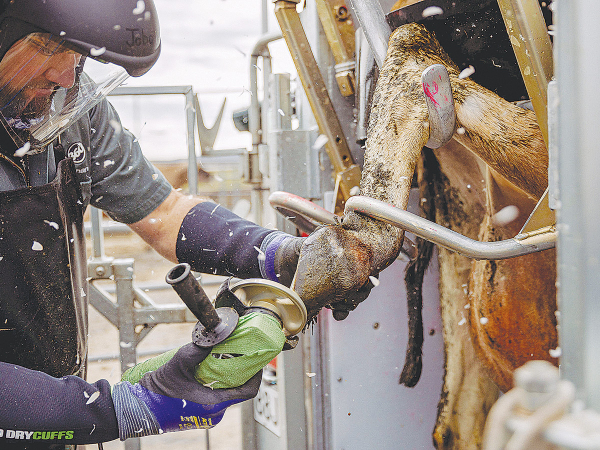
He formed his family business in 2013. Specialising in treating and trimming lame cows and bulls on commercial dairy farms, using suitable correct equipment and extensive knowledge, the business undertakes remedial and routine hoof treatment to create an optimum environment for a speedy recovery with minimum stress to the animal.
Trimming and treating lame cows correctly using a qualified and experienced trimmer ensures a speedy recovery and ensures minimal permanent damage to the claw.
“We set out to ensure correctly balanced claws to prevent any further damage, making sure all four feet are checked, as cows will alter their weight to alternate claws to relieve pain of the effected claw,” says Buys. “This leads to pressure points and lesions on the other claws.”
Buys says preventative trimming twice a year on affected cows will dramatically reduce lameness and sub-clinical lameness, a service that can be done for as little as $24 for two rear feet and is being recognised as a good investment by increasing numbers of dairy farmers.
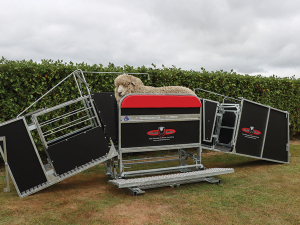
Much of the Hoofmans’ operation is driven by easy, safe and comfortable treatment of the animals, using self-propelled hydraulic chutes for big and small animals, in this case the Dutch WOPA hoof trimming chutes that are easy to get around dairy sheds. A recent venture sees the units available for rental, allowing suitably skilled farmers to undertake their own safe treatment.
An expanding team of experienced trimmers are trained then regularly assessed and evaluated by Johan to ensure they are always up to date with best practice.
A final part of the operation is the provision of tried and tested products from around the globe, typically used by the business first for validation. These include the ‘Pro’s Choice’ product range of hoof blocks, glues, hoof knives arm protectors and grinding discs.
www.thehoofman.co.nz