Dutch co-op's profit slumps
One of the world's largest dairy co-operatives is reporting a slump in half-year profits on the back of declining commodity prices and lower sales volumes.




 increase font size
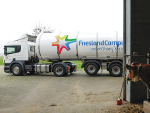
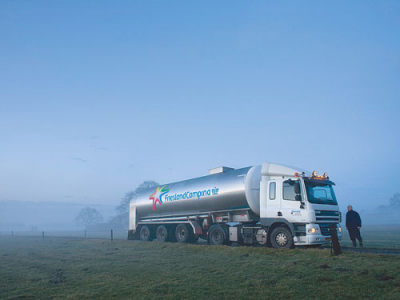 FrieslandCampina says milk payout to farmers rose 27% in the first half of this year.
European dairy co-op Royal FrieslandCampina says the milk price paid to its farmer shareholders rose 27% during the first half of this year.
In its half year report, the co-op says milk supply from farmer suppliers declined by 1% to 5435 million kgMS.
Total payments to farmers rose 24.1% to 2.1 billion euros; the pro forma milk price paid to member dairy farmers reached Euro 38.37 per 100kgMS.
FreislandCampina chief executive Roelof Joosten says the milk price for farmers recovered this year after several disappointing years.
“The higher sales prices for primarily butter and cheese lie at the root of this recovery,” he says.
“In Western Europe we were successful in passing on the higher guaranteed price in the sales prices. This is reflected in the increased revenue.
“The total payment to member dairy farmers increased by 24% versus the first half of 2016. High growth levels were achieved in Indonesia and Vietnam, and with cheese and butter. In Germany, the Philippines and
Nigeria result trends are not as positive due to local market conditions and negative currency effects, the latter particularly in Nigeria.”
The co-op’s revenue rose 10.7% to Euro 6.1b on volume growth in Southeast Asia, with food service products, added-value segment cheese and pharmaceutical lactose; consumer volumes in Europe in particular were under pressure.
Operating profit rose 7.8% to Euro 275m primarily due to the strong recovery of cheese and butter sales prices.
Joosten attributed the increase in revenue to higher sales prices of 10.3%; the acquisition of Engro Foods in Pakistan at the end of 2016 contributed 2.4%.
Butter products had the highest price increases due to the increased global demand for butter and cream products with a declining supply.
Milk supplied by FrieslandCampina farmers dropped by 53m kgMS over the first half-year 2017 to 5435m kgMS.
One of the world's largest dairy co-operatives is reporting a slump in half-year profits on the back of declining commodity prices and lower sales volumes.

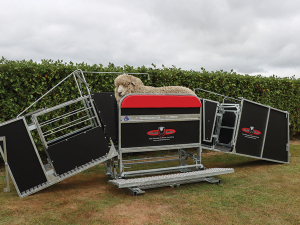
Oamaru-based livestock handling specialist Te Pari has bought Combi Clamp, the New Zealand manufacturer of Combi Clamp manual sheep handlers.
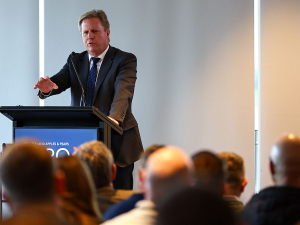
Agriculture Minister Todd McClay has admitted that a scheme bringing workers from Pacific nations to work on orchards has become too hard to navigate but says changes are coming.
A new app designed in New Zealand aims to help sheep, beef and deer farmers capture, analyse and use body condition score data more effectively.
Canterbury farmer Andy Macfarlane has been appointed to the board of AgriZeroNZ, the public-private partnership designed to accelerate the development and deployment of emissions reduction tools for New Zealand farmers.
For over 50 years Mel Ewers has been supporting the apple sector navigate through compliance and quality assurance issues.
The apple sector is enjoying a bumper harvest season.

OPINION: City and regional councils have been put on notice - stop using extreme climate forecasting scenarios that can drive…
OPINION: The Green Party’s rivers and oceans policy may have a new name but nothing else has changed.