Perrin Ag Appoints Consultant Vicky Ferris to Strengthen Hawke’s Bay Agribusiness Support
Perrin Ag has appointed Vicky Ferris as its new Hawke's Bay consultant.




 increase font size
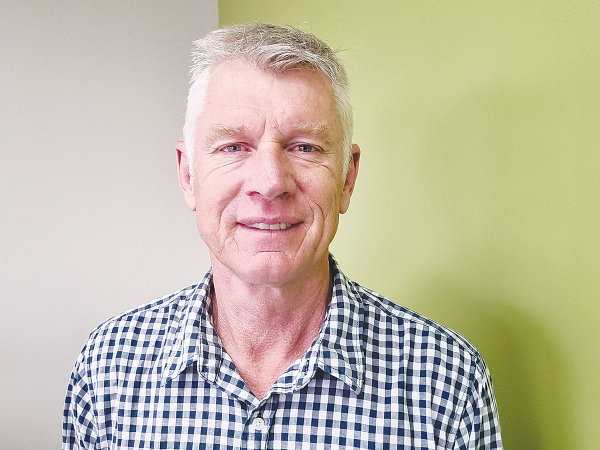 Perrin Ag senior consultant Rob Brazendale believes farmers should start planning now for a dry summer.
With NIWA predicting a hot, dry summer, farmers are being encouraged to consider once-a-day (OAD) milking as a low-cost strategy to minimise the impact of dry conditions on next season, while looking after their cows and their team.
NIWA has recently released its predictions for the upcoming summer month, with the North Island in for above average temperatures, near or below average rainfall, and near or below average soil moisture.
Perrin Ag senior consultant Rob Brazendale says, while predictions are just that, and they don't know exactly how the season will play out, it is prudent for farmers to start planning now for a dry summer.
"One strategy that is under-utilised, particularly on unirrigated North Island dairy farms, is once-a-day milking.
"Reducing milking frequency to once-a-day from Christmas onwards has been found to have considerable benefits including better cow condition, less heat stress, a small reduction in feed demand, and a much more enjoyable summer for the on-farm team."
A DairyNZ trial where cows were milked OAD from Christmas onwards found these cows had a quarter Body Condition Score (BCS) higher than cows milked twice a day, which flowed through to improved reproduction and milk production the following spring.
Milk production dropped 13% per day at the time of switching to OAD. However, because two thirds of the season's production had been achieved by the time of the switch, this equated to a 5% reduction for the full season.
Brazendale says one argument against using OAD is the impact on somatic cell count (SCC).
"Farmers with herds that have higher SCC would need to manage the transition carefully as SCC could double for a few days after the switch."
He says others can learn from those who have successfully implemented a OAD strategy.
"It is best to make the transition earlier rather than later. If the switch is made while the cows are still milking well, say at 1.5-1.7 kgMS/cow, the impact of increasing SCC is mitigated by higher milk volumes. And again, if cows are milking well and feeding levels are maintained, the decline in milk production tends to be reduced. Avoid the temptation to reduce feed allowances because the cows are being milked OAD."
He says planning now for options to reduce feed demand going into the summer should be a priority for dairy farmers.
"We should expect a period where feed supply will not meet demand.
"Options for dairy farmers to balance this equation fit broadly into two strategies: increase feed supply and/or reduce demand.
"Increasing feed supply normally means increasing the use of purchased feed. While this strategy has served dairy farmers quite well in recent years, the terms of trade for purchased feed appear less favourable this season.
"Feed costs are high at around 40-50c/kgDM down the throat and a $9/kgMS plus milk price is looking less certain.
"Our advice to farmers is to do the maths, use realistic figures for milk responses to feed, allow for wastage and don't forget about the hidden costs of feeding out, including time and depreciation on machinery.
"As the saying goes: plan for the worst and hope for the best."
Perrin Ag has appointed Vicky Ferris as its new Hawke's Bay consultant.

Agri advisor Perrin Ag says its graduate recruitment programme continues to bring new talent into the agricultural sector.
Rhys Dawson will join Perrin Ag in 2025 as the firm’s newest graduate recruit, bringing a passion for inter-generational agribusiness and sustainable farming.
A landmark Māori agribusiness programme has been launched by Waikato University in partnership with the NZ Institute of Primary Industry Managers (NZIPIM).
Once-a-day milking (OAD) can increase or lower the amounts of proteins in milk, according to a new study published in the journal Dairy.
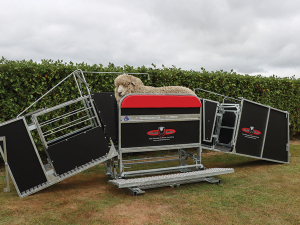
Oamaru-based livestock handling specialist Te Pari has bought Combi Clamp, the New Zealand manufacturer of Combi Clamp manual sheep handlers.
Agriculture Minister Todd McClay has admitted that a scheme bringing workers from Pacific nations to work on orchards has become too hard to navigate but says changes are coming.
A new app designed in New Zealand aims to help sheep, beef and deer farmers capture, analyse and use body condition score data more effectively.
Canterbury farmer Andy Macfarlane has been appointed to the board of AgriZeroNZ, the public-private partnership designed to accelerate the development and deployment of emissions reduction tools for New Zealand farmers.
For over 50 years Mel Ewers has been supporting the apple sector navigate through compliance and quality assurance issues.
The apple sector is enjoying a bumper harvest season.

OPINION: City and regional councils have been put on notice - stop using extreme climate forecasting scenarios that can drive…
OPINION: The Green Party’s rivers and oceans policy may have a new name but nothing else has changed.