Fonterra's Whareroa Wins Directors Award
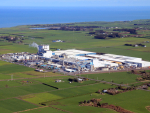
Fonterra's Whareroa site took home the prestigious Directors Award at the co-op's 'Oscars of Manufacturing', while Clandeboye led the way with multiple wins at this year's Best Site Cup.




 increase font size
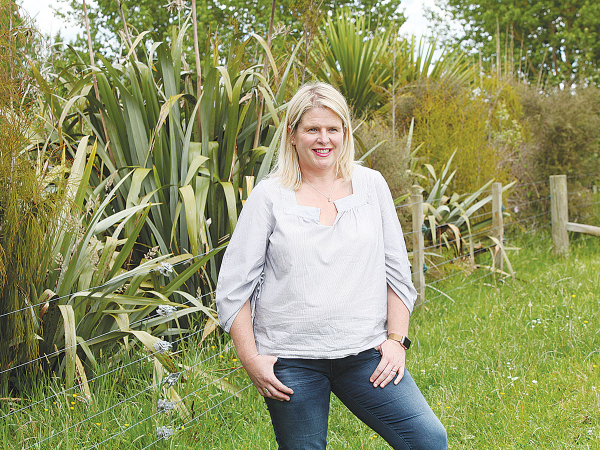 Fonterra director of sustainability Charlotte Rutherford says sustainability was top of mind for every customer she spoke to at a recent conference in Florida.
Dairy consumers are demanding change, now, according to Charlotte Rutherford, director of sustainability at Fonterra.
She says sustainability was top of mind for every customer she spoke to – Nestlé, MARS, Abbott, Premier – at the recent International Dairy Forum Association (IDFA) in Florida.
“They’re all laser focused on sustainability in their products and supply chain,” says Rutherford.
“Consumers are demanding change, quickly, with the main issue being carbon reductions.
“We should be prepared for these demands to continue to grow, and in turn we need to adapt to maintain and protect our value.
“For these customers sustainability is no longer a nice to have or value add, it’s a must have if we want to continue working together in the future.”
The annual forum attracts over 1,000 dairy leaders to connect with other industry leaders, advance their knowledge and discover new perspectives on issues that are important to our industry.
Many of Fonterra’s strategic customers shared their insights and perspectives on a wide variety of relevant topics to advance dairy's growth in the US in the years ahead.
Rutherford spoke on a panel discussing how global environmental, social and governance (ESG) trends impact leadership decisions, and showcased Fonterra’s work to become more sustainable.
Rutherford notes that the US dairy industry is big, bold, and growing. She says ever the optimists, representatives from the US were extremely confident about the adaptability and future of their industry.
“They claim their industry is the most sustainable and believe offsetting is the solution to on-farm emissions, strongly promoting it.
“They believe this, along with the supply, and the ability to grow, means they will meet the sustainability expectations of customers and consumers.
“That doesn’t mean they don’t have challenges – carbon measurement and reporting, access to water in some states, and of course individual state laws to contend with, to name a few.
“With our low carbon dairying, we have an advantage. The US, amongst others, is hot on our heels and this is ours to lose.”
Rutherford describes regenerative agriculture as “two words, one big promise”.
She points out that while the concept of regenerative agriculture is popular with consumers and customers, it remains relatively undefined.
“The good news… we have a very real opportunity to lead and deliver in this space.
 |
|---|
|
Consumers are demanding change, quickly, with the main issue being carbon reductions, says Fonterra. |
“Our pastoral based system is compatible with most regenerative principles and ideas, and, because of our existing reputation, it’s likely to be viewed more favourably by consumers.”
Rutherford says measuring our progress as an industry has never been more important.
“We have world-leading experts in this space to ensure Fonterra’s method for pastoral farming is fairly and transparently represented in any global system.
“However, the difference in geographic farming systems means some methods could disguise other companies’ true footprints.
“These reporting protocols will shortly be reviewed, and we will be working hard to ensure transparency to retain our leading position.”
Rutherford says the global sustainability space is moving incredibly quickly, and the industry must continue to accelerate our work.
For Fonterra, this is an opportunity, she says.
“We are in a prime position to claim the leading position for most sustainability issues in the industry. Key to this will be partnering with our customers to set achievable roadmaps that represent our farmers current practices, achieving a pace of change appropriate to our unique farming system.”
Fonterra's Whareroa site took home the prestigious Directors Award at the co-op's 'Oscars of Manufacturing', while Clandeboye led the way with multiple wins at this year's Best Site Cup.
After 25 years it is the right time to step away, says Colin Glass, the retiring chief executive of New Zealand's largest private corporate dairying company, Dairy Holdings.
Fonterra is strengthening its foodservice presence in China with the launch of a new cream for professional bakeries at Bakery China 2026 in Shanghai.
OPINION: To a chorus of crying greenies, and not a minute too soon, the Government has moved to put the courts back in their place through proposed amendments to the Climate Change Response Act 2002, intending to limit climate litigation claims such as Smith v Fonterra, in the interests of providing greater certainty for vital industry.
For the third season in a row, Fonterra farmers are in for a farmgate milk price near $10/kgMS.
New Zealand dairy farmers are set to be the first in the world to receive access to a new digital physical milk pricing tool that enables them to fix the price for their physical milk.
State farmer Pāmu is opening its farm gates this summer in an effort to give the rural sector the opportunity to see how large-scale, multi-system farming is delivering productivity and profitability across New Zealand.
A five-year study has found that the cost of reducing emissions without technology may be significant and unsustainable for Northland dairy farmers.
DairyNZ says Waikato farmers need certainty on Plan Change 1, but they say that certainty must be matched with practical, workable rules and a clear transition that doesn't get ahead of the new resource management system currently under review.
While the Government has moved quickly to make commercial hauliers' lot easier during the current fuel crisis, they appear to be stuck in the creep box when it comes to the agricultural industry.
Waikato farmers have been told that the Government’s new planning system legislation and the region’s Plan Change 1 (PC1) “won’t mesh together very well”.

OPINION: No one messes around with Winston Peters, more so in a general election year.
OPINION: Staying on Federated Farmers, this week's annual general meeting in Auckland is shaping up to be an interesting one.