Let’s talk about industry culture
2018 Fonterra Dairy Woman of the Year Loshni Manikam says dairy should follow a workplace philosophy similar to Google.




 increase font size
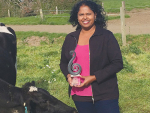
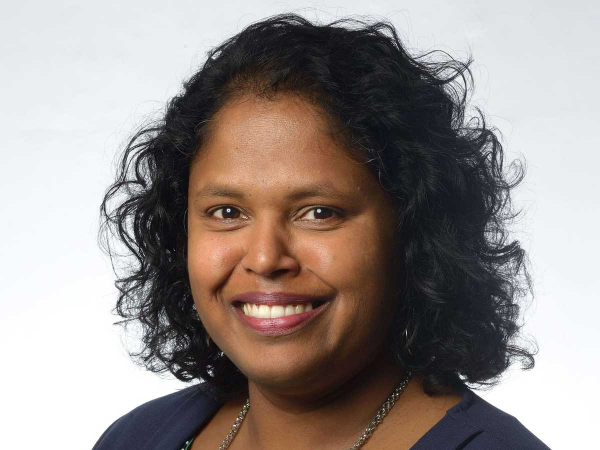 Southland farmer Loshni Manikam.
The year is 2010 and Loshni Manikam – co-owner of a Southland farm, wife and mother – tells her husband for the second time that she is unhappy with her life.
“I remember a moment when I could see the raw pain and confusion in his eyes and face,” she writes in her new book The Rural Women Dilemma. She describes that moment as a ‘breaking point’; she had to get up and do something.
Thirteen years on from that moment, and Manikam, originally from South Africa, has released a new book inspired by her experiences, both in those low moments and in her career since as a coach and facilitator working with rural women.
She has since gone on to win the Dairy Woman of the Year competition in 2018.
“I want to help rural women see that they are not alone and there is nothing wrong with them if they sometimes struggle,” she told Dairy News.
“I’ve been privileged to have hundreds of conversations with women through my coaching sessions or workshops and I see the same struggles and patterns come up repeatedly – but each woman feels like she’s the only one.”
Manikam says a major part of writing the book is to bring awareness and attention to the fact that rural women are struggling.
“I’m inspired to write this book because I think we need more national action on this and I hope that the book will spark some of that conversation and action.”
She says the ‘rural women dilemma’, after which the book is named, is the battle between the needs of family, business and community and your own needs.
“A lot of women are stuck with this dilemma because they are expected to do the first and there is little support to do the second. But it’s very difficult to continue to look after others when you are struggling,” Manikam says.
She says there’s a need women feel to wear a ‘Mask of Perfection’, adding there is pressure on women to pretend everything is going well.
“It takes courage and vulnerability to take off the Mask and be your authentic, imperfect self. But I would encourage them [women] to find safe spaces to take off that Mask sometimes – otherwise you spend your entire life being a fake version of you,” she says. “I encourage more rural women to talk about our imperfect lives and our struggles, so that we can start normalising it for all women.”
She says many women feel as if it’s their fault when they are unhappy, as though there’s something wrong with them.
“That’s a key reason why I do the work I do – to help women see that there’s nothing wrong with them,” she says.
The Rural Women Dilemma is available for purchase on Amazon or via thrivingfarmingwomen.com
2018 Fonterra Dairy Woman of the Year Loshni Manikam says dairy should follow a workplace philosophy similar to Google.
The dairy industry has been successful, now it needs to be happy, says 2018 Dairy Woman of the Year Loshni Manikam.
The rural sector needs to focus more on mental wellness and look at developing simple self-diagnostic tools, says a South Island professional development coach, Loshni Manikam.
WORK IS well underway to plan the dairy industry's largest event targeted for the specific needs of women in the business of dairying – the Dairy Womens Network annual conference.
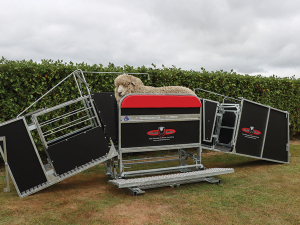
Oamaru-based livestock handling specialist Te Pari has bought Combi Clamp, the New Zealand manufacturer of Combi Clamp manual sheep handlers.
Agriculture Minister Todd McClay has admitted that a scheme bringing workers from Pacific nations to work on orchards has become too hard to navigate but says changes are coming.
A new app designed in New Zealand aims to help sheep, beef and deer farmers capture, analyse and use body condition score data more effectively.
Canterbury farmer Andy Macfarlane has been appointed to the board of AgriZeroNZ, the public-private partnership designed to accelerate the development and deployment of emissions reduction tools for New Zealand farmers.
For over 50 years Mel Ewers has been supporting the apple sector navigate through compliance and quality assurance issues.
The apple sector is enjoying a bumper harvest season.
OPINION: City and regional councils have been put on notice - stop using extreme climate forecasting scenarios that can drive…
OPINION: The Green Party’s rivers and oceans policy may have a new name but nothing else has changed.