Milk Glut Drags Fonterra Forecast Down to $9.20/kgMS
A milk glut around the world shows no sign of easing, putting downward pressure on farmgate milk prices for the next few months.




 increase font size
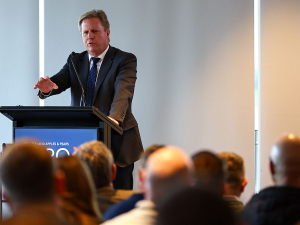
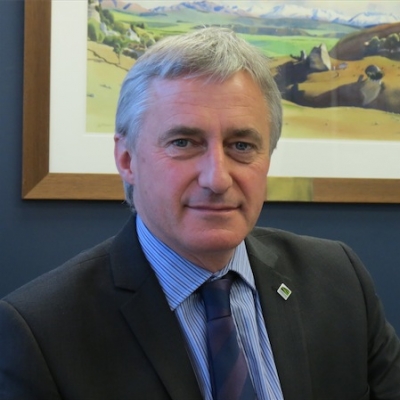 Federated Farmers president William Rolleston
A slump in farmer confidence has seen Federated Farmers' new-season 2015 Farm Confidence Survey move further into negative territory.
Pessimists outnumber optimists for both the general economy and farm profitability.
Federated Farmers president William Rolleston attributes most of the pessimism to the fall in dairy prices, down 46% from their peak on last February.
As a result, the survey shows that nearly 80% of dairy farmers expect their profitability to worsen.
"That should be put in the context however," Rolleston says, "of a very strong 2013/14 season with record returns."
He says a dry summer is affecting sheep and beef farmers' profit expectations. Farmers have to send more stock to slaughter earlier than usual.
"That and a higher than usual dairy cull cow kill has increased supply at meat processors, and that has reduced schedule prices," Rolleston says.
Production reports are generally good for 2014, bouncing back from 2013's severe drought, but the current dry weather is causing concern for the remainder of the season, especially in the South Island.
Farmers' spending intentions reflect this pessimism about profitability, with more farmers now expecting to reduce spending than increase spending. This is particularly true for dairy farmers.
For the first time since the Global Financial Crisis, more farmers expect to increase debt than reduce debt. Again, this is more evident for dairy farmers who are worried about their cash flow over the coming months and expect to go into overdraft. The support of banks will be important over this challenging period.
The agricultural labour market remains very tight with more farmers reporting greater difficulty finding skilled and motivated staff.
The biggest concern for farmers is commodity and farmgate prices, cited by nearly 33% of farmers, followed by the weather, with 21%. Both are up sharply on the previous survey, moving ahead of regulation and compliance costs, with 19%. No other concern attracted more than 6% of respondents.
Farmers' highest priority for the Government is regulation and compliance costs, with more than 25% mentioning it generally or specifying hot topics such as health and safety and the RMA. No other priority attracted more than 10% of respondents, with numerous others evenly spread.
As with the last survey the overall results mask both industry and regional variations.
The headline results from the Farm Confidence Survey:
• A net 19.2% of respondents expect general economic conditions to worsen over the next 12 months.
• A net 38.5% of respondents expect their own farm's profitability to worsen over the next 12 months.
• A net 22.7% of respondents expect to increase production over the next 12 months.
• A net 21.8% of respondents expect to reduce on-farm spending over the next 12 months.
• A net 6.7% of respondents expect to their farm debt to increase over the next 12 months.
• A net 24.4% of respondents found it harder to find skilled and motivated staff over the past six months.
• Respondents' biggest single concern was commodity and farmgate prices, cited by 32.8% of respondents.
• Respondents' highest priority for government was regulation and compliance costs, cited by 25.2% of respondents.
A milk glut around the world shows no sign of easing, putting downward pressure on farmgate milk prices for the next few months.

RaboResearch senior analyst Emma Higgins expects the 2026/27 dairy season to be another profitable one.
OPINION: The good news keeps getting better for NZ dairy farmers.
Buyers trying to secure supply are keeping dairy prices at elevated levels.
Global dairy prices continue to rise despite ample supply from key milk producing countries including New Zealand.
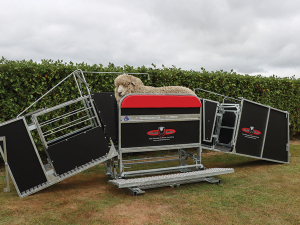
Oamaru-based livestock handling specialist Te Pari has bought Combi Clamp, the New Zealand manufacturer of Combi Clamp manual sheep handlers.
Agriculture Minister Todd McClay has admitted that a scheme bringing workers from Pacific nations to work on orchards has become too hard to navigate but says changes are coming.
A new app designed in New Zealand aims to help sheep, beef and deer farmers capture, analyse and use body condition score data more effectively.
Canterbury farmer Andy Macfarlane has been appointed to the board of AgriZeroNZ, the public-private partnership designed to accelerate the development and deployment of emissions reduction tools for New Zealand farmers.
For over 50 years Mel Ewers has been supporting the apple sector navigate through compliance and quality assurance issues.
The apple sector is enjoying a bumper harvest season.


OPINION: City and regional councils have been put on notice - stop using extreme climate forecasting scenarios that can drive…
OPINION: The Green Party’s rivers and oceans policy may have a new name but nothing else has changed.