
NZ Milk Price Could Hit $10/kgMS as Global Supply Eases
A 'tsunami' of milk from key exporting countries is winding down and this may be good news for New Zealand dairy farmers.




 increase font size
 Rabobank New Zealand country banking general manager Bruce Weir says lower commodity prices is the chief source of farmer anxiety.
Concern over the outlook for commodity prices in the coming year coupled with rising on farm costs have pushed New Zealand farmer confidence to a new record low.
The latest Rabobank Rural Confidence survey has found that farmer confidence now sits at minus 72% - the lowest reading in the 20-year history of the survey.
The survey found 77% of farmers were expecting conditions in the broader agricultural economy to worsen over the next 12 months (up from 65% last quarter) with only 5% expecting conditions to improve (from 8% previously). The remaining 15% expected conditions to stay the same (24% previously).
While a swathe of farmer concerns was contributing to record low sentiment, Rabobank New Zealand country banking general manager Bruce Weir says lower commodity prices had now emerged as the chief source of farmer anxiety.
"It was not surprising to see more than half of farmers (54%) with a negative outlook identifying 'falling commodity prices' as a reason for their pessimistic view on the year ahead. Fonterra's subsequent revision of the milk price earlier in the week to a new mid-point of $7.25/kgMS was a significant boost for the industry, however, this lift was made after the survey period and is therefore not reflected in the latest results," he says.
Weir says the second biggest concern for farmers was rising input costs. He says prices for key farm inputs like fertiliser, fuel and feed all remain stubbornly high and, with farm income now significantly lower, farmers' central focus at the present time is on identifying how they can strip necessary costs out of their businesses over the months ahead.
"The other key concerns cited by farmers in the latest survey were government policies (35%), overseas markets (29%) and 'rising interest rates' (18%). This was the first time since mid-2020 that we've seen government policy slip outside the top two reasons for farmer concern," he says.
Farmgate Woes
The survey also found farmers were also less optimistic about the prospects for their own farm businesses with more than two-thirds of them now expecting this to worsen in the next 12 months.
Bruce Weir says across both the dairy and sheep and beef sectors, more than three-quarters of farmers are now expecting the performance of their own operation to deteriorate, and only 1 in 20 is expecting conditions to improve.
"As well, 12% of farmers viewed their farming operation as unviable this quarter (up from 8% previously), while there was also a lift in the number of farmers assessing their operation as 'just viable' (40% from 38% last quarter)," he says.
Weir says the result of the latest survey reflected the incredibly rough conditions facing primary producers at the current time. He says Rabobank is running a series of workshops and seminars to help their farmer clients to deal with the present crisis. He says they are also urging farmers to look after their own health and wellbeing in the present environment.
A 'tsunami' of milk from key exporting countries is winding down and this may be good news for New Zealand dairy farmers.

Will the good times last? That's one of the key issues to come out of the latest Federated Farmers confidence survey.
Chinese beef trade quotas and a looming suspension of Brazilian beef imports into the European Union are expected to reshape global beef trade flows over the remainder of 2026, with implications for New Zealand exporters, according to Rabobank's Q3 Global Beef Quarterly report.
New Zealand consumers are paying more for beef mince than ever before, with the average retail price now sitting above $24 per kilogram, according to Rabobank.
West Otago dairy farmer Luke Kane has been awarded the 2026 Rabobank Dr John Morris Business Development Prize.


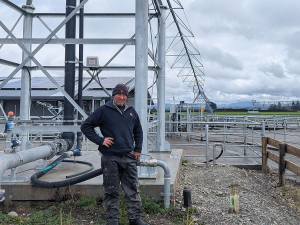
Converting a longstanding cropping farm to dairy was the only way to ensure the land stayed in the family long term, says new dairy farmer Rod May.

As the election heats up, Organics Aotearoa New Zealand (OANZ) has launched its election scorecard designed to help voters wanting to support policies that grow organic and New Zealand's organic sector.
A 'tsunami' of milk from key exporting countries is winding down and this may be good news for New Zealand dairy farmers.
Will the good times last? That's one of the key issues to come out of the latest Federated Farmers confidence survey.
Outgoing Fonterra Co-operative Council chair John Stevenson says that it has been a privilege to represent the co-op's farmer shareholders.
Have a plan in place for your cows and staff.



OPINION: It seems Canterbury processor Synlait is still in the doldrums.
OPINION: Get offside with New Zealand First leader Winston Peters at your own peril.




