What Would Synlait Be Worth to Fonterra or a2 Milk?
Speculation of a possible joint move by Fonterra and a2 Milk to buy Synlait raises a much bigger strategic question, says agribusiness expert Dr Nic Lees.




 increase font size
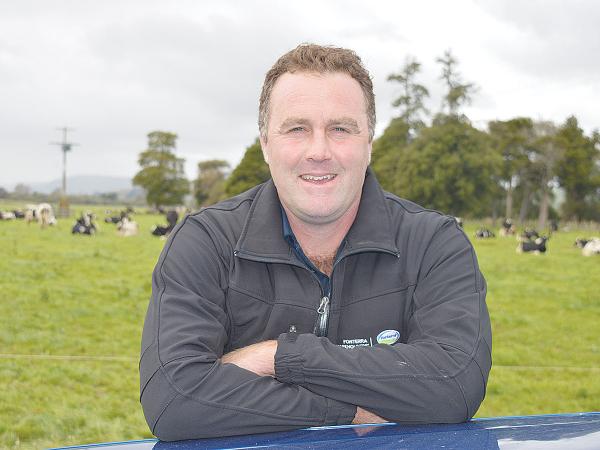 Fonterra Co-operative Council chair John Stevenson.
Fonterra farmer shareholders always look to their co-operative to pay them the highest sustainable milk price, and understandably they ask questions when they see global differences in milk price, says Co-operative Council chair John Stevenson.
He was commenting on Fonterra having to pay its Australian farmer suppliers $1.50/kgMS more than its New Zealand suppliers.
Last month, Fonterra Australia announced an opening weighted average milk price for the 2023/24 season of A$8.65/kgMS. That's NZ$9.50/kgMS. For NZ suppliers, the co-op last month opened with a margin of $7.25 to $8.25, and a midpoint of $8/kgMS.
Stevenson told Dairy News that it is important to note that the NZ and Australian milk prices are calculated in very different ways, reflecting the different markets, product mixes and competitive environment.
"Fonterra's NZ farmers have received comparatively higher milk prices than their Australian members in some previous seasons. Fonterra management are best to comment on the detail of these reasons.
"Council is interested in Fonterra's strategic choice to focus on NZ milk, differentiating it in the global market and earning a premium.
"For some time, we have been asking how this 'premium' will be evidenced and measured.
"We have yet to see this value identified in reporting from management, so will continue to ask this on behalf of our farmers.
"As well as comparing the NZ milk price to Australia's, Council is also keenly interested in the NZ milk price compared to EU and US milk prices. We include reporting on that in our annual report each year, which is released prior to the Fonterra annual general meeting."
A shrinking milk pool in Australia is forcing major processors, including Fonterra, to outbid each other and secure farmer suppliers.
Federated Farmers dairy section chair Richard McIntyre says NZ dairy farmers would love to have a higher milk price, but they are aware that milk price is affected by a processor's product mix and the market the product is sold into.
"We see this between NZ processors, but the distinction is particularly evident between NZ and Australian processors," he told Dairy News.
"Australia's milk production is largely consumed internally, whereas the vast majority of New Zealand's milk is exported."
Speculation of a possible joint move by Fonterra and a2 Milk to buy Synlait raises a much bigger strategic question, says agribusiness expert Dr Nic Lees.

In the past, much has been made of the concept of farm to fork, but an Australian expert in food science and marketing with experience in the dairy industry, Dr Angeline Achariya, says the reverse of this slogan is critical to win modern day consumers.
A four year trial has reaffirmed that mixing plantain into dairy pastures can help reduce nitrogen losses to freshwater while maintaining milk production and profitability, say researchers.
Fonterra has opened its upgraded Chengdu Application Centre, bringing New Zealand dairy expertise closer to customers in one of China's fastest-growing regions.
Tatua chair Stephen Allen says he leaves the co-op with a deep sense of gratitude for the people who have contributed to its success.


OPINION: In politics, credibility is and should be big. It must surely rank higher than charisma, which is quite trite and superficial. Yet, voters nowadays are often wooed and influenced by how someone looks or talks at a superficial level. TV plays a huge role in this.

Farmers can spend less time on paperwork, thanks to a new data sharing agreement between DairyNZ’s DairyBase and LIC’s MINDA software.
Kaikōura families affected by July's severe storm have found a practical solution to a problem that's kept some children away from regular schooling for weeks: a washed-out section of Inland Kaikōura Road, which has stopped the local school bus from running its usual route.
Rural New Zealand is welcoming the Government’s recent package of rural healthcare initiatives.
Interest in agritech and production animal systems has prompted Massey University's School of Agriculture and the Environment to new majors to its popular animal science degree.
Ballance Agrinutrients chief executive Kelvin Wickham says despite a tough year, he is pleased the business has returned to profit.


OPINION: After hogging the media limelight for telling a NZ Chinese MP to "go back home", Winston Peters has decided…
OPINION: With fuel prices soaring, one would have expected most farmers to be reclaiming excise duty on petrol.