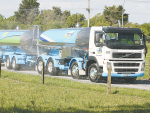
Fonterra Elections 2026: Voting Opens Tuesday 20 October
Fonterra shareholders can begin voting on Tuesday 20 October in the 2026 Board of Directors’ election, a Co-operative Council election in one Ward, and seven Annual Meeting resolutions.




 increase font size
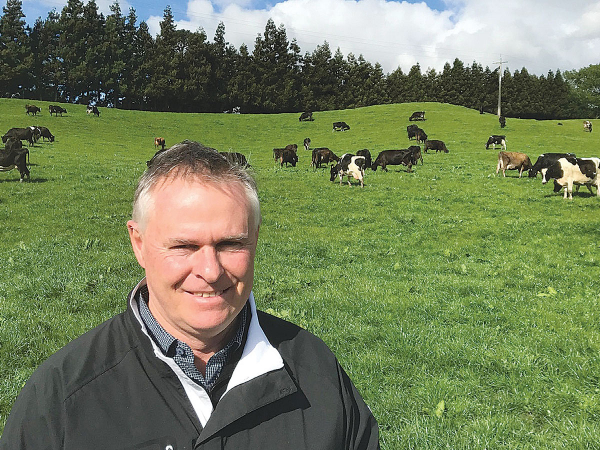 Fonterra chairman Peter McBride says the independence of the milk price panel is already assured.
Fonterra says additional measures are not required to reduce the co-operative's discretion in a setting the milk price.
In a submission to the Ministry for Primary Industries (MPI), the co-operative says it will add significant additional annual cost for no clear benefit.
"Instead, we propose that consideration of additional measures as significant as this should be deferred to the next Dairy Industry Restructuring Act (DIRA) review."
MPI is proposing changes to the milk price panel as part of its intention to amend DIRA to accommodate the co-operative's revised capital structure, approved by farmer shareholders last year.
MPI is proposing to increase the number of ministerial nominees to the milk price panel from one to two. It also proposes an independent chair.
However, Fonterra chairman Peter McBride told Dairy News that the co-operative believes the independence of the panel is already assured.
"While we do not oppose increasing the number of ministerial nominees to two, we believe that the independence of the panel is already assured through its current composition," he says.
McBride says the co-op has concerns about the proposal to prescribe a maximum of seven panel members in the context of the proposal to make the chair an additional independent member.
"We propose that any of the five independent members of the panel should be eligible to be appointed as the chair."
The submissions will go through a parliamentary select committee before Parliament will vote on the DIRA amendments. The Government has indicated that it intends to pass the amendments.
McBride says changes to the capital structure are critical to the future of the co-op.
The co-op's strategy is focused on New Zealand milk.
He says Fonterra's ability to meet strategic targets depends on the co-op maintaining access to a sustainable New Zealand milk supply in an environment where they are seeing total milk supply in New Zealand as likely to decline, and flat at best, due to environmental pressures, new regulations and alternative land uses.
"Flexible shareholding will help our co-op maintain a sustainable milk supply.
"It is intended to make it easier for new and young farmers to join our co-op, and for existing farmers to remain in our co-op."
McBride says farmers leave the co-op for different reasons, but one of the most influential ones is the high level of compulsory investment that's required to be part of the co-op, in part driven my the different costs of capital between farmers and investors in a public market.
He says a flexible shareholding structure will make it easier for farmers to join and stay with the co-op by helping to "level the playing field with other domestic processors, many of whom see milk as a cost to be minimised, rather than aiming to maximise the long-term sustainable value created by and for New Zealand farmers and therefore to the New Zealand economy as a whole."
Fonterra shareholders can begin voting on Tuesday 20 October in the 2026 Board of Directors’ election, a Co-operative Council election in one Ward, and seven Annual Meeting resolutions.

Fonterra Co-operative Group chief financial officer Andrew Murray has resigned to take up a role outside the dairy giant.
Four candidates have been confirmed for two director positions on Fonterra’s board.
A record farmgate milk price and strong global demand is laying the foundation for continued growth of organic dairy farming in New Zealand.
Waikato milk processor Tatua has again declared a record milk payout to farmer shareholders, leaving other processors in the dust.


Federated Farmers has welcomed new rural policies released by ACT, saying they align closely with its own election priorities.

Rural Contractors NZ says proposed changes to land transport rules for agricultural vehicles are a welcome response by the Government to out of date regulations which have seen members hit with huge fines.
Alliance is calling for final applications for its 2027 Graduate Programme, with applications closing on Sunday 25 October.
Decades piloting planes has ensured vet and farmer David Hayes is focused on safety. So, after a serious accident while welding on farm, he is sharing his experience so others can learn from it.
Canterbury milk processor, Synlait Milk has confirmed Leon Fung as its chief executive officer.
OPINION: Making it easier to collect rainwater and use it to grow crops and livestock is a no brainer.

OPINION: It seems Canterbury processor Synlait is still in the doldrums.
OPINION: Get offside with New Zealand First leader Winston Peters at your own peril.




