The directors and management are discussing this and have set up a board sub-committee.
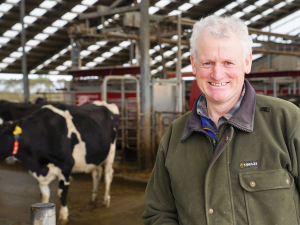
Chairman John Monaghan describes the capital restructuring as the “last piece of the jigsaw”. Once the co-op has made fundamental changes to its strategy it must then ensure the capital structure is fit for purpose, he says.
He points out that the review doesn’t necessarily mean a major revamp of the capital structure.
“We may well find we need not make any changes,” he told Dairy News. “But it’s incumbent on any board to do this as part of due diligence.”
Monaghan confirmed that a board sub-committee is discussing this with the management. “We are at the starting point, looking at existing structure, what’s working, what’s not working.”
The sub-committee includes directors who support opening some Fonterra shares to the public, and those who are advocates of 100% farmer control and ownership.
Fonterra’s capital structure was devised in 2012. While it gives farmer shareholders total control and 100% voting rights, it has been criticised for impeding equity raising and limiting ability to get value from investments.
The co-op has said this year that it will not pay dividends to unit holders, thus prompting outside investors to sell.
Its share price on NZX slumped last week to $3.19, a massive drop from the $6.60 price in January last year.
Monaghan says that as a farmer he is well aware of the impact, but that the co-op is reducing debt and working towards a return to paying dividends.
He says the rating agency Standard & Poor’s is holding the co-op’s credit rating at A-. “They see through the big picture that we are taking the right actions to return our co-op to profitability.”
S&P says the dividend suspension indicates the co-op is willing to actively protect the interests of creditors.
The co-op will announce its annual results on September 12. It has already forecast a loss of up to $675 million because of writedowns of up to $860m.
Monaghan says the full year result will add a bit more colour to earlier announcements. He has hinted at cost cutting across the business but will not confirm job cuts at this stage.
“We will provide clarity to farmers on September 12. Farmers will be keen to know what we are doing.”
Monaghan admits that not everything has gone right for the co-op in the past few years, pointing to loss-making China Farms.
But he points out that other issues, eg pressure from Australian banks and climate change and water issues have added to the uncertainty.
He says Fonterra has “cleaned the cupboards” at home to return the co-op to profit.