
DairyNZ Sets Out Election Priorities for Dairy Farmers
Election years are always a concerning time for farmers, according to DairyNZ chair Tracy Brown.




 increase font size
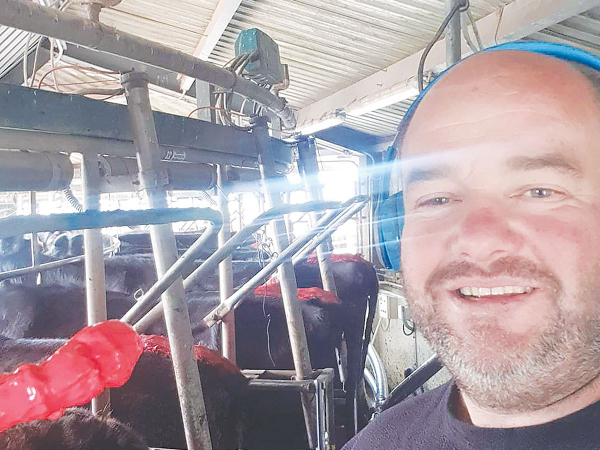 Southland sharemilker Jason Herrick says the Government is again giving farmers "the middle finger".
A Government directive for farmers to pay new overseas workers higher rates has been slammed.
While farmers welcome the Government's decision to issue border class exemptions for another 200 dairy workers, the increase in pay levels is causing anger.
Farmers employing these extra workers must pay them $92,000 per annum or 1.75 times the current median wage for an assistant dairy farm manager.
Those employed as herd manager must be paid $79,500/year which is 1.5 times the current median wage for dairy herd manager roles.
Federated Farmers Southland sharemilker chair Jason Herrick told Dairy News that increases in pay levels is his biggest issue.
"Setting those levels for junior staff and senior staff creates a whole new set of problems with current staff," Herrick says.
"Now they will feel hard done by, so to make things smooth sailing we now have to increase the wages of our current staff to be seen to be dealing with pay equality.
"With the current payout that's all very well and good, but is the current Government guaranteeing the payout to stay there?
"If not, what happens when payout drops to $5, which is where most farms expenses are sitting?"
Herrick believes this is just another move by the Government to continue giving farmers "the middle finger".
"Most businesses will fail in the future if we see payouts drop and current pay levels keep heading in that direction, just to encourage us to employ New Zealanders that just are not there to work on farms.
"We have a long hard road ahead and I am going to keep the pressure on the Government till they start to listen and recognise they are creating all the issues we are currently having."
Agriculture Minister Damien O'Connor says it is clear from conversations with the dairy sector that it is facing workforce pressures.
"These border exceptions will go a long wy towards relieving those pressures," he says.
The exceptions will allow up to 150 dairy farm workers in management roles on farms and up to 50 workers in dairy assistant roles, along with their partners and dependent children.
At the same time O'Connor has told sector leaders to ensure there is a strong incentive for New Zealanders to take up entry level roles and develop careers in dairying.
"The Government and food and fibres sector have been working hard to mitigate worker shortages by training and upskilling New Zealanders, but we know that takes time. This announcement recognises the immediate need for additional expertise to come through our borders.
"Dairy managers have specialist skills developed over many years, which we can't replicate overnight. With the new dairy season kicking off, migrant dairy farm workers will supplement the domestic workforce and provide critical support."
Herrick says the extra 200 workers is a token gesture from the Government.
It won't even make a small dent in the situations vacant market, he says. "We need over 1,000 in Southland alone to start getting close to relieving any sort of pressure."
Election years are always a concerning time for farmers, according to DairyNZ chair Tracy Brown.

OPINION: To a chorus of crying greenies, and not a minute too soon, the Government has moved to put the courts back in their place through proposed amendments to the Climate Change Response Act 2002, intending to limit climate litigation claims such as Smith v Fonterra, in the interests of providing greater certainty for vital industry.
OPINION: The coalition Government’s plan to make about 9000 public servants redundant looms as a major election issue
The battle for the rural vote is on and parties are securing high profile names to try and bolster their chances at the general election.
Prime Minister Christopher Luxon has announced changes to the ministerial lineup, including a new Minister for the Environment and a new Associate Agriculture Minister.


Synlait has swung to second-half profit as operations stabilise, but the dairy processor still posted a $75.4m annual loss.

LIC shareholders have elected a new North Island representative to the co-operative's Board, along with five representatives to its Shareholder Reference Group (SRG), following the company's Annual Meeting held in Invercargill.
Farmers across parts of Southland and South Otago are continuing to deal with difficult conditions after a prolonged run of wet weather, with pressure building around feed supply, stock management, pasture damage, farm infrastructure and everyday workloads.
Federated Farmers says it welcomes Labour's commitment to reviewing the Sharemilking Agreements Act, calling on other major parties to do the same.
For Canterbury dairy farmers Sian Meijer and Rick Wobben, wearable technology has become one of their most valuable on-farm tools - helping manage 1850 cows across an expansive, high-performing dairy operation while improving efficiency, mating outcomes and day-to-day decision making.
Fonterra has unveiled its annual results for the 2026 financial year, posting $27 billion in revenue and close to $20 billion returned to New Zealand farmer owners and unit holders.

OPINION: It seems Canterbury processor Synlait is still in the doldrums.
OPINION: Get offside with New Zealand First leader Winston Peters at your own peril.




