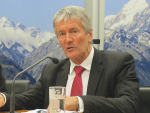
Damien O’Connor Criticises Budget 2026 as ‘Miserable’ for Rural New Zealand
A miserable budget that didn’t deliver much for anyone.




 increase font size
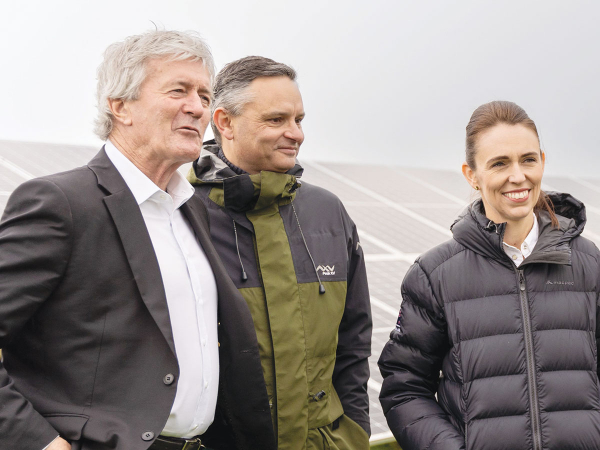 Prime Minister Jacinda Ardern, Climate Change Minister James Shaw and Agriculture Minister Damien O’Connor at the emissions plan launch in Wairarapa last week.
The Government's proposal to deal with agricultural emissions has stunned many rural communities who warn that it will decimate them and replace sheep and beef farms with pine trees.
Under the proposal, the Government states its intent to reduce emissions by 10% by 2030 and that farmers will start paying for their emissions by 2025.
But according to Federated Farmers president Andrew Hoggard, this plan put up by government will cause massive economic and social consequences in rural communities. He says the plan would see sheep and beef production drop by up to 20% and dairy by 5%, costing NZ $3 billion.
"We didn't sign up for this. It's gut wrenching to think we have a proposal by the Government that rips the heart out of the work we have done and to the families who farm the land. Feds is deeply unimpressed with the Government," he says.
The 94-page 'consultaton document' was released at an 'event' at a dairy farm in the Wairarapa and people have six weeks to make submissions before a final proposal is reached early next year. The document is a response to the much lauded He Waka Eke Noa (HWEN) submission put to government in May, which offered an alternative to the earlier Green-led scenario to put agriculture into the ETS and to hell with the consequences. HWEN is a consortium of all the rural sector groups and they, after consultation with farmers and growers, came up with a consensus proposal and this was put to government.
At the time, the proposal was hailed by DairyNZ, B+LNZ and others as a win-win solution and that it offered the best solution. Four months on, the same leaders are not happy chappies and it seems that the Government did not rubber stamp their proposal. The rebel farmer group Groundswell stood aside from HWEN, lambasting them and the Government. But since then the Government has had the HWEN report reviewed, taken other advice and so it seems the talk fest is about to become the work fest.
The deal was said to be based on consensus, and despite the outcry from rural NZ, Prime Minister Jacinda Ardern is still claiming it is, but is also acknowledging the pain and impact on sheep and beef farms will suffer if the Government sticks with its plan.
For his part, Agriculture Minister Damien O'Connor claims the vast majority of the HWEN recommendations have been accepted, but there are some issues he says need to be worked through to make sure the scheme is cost effective for farmers. He says there will be an ability during the consultation to sort out problems and that government is open to suggestions He admits the proposal is "not exact".
"But clearly, if people were hoping this was never going to come to fruition and that it wasn't going to be implemented, they have not been dealing with the world we live in and that is one of facing the ever increasing impacts of climate," he says.
Claims are being made that the proposal will see more pine trees planted. But O'Connor says, while there will be some new plantings, NZ might end up with mixed farm systems and there will be more small plantings within farm systems.
"So yes, there will be more trees but trees in the right places are really what we are seeking rather than whole farm conversions," he says.
A question remains as to whether there will be strict rules around this.
In terms of the dairy sector, O'Connor says there may be some land changes, which he says has been part and parcel of agriculture for years. He says new opportunities will emerge.
"It's hard to know how this will play out on dairy farms because every one is different and runs different farm systems.
"But dairy farmers have been adapting over many years and some will know their carbon and environmental footprints and are already making great progress and that will continue.
"For its part, government will step in with more knowledge options and work alongside farmers, especally in the dry stock sector where there are issues," he says.
A miserable budget that didn’t deliver much for anyone.
National's decision to ‘dribble’ information about the NZ/India to Labour contributed to the delay in it deciding to supported the FTA.
When it comes to international trade, politicians from all sides of the aisle are united, says Labour's trade spokesman Damien O'Connor.
Beef + Lamb New Zealand (BLNZ) says the release of New Zealand's latest Greenhouse Gas Inventory clearly shows agriculture is playing its part in emissions reductions and there is no need for a price on agricultural emissions.
New DairyNZ chair Tracy Brown says bipartisan agreement among political parties on emissions pricing and freshwater regulations would greatly help farmers.



LIC shareholders have elected a new North Island representative to the co-operative's Board, along with five representatives to its Shareholder Reference Group (SRG), following the company's Annual Meeting held in Invercargill.
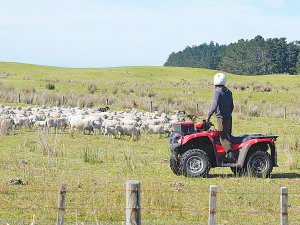
Farmers across parts of Southland and South Otago are continuing to deal with difficult conditions after a prolonged run of wet weather, with pressure building around feed supply, stock management, pasture damage, farm infrastructure and everyday workloads.
Federated Farmers says it welcomes Labour's commitment to reviewing the Sharemilking Agreements Act, calling on other major parties to do the same.
For Canterbury dairy farmers Sian Meijer and Rick Wobben, wearable technology has become one of their most valuable on-farm tools - helping manage 1850 cows across an expansive, high-performing dairy operation while improving efficiency, mating outcomes and day-to-day decision making.
Fonterra has unveiled its annual results for the 2026 financial year, posting $27 billion in revenue and close to $20 billion returned to New Zealand farmer owners and unit holders.
The first major update to the Dairy Cattle Code of Welfare in more than a decade has been released, marking what DairyNZ describes as an important step in ensuring animal welfare standards continue to evolve alongside scientific evidence and on-farm realities.

OPINION: It seems Canterbury processor Synlait is still in the doldrums.
OPINION: Get offside with New Zealand First leader Winston Peters at your own peril.




