
Make It Up!
PM Chris Luxon can't seem to buy a trick when it comes to the polls, particularly for his own approval rating as preferred Prime Minister.




 increase font size
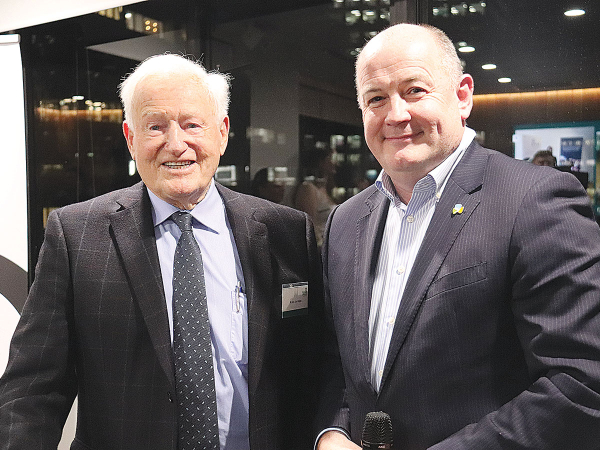 Jim Bolger with Peter Ryan, the former Irish Ambassador to NZ.
Tributes are pouring in from across the political divide for former Prime Minister Jim Bolger who passed away, aged 90.
Prime Minister Christopher Luxon described Bolger as a towering figure in New Zealand’s political life – a leader of conviction, a reformer of consequence, and a servant of the people whose legacy has shaped our nation in profound and lasting ways.
Born in Taranaki to Irish immigrant parents, his early life on a dairy farm instilled in him the values of hard work, resilience, and quiet determination, Luxon says.
“These qualities would go on to define both his character and his leadership.
“Elected to Parliament in 1972, he served our country across more than three decades with dignity and a deep sense of public duty. As Prime Minister from 1990 to 1997, he led New Zealand through a time of significant change – modernising the economy, forging stronger relations with our international partners, and helping to shape the MMP electoral system that continues to serve our democracy today.
“While his government was sometimes tested by the scale and pace of reform, he never wavered in his belief that the role of leadership was to prepare a better future, not merely manage the present.”
NZ First leader Winston Peters, who had his share of policy differences with Bolger, says he served as Prime Minister during a difficult period of serious transition in the country’s politics.
“Everyone with a knowledge of New Zealand political history from the late 1980s and early 1990s will know that the two of us sometimes had our policy differences.
“But from 1996 onwards, Mr Bolger and I led New Zealand’s first MMP Government - which was a coalition between NZ First and National.
“As the leader of Mr Bolger’s coalition partner, I can attest he was a man of his word. He did what he said he would do - and we ran our Coalition Government with integrity, focus and a fidelity to New Zealanders who had delivered a majority to our two political parties.”
Labour leader Chris Hipkins says his party was sad to hear of the passing of Bolger.
“Jim was a towering figure in New Zealand politics both in his role as Prime Minister, and as the Member of Parliament for King Country for 27 years,” says Hipkins.
“His time in office was marked by immense economic and social change. He oversaw the introduction of the MMP electoral system and worked to put New Zealand’s modern economy firmly on the world stage.
“Jim had an enduring commitment to public life, his legacy will be long remembered, and his contributions will continue to shape our country for generations to come.”
Former Prime Minister Helen Clark tweeted that she was saddened by news of Bolger’s death. He was a parliamentary colleague for many years, she adds.
“Jim was deeply committed to NZ and served our country selflessly,” says Clark.
Bolger was born in Opunake, Taranaki, to Irish immigrants. Before entering politics, he farmed in Waikato and was involved in Federated Farmers. Bolger won election to Parliament in 1972 and subsequently served in several portfolios in the Third National Government. Following one unsuccessful bid for the party leadership in 1984, Bolger was elected as National Party leader in 1986. He served as Leader of the Opposition from 1986 to 1990. Bolger led the National Party to victory in the 1990 election and became PM on 2 November 1990.
Beyond politics, Bolger continued to contribute to national life, most notably as Ambassador to the United States, Chancellor of the University of Waikato and as chair of NZ Post and Kiwibank.
He is survived by his wife Joan and other family members.
PM Chris Luxon can't seem to buy a trick when it comes to the polls, particularly for his own approval rating as preferred Prime Minister.
Sir Sam Neill made an extraordinary mark on the world, and on the world of New Zealand wine.
OPINION: Is it now time for the country's top agricultural university to start thinking about a name change - something that has been mooted in the past?
OPINION: In the past weeks, much has been said and written about one of New Zealand's greatest prime ministers, James Brendan Bolger, who died just a few months after his 90th birthday.
Dignitaries from all walks of life – the governor general, politicians past and present, Maoridom- including the Maori Queen, church leaders, the primary sector and family and friends packed Our Lady of Kapiti’s Catholic church in Paraparaumu on Thursday October 23 to pay tribute to former prime Minister, Jim Bolger who died last week.


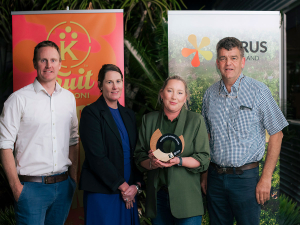
New Zealand's citrus growers were challenged to build their future on the value embedded in their fruit rather than the volume they produce, at Citrus New Zealand's annual gathering in Gisborne on 17 September.
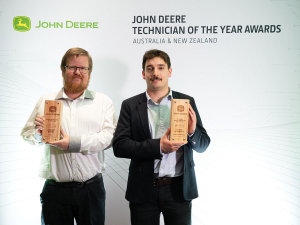
Leading John Deere technicians and apprentices from New Zealand and Australians were recognised at the recent sixth annual JD Technician of the Year Awards, held in Brisbane.
In Dacre, near Invercargill in New Zealand’s South Island, Bruce Dinnington is running a dairy operation unlike any other.
A free online platform aggregating governance vacancies across rural and regional New Zealand has been launched.
Environment Minister Nicola Grigg has announced details of a new rural plastics recycling scheme.
Agricultural drone operators say that a government decision to allow lower-risk drone work without certification won’t lower standards but drive innovation and efficiency.




OPINION: The same mainstream media muppets that brought you Jacindamania in 2017 have been flat out pimping for the Opportunities…
OPINION: Your old mate reckons the atrocious way farmers in the UK are treated by their lords and masters in…




